



Articles
News, analysis and expert opinion from B2B Marketing — all in one place.
629 results · page 13 of 27

CMO, chief communications officer and chief growth officer among the fastest growing c-suite roles in the UK, says LinkedIn
New data from LinkedIn reveals the top 10 fastest growing c-suite roles in the UK when compared to the previous year as companies hired executives to help navigate the global pandemic and drive business performance.
28 October 2021 · Content, Creative & Campaigns

An interview with Eric Schou
Cisco AppDynamics recently announced that it has appointed Eric Schou as its new CMO. According to Cisco AppDynamics, the appointment comes at a key moment for the company, as it continues to assert its leadership in full-stack observability – a fast-growing, multi-billion dollar technology market. With that in mind, David Rowlands, senior editor at B2B Marketing, spoke with Eric to learn more.
26 October 2021 · Content, Creative & Campaigns

Supplier ecommerce sites are failing B2B buyers
Despite the boom of ecommerce during the pandemic, new research has found that over half of ecommerce sites are underperforming, causing significant and frequent disruption to buyers.
21 October 2021 · Content, Creative & Campaigns

UK businesses missing out on sales opportunities thanks to lack of human interaction, says HubSpot
CX professionals have warned that B2B organisations are at risk of missing vital sales opportunities thanks to a lack of human contact in the sales process, according to HubSpot’s recent report Hybrid Customer Experience in a Post-Pandemic World: Where do we stand on the Human Touch?
20 October 2021 · Content, Creative & Campaigns

Thinking of starting a B2B podcast? Ask these three questions first
Host of one of B2B’s longest-running podcasts, copywriter David McGuire shares his advice for anyone considering the format.
20 October 2021 · Content, Creative & Campaigns

Hubilo announces £92 million investment as the new era of events begins to unfold
Global virtual events platform Hubilo has raised £92 million in Series B funding, bringing the total funding to £113 million in less than 18 months. One of the largest investments in event technology, this signals a revolution in the ways people connect and communicate in an era marked by uncertainty.
13 October 2021 · People, Teams and Skills

Same old, same old or or B2B marketing 2.0? (Part 3)
Is motivational marketing (MM) truly transformative, or is it simply old wine in new bottles? In this blog, we examine how MM can help you tackle some of marketing’s thorniest problems (creating a motivation-based marketing plan, balancing 60/40 efficiencies, maximising your martech and tech stack) and even help you market yourself, CMO! Do you need MM to accomplish all these tasks? No, surely not. But, why not? Why not employ all the help you can get?
13 October 2021 · Customer Experience

Expandi Group announces the integration of AccountInsight into the group
Expandi group, a B2B marketing agency, has acquired AccountInsight, a UK-based adtech and martech company. This integration aims to develop and expand current Expandi services.
4 October 2021 · Content, Creative & Campaigns

durhamlane and Cyance launch new report
Study shows that B2B buyers are overwhelmed with more sales and marketing material than prior to the pandemic, but will engage with vendors showing the right behaviour.
29 September 2021 · Content, Creative & Campaigns

An interview with Dr. Christine Bailey
In a recent B2B Marketing Podcast, David Rowlands, editor at B2B Marketing, spoke with Dr. Christine Bailey, CMO of PassFort to discuss her latest book, Customer Insight Strategies: How to Understand Your Audience and Create Remarkable Marketing, and what it takes to build a world-class customer insight strategy.
28 September 2021 · Customer Experience
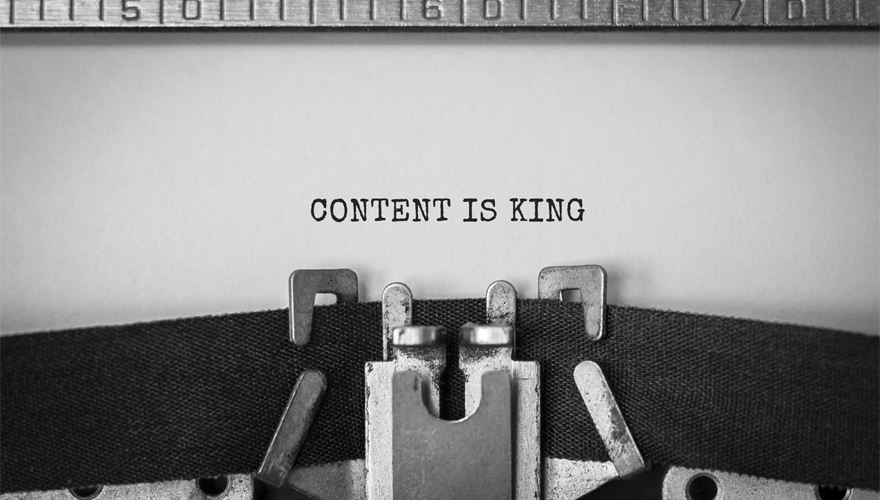
How to build a B2B content strategy
Engaging B2B content strategies play an integral role in moving prospects through the consumer journey. With the right mix of content formats and topics, The Brains (a UK-based digital marketing agency) believes that B2B businesses can attract new, quality leads, engage them with relevant information, convert them by building up trust and delight them with continued tips, tricks, and guidance. However, just creating content is not enough.
21 September 2021 · Content, Creative & Campaigns

How to lead score like a boss
Lead scoring can help both marketing and sales immensely, but it can be tricky to master. At Ignite London, Mary Kleinsorgen, senior marketing and technology strategist, and Gifford Morley-Fletcher, senior marketing strategist at MarketOne, delivered a stellar presentation outlining the dos and don’ts when it comes to lead scoring. Kavita Singh reports.
17 September 2021 · Content, Creative & Campaigns

How employee engagement can help B2B organisations grow
Employee engagement is now widely regarded as one of the key drivers for the growth of B2B organisations. It has been proven to help grow sales, improve productivity, increase customer satisfaction, reduce turnover, increase organisational effectiveness, and many other key business drivers.
15 September 2021 · Content, Creative & Campaigns

Does diversity training actually work?
There is much debate around diversity training. While some think it might be useful to educate employees in the workplace, others have criticised it saying it’s simply a band aid to a much larger issue. So what’s the verdict? Kavita Singh reports.
13 September 2021 · Content, Creative & Campaigns

Gravity Global receives major investment from private equity fund to continue international expansion
Gravity Global has announced that it has reached an agreement with Elysian Capital, a UK-based mid-market private equity fund, for a major investment.
9 September 2021 · Content, Creative & Campaigns

Part 1: This is the audit that every B2B business needs right now
Relaxing on holiday? Looking at the beach? Taking stock and a well-earned rest? Well, the last thing on your mind might be an audit. Yes, typically the preserve of finance who begrudgingly accept the attentions of an external audit team every year, a brand audit is very different. No, you don’t have to provide every financial record and audit trail for weeks on end. The brand audit is far sexier than the financial audit. Read on to find out why you should be thinking about audit during your summer break.
2 September 2021 · Content, Creative & Campaigns

An interview with Gary Hurry
David Rowlands, editor at B2B Marketing, recently spoke with Gary Hurry, international marketing director at IRI, about the transformation IRI has seen this past 18 months. To check out the full podcast, click here!
31 August 2021 · Content, Creative & Campaigns

DMA creates career personality quiz on International Youth Day
The Data & Marketing Association has launched a new interactive career quiz to improve student awareness of job roles in both data and the marketing industry. The quiz has been developed in partnership with the DMA’s B2B Council, using the Leadfamly marketing gamification platform. With GCSE results being recently announced, the DMA aimed to highlight what types of careers the creative, data and marketing industries can offer through its quiz called ‘What Type of Marketer are You?’. Users can explore a series of scenarios through personality-based questions by helping them understand what job types might fit their qualities. After users receive their results, they can see what type of jobs they should be looking for including roles such as event executives, copywriters, design managers and data analysts. Kate Burnett, general manager of DMA Talent, said: “Our new quiz is a fun, interactive way for students across the UK to discover what careers the data and marketing industry can offer them. It will provide them with invaluable advice and information into an array of job types, with unique insights from current industry professionals – a first for the industry.DMA Talent exists to guide and support the next generation of talent. Through projects like this, we can educate emerging talent about our industry, steering them towards the skills and qualities they need to thrive.”
26 August 2021 · Content, Creative & Campaigns

The top 5 soft skills for every manager to have in their toolkit
We often discuss the technical skills that every B2B leader needs to possess, but what about the softer skills and personality traits? We asked Cara Brennan Allamano, SVP of People, Places, and Learning at Udemy to outline these top essential traits. Coaching Employees are looking for mentorship and coaching today more than ever. On a monthly basis, our Udemy Business team analyses and releases the skills that employees are learning across our enterprise customers, and last month we witnessed a 288% increase in consumption of coaching skills. Similarly, career coaching and executive coaching courses were surging over 50% in consumption. Empathy Creating a culture of empathy in an organisation is always important. But empathy from managers is needed now more than ever as we emerge from a year when everyone’s lives were turned upside down. Being empathetic to what employees are experiencing lays the groundwork for a more positive and open work environment. Growth mindset For a manager overseeing a team during this era known as “the Great Re-Entry,” a growth mindset allows for mistakes to be made, all in the spirit of figuring out how to work in a new and better way. Communication Managers need to communicate clearly and constructively so employees are clear about team and company goals. But stellar communication isn’t only about speaking clearly. It’s about actively listening to your team members. Inclusion Managers should be intentional about creating a culture of allyship that is a physically and psychologically safe place to work. Ideally, their organisation is thinking far beyond filling quotas and genuinely working to create a broad and diverse workplace founded on a culture of belonging.
19 August 2021 · People, Teams and Skills

What do hybrid events actually look like in the future?
As we shift into a 'new new normal’, there is a lot of talk around 'hybrid events'. So, what do these events look like and how can we adapt? David Rowlands, editor at B2B Marketing, spoke to Louise Bird, head of events at Capita. DR: ‘Hybrid’ is the word of the year when it comes to events, but there seems to be a lot of disagreement or confusion around what a hybrid event actually is, and I think part of that stems from the fact that different sized events have different requirements. So, with that in mind, what should a hybrid event look like when it comes to a major conference? Think, 10,000+ attendees. LB: The challenge for large scale events (LSEs), which events of this size fall under, is that they need to become ‘must attend’ events for the industry. In other words, attendees go because they know they are going to see everyone they want to in one place, including suppliers, clients, prospects and even potential employers. There tends to be at least one attendee in each of those areas, and you can say ‘see you next year’ as you leave. These events are where a lot of business happens as you can squeeze so much into just a few days. These types of events will, therefore, be the most challenging to make hybrid. Ultimately, when you're online, you just don’t get the networking experience that you do at an in-person event. Many suppliers have included networking and meeting facilities in their online offering, but it remains a challenge. For instance, human nature means we check emails or get a drink in between sessions, and just don’t use the facilities provided. Networking online just isn’t the same. The exhibitions at these events are also a huge attraction and the leads you can generate are a big reason why companies attend, not to mention a key sponsorship generator for the organisers. Even with virtual stands, you don’t get the same ‘hot’ leads you do from meeting someone in-person on a stand. DR: And, following on from that, what should a hybrid event look like when it comes to those smaller events of around 500 attendees or less? LB: For these events, it is a bit simpler than LSE events. These aren’t the ‘must attend’ events for the industry. I’m not saying they aren’t excellent events; just that you get a large number of events at this scale in a year. The focus of these events tends to be content rather than networking, and this is really where hybrid can really come into its own. These events will give you different types of engagement and sponsorship depending on your objectives. If you want to get leads, you can attend and exhibit. If you are trying to raise awareness, you can speak (either in-person or online). DR: Traditional events managers know how to run a physical event, and they’ve no doubt quadrupled their knowledge and understanding of virtual events this past year. But what is unique to hybrid events that they will need to understand before kicking things off? Are there perhaps some new skills they need to learn? LB: There are certainly some new skills that anyone who has worked in events since March 2020 has had to learn, not least becoming much more familiar with those challenges which traditionally sit with a digital team, and not an events one, such as firewalls and lag. But the thing that is unique to hybrid events is that you must consider both the in-person and the virtual element as joined but separate.
19 August 2021 · Strategy and Evolution

Is this the end of the B2B whitepaper?
B2B copywriter David McGuire examines Salesforce’s claim that whitepapers are “no longer interesting”. “The report of my death was an exaggeration.” What Mark Twain actually wrote Ah, the trusty B2B whitepaper. Heavyweight champion of the mid-funnel consideration phase. Occasional gated lead magnet and the ebook’s brainier, less handsome twin.* And now, according to Salesforce’s Senior VP of Global Brand Marketing, Colin Fleming, “no longer interesting”. But is there any evidence to support the idea the pandemic has rendered the format ineffective? Given the work that goes into researching and writing a good whitepaper, it’s worth considering. *My colleague, senior copywriter John Kerrison, once memorably described whitepapers and ebooks as the “Nick Nolte and Gary Busey” of B2B content, but that’s another story. B2B marketers still trust the whitepaper Usually, when a marketer publicly declares something is “dead” or “king”, it’s sensible to take the claim with a ladle of salt. Content marketing is a battle for attention, after all, and unfortunately a little exaggeration sometimes goes with the territory. But when opinion comes from such a source – at a moment as potentially pivotal as the launch of a whole B2B streaming service – you have to take notice. So, I delved into the figures. I started close to home. At Radix, we write content – including whitepapers – for around 60-80 B2B tech brands in any given year, which gives a reasonable spread across the industry. A quick, unscientific count showed whitepaper projects are actually up about 35% on pre-pandemic levels. Casting the net wider, the Content Marketing Institute’s 11th annual B2B Content Marketing Report showed 47% of respondents – around one in two – use still whitepapers. That’s a lot of marketers. However, it’s down on 2020’s figure of 59%, and a big change from 2019, when long-format content like whitepapers, ebooks and guides were voted by far the most effective content format in the consideration stage. Clearly a lot of marketers still trust the format – but perhaps the way it’s used is changing.
18 August 2021 · Content, Creative & Campaigns

Seismic surpasses $200M in annual revenue run rate
Sales enablement platform, Seismic, has announced it has surpassed $200 million in annual revenue run rate, finishing its best first quarter in company history. In addition, Seismic has also grown active users 45% over the prior year period, along with a number of other achievements. With more than 50 new customers and a recorded sales growth of 182% year-over-year, they also named Heather Cook as VP, APAC, to spearhead its expansion in Australia, New Zealand, and other Asian markets. Kevin O’Regan, senior VP of sales, EMEA at Seismic, said: “In two years, we’ve doubled globally. We’ve been investing quite heavily in the last 12 to 18 months internationally, and I think the interesting thing is that sales enablement is something that is really gaining momentum right now internationally. As the market has continued to blossom, our position as the global sales enablement leader has enabled us to help local businesses adapt to new ways of working and capitalise on the opportunities available to them. And this is just the beginning. With new customers such as Uberall and Maersk coming aboard, we’re in a stronger position than ever to support local businesses as they transform their go-to-market processes.' Seismic was named to the Forbes Cloud 100 and Deloitte Technology Fast 500 in consecutive years. Last year, the company also acquired social sales engagement platform Grapevine6. While many businesses suffered during the pandemic, Kevin explained that Seismic had quite the opposite effect, as many users had to adapt to the digital world. Kevin continued: “The average usage of our platform by our customers, during the first 12 months of Covid-19 went up 2 ½ times on average. That tells you people are using technology a lot more than they were before the pandemic so it’s pushed a very heavy agenda of digital transformation and anything that is helping salespeople connect and engage is helping drive a lot of those interactions.”
12 August 2021 · Content, Creative & Campaigns

4 product launch failures and what we can learn from them
Kelly Wright, B2B associate account director at The Purple Agency, digs into some classic product launch fails, and breaks down what we can learn from them in her latest blog. Put 10 people in a room and ask them what Coca-Cola, Apple, Google and Microsoft have in common, and you’ll get a variety of different, but all correct, answers. Biggest companies in the world, market leaders, global household names … What they probably wouldn’t say is that they’re responsible for some of the worst product flops of all time. Yes, even the biggest brands make mistakes. Let’s take a look at the launches in question, and what marketeers can learn from them. 1. New Coke – Coca Cola, 1985: Often given the unfortunate accolade of ‘the worst new product of all time’. Coca-Cola had been losing market share to Pepsi for 15 years, decided the reason for this was Pepsi’s sweeter taste, and changed their formula for the first time in 99 years. But it fell flat. Within weeks, Coke were fielding 8,000 complaints a day, and one angry customer even took legal action. 79 days after launch, new Coke was discontinued and the original returned to the shelves. Why did it fail? Although they had carried out taste tests before launch, their research failed to uncover important insights, underestimating loyal drinkers’ emotional attachment to the brand, and alienating its core audience. Changing to mimic a competitor undermined its own brand position as ‘the real thing’ and the original. If it ain’t broke, don’t fix it.
4 August 2021 · Content, Creative & Campaigns

Three psychological pitfalls marketers should avoid in 2021
A year in quarantine has changed consumer psychology and the rules of engagement for marketers. From dealing with isolation to significant economic uncertainty, it is no surprise that depression has doubled for UK adults throughout the last 12 months. As the UK lockdown starts to ease, people are grappling with the conflicting emotions of desiring connection with each other on the one hand, yet remaining wary of too much close contact, too soon. For marketers, this means both adapting their 2021 plans to today’s “new normal,” contactless world, while ensuring that empathy and connection remain at the core of every communication. To accomplish this, we must all avoid the following pitfalls. Don’t mistake empathy for disingenuity We’ve all heard the same phrases a dizzying number of times by now: “These are unprecedented times,” “Stay at home, save lives,” and “We hope you’re doing well in these trying times.” For many brands, these empathetic phrases served as a pseudo-obligatory acknowledgement of current events before diving into sales-driven messaging. But for consumers, these messages quickly became white noise, a reason to ignore the communication altogether. Data from Acoustic’s analysis of email marketing from January to May 2020 reinforces this. While open rates in the UK and Ireland increased by 19% in March versus January as consumers scoured for information on how to safely buy essential supplies and support their favourite businesses, click-through rates and click-to-open rates, on the other hand, remained relatively flat. This signals that emails with “An important message from our CEO” piqued curiosity but did not incite action or engagement. For marketers, the takeaway is clear: Show, don’t tell. Find creative ways to make it clear you genuinely care about your customers, without falling back on the same tired phrases. As marketers, we should emulate rigour. Our messaging should be clear, transparent, and to-the-point. The rest is just white noise.
20 July 2021 · Content, Creative & Campaigns


