



Articles
News, analysis and expert opinion from B2B Marketing — all in one place.
629 results · page 14 of 27

Are you ready to grow sales by 10x?
Productivity in the B2B industry did not suffer during the recent pandemic. As a matter of fact, productivity went up 10-fold in many instances. The reason that most B2B companies were able to ride out the storm reasonably unscathed and some actually prospered is the prevalence of digital and virtual technologies that were already in place and allowed people to work remotely. Crisis leads to innovation B2B sales is also experiencing a productivity and economic boom driven by innovations in digital and smart technologies. B2B sales and marketing, as we have known it, has irreversibly changed – and for the better. Sales pitches that were previously conducted through in-person meetings are now delivered virtually. The post-pandemic economic boom promises radical shifts in productivity. For example, with new virtual and smart technologies in place, B2B sales reps increased their out-bound call rate by as much as 10 times!
13 July 2021 · Content, Creative & Campaigns

How to authentically represent Pride in B2B
There’s an inherent culture clash between the corporate world of B2B, and what Pride means to me. Rules, structures and formality don’t sit well with Queer culture. Pride is all about disrupting norms, celebrating uniqueness and difference. In contrast corporate culture, particularly in the B2B world, often rewards conformity.
9 July 2021 · Content, Creative & Campaigns
Ignite London 2021: Key learnings and takeaways, and where to go to watch on-demand
Last week, we hosted B2B Marketing Ignite London – our first ‘hybrid’ event, which saw our talented B2B experts speaking both virtually and in-person at the B2B Marketing studio. With our speaker line-up having insights on topics such as ABM, global campaigns and marketing operations, it was an unmissable event! You can view a handful of our on-demand sessions now, and if you’re a Propolis member, ALL sessions are now available! Our keynote sessions What Sage learned pioneering TikTok in B2B by Kirsty Waller, VP UKI marketing, Sage Kirsty kicked off Ignite London with an enlightening session about Sage’s TikTok campaign, which became the first B2B brand to run a campaign using the popular platform. How did this bold choice play out? Kirsty said: “It actually blew up more than we ever could have imagined, and certainly more than I've ever seen in a B2B environment. We had 1.3 million entries using our hashtag. We had two million engagements, which were the likes and comments on videos, and overall, 8.5 billion impressions.” On-demand session available to:Propolis members & non-Propolis members It’s time for brands to stop sitting on the fence by Stefan Doering, brand strategy lead, PwC; and Dara Douglas, senior manager, Consulting and UK BXT leader Stefan and Dara followed up with a session on brands taking a stand against social issues such as climate change to be on the right side of history. Stefan said brands can no longer play it safe to risk avoiding parts of their customer base and this takes a certain amount of bravery and adapting. They even shared an ADAPT tool that marketers can utilise: asymmetry; disruption; age; polarisation; and trust. On-demand session available to: Propolis members & non-Propolis members Balancing utility and magic In B2B Marketing by Robert Senior, non-executive chairman, Selbey Anderson In Robert’s session, he discussed the Covid-19 effects on brands, why we’re currently in the age of specialists vs generalists, and how serendipity can be used as a competitive advantage in B2B marketing. On-demand session available to: Propolis members & non-Propolis members Adapt and grow: How to map content to the buyer journey and show marketing ROI by Michael Brenner, CEO, Marketing Insider group and former VP digital marketing, SAP Michael also discussed how to effectively map out content to the buyer journey. He also broke down a powerful framework used to measure the ROI of content marketing and ways to prove your marketing is a strategic asset for your business. On-demand session available to: Propolis members & non-Propolis members
9 July 2021 · Content, Creative & Campaigns

6 reasons why it’s important for marketing to understand finance
While we are not saying that you should rush to give a virtual hug to your nearest finance person, it is important to understand finance. That means both understanding what drives financial performance as well as dealing with the finance bods. Now, it should be pretty clear that most marketers and finance people are opposite ends of the spectrum when it comes to personality. But, that just means that there is a lot to learn from each other so read on discover 6 reasons why it’s important for marketing to understand finance. The bean counters are coming In truth, they probably already arrived. A pandemic is a pretty good reason for the numbers to come under greater scrutiny. After all, the very survival of some companies and countless jobs depends on it. So, it makes sense that we all play along and try to get along. Finance people are custodians of the financial results and the purse strings. In some businesses, that could be seen as ‘keeping score’ and control over cash flow. However, never are accountants more involved than during a downturn and that means marketing gets paid a visit. It isn’t quite a case of ‘sending the boys ‘round’ but it may have felt uncomfortable. Here’s a big tip. One thing that really helps any conversation with finance is knowing your numbers. 6 reasons why it’s important Here are 6 reasons why it’s important for marketing to understand finance: Finance approves the marketing budget – yes, you may not like it but finance is heavily involved in signing off budgets in most companies. Finance approves capital expenditure – if you are looking at a systems transformation or similar big investment, finance will have a governance process to review and approve. Marketing needs to be able to talk to finance – it sounds obvious but the first two reasons really depend on communication, particularly in terms of detail. Marketing needs an ally in the boardroom – it may be a surprise that marketing can be a lonely voice in some boardrooms so why not have another ally? Finance wants to be informed of spend and performance – as custodians of the corporate credit card, finance sometimes have to explain how it is being used. Finance may intervene if funds are not invested wisely – if money is spent with little return, questions are inevitably asked so finance quickly need answers. Getting to know the numbers A major element of a successful understanding of finance is to know your numbers. Yes, being able to openly and honestly discuss the numbers in detail and with confidence will go a long way. Many accountants will get comfortable pretty quicky once you start to speak their language. While it isn’t all ones and zeroes, numbers and detail are very familiar to finance teams. If at this point you want to run for the hills, bear with us. One thing that really might surprise you is that finance people are often really interested in business and marketing issues. As finance roles in larger companies move further away from general bookkeeping towards ‘value add’ work, they wish to enhance their commercial skills. This gives marketers a great opportunity to engage the professional curiosity of their finance counterparts.
7 July 2021 · Strategy and Evolution

How to be an ally post-Pride month
With June coming to an end, that also means that Pride month is coming to end. However, the allyship must continue. According to a research study by Accenture, approximately 59% of employees aren’t open about their sexual identity. As amazing as it is to see support worldwide, how can we become better allies in the B2B sector? Well, first thing’s first. If you haven’t, go update your LinkedIn profile with your pronouns. As a cisgender woman, I have no issue putting (She/Her), but if it helps others feel more comfortable putting their preferences, well, that’s what being inclusive is all about. But it goes beyond doing the bare minimum. If your company did change their logo during this month, ask yourself if you earned it or was it just a matter of asking your designers to change the logo? If you haven’t done anything in terms of policies, initiatives or inclusivity, then it will come off as performative. Before events like these, it’s so important to remember the intention – is it to create a safe space, or is it to come off ‘politically correct’ and boost sales? But there are things you can do post-Pride month to be an effective ally. Research (especially if you’re at a senior level) Being in the know is absolutely critical. The more informed you can be, the better. The transgender community still faces an obscene amount of hate crimes daily, and people that identify as gay, transgender and bisexual are twice as likely to experience mental health related issues. When you care, you’ll be more inclined to offer support, and, if you brush off these statistics, it comes off as if it’s ‘not your problem.’ And once you start learning more about LGBTQ+ issues, you’ll be exposed to charities, causes, initiatives and programmes that you’ll be able to offer or look into for your employees. One thing that was interesting to hear from our most recent B2B Marketing Ignite USA conference was when the CMO of Accenture, Joseph Taiano, spoke about affinity groups at his company. When he first joined Accenture, he joined one, which brought together marginalised groups around a cause. At the time, Joe said he didn’t have many gay friends, so he joined an LGBTQ+ employee resource group. If your company has the resources, it’s worth the investment, but if you don’t, there are several charities and organisations you can join and look into such as Workplace Pride, LinkedIn’s Out in Tech and Free Equal United Nations.
28 June 2021 · Content, Creative & Campaigns

Can you outsource your sales team?
In the world of B2B Sales, pre-sales as a process and appointment set-up as a function have acquired a key stake in the ultimate achievement of revenue numbers for any large corporation. This specialised function enables the actual sales folks to attend to opportunities post proper qualification screening and establish the critical buying signals, including the industry-standard Budget/ Authority / Need / Timeline – BANT criteria. Most organisations do this internally with a team of SDRs. However, some of the B2B demand generation companies have started offering such services as an outsourced function in the recent past, but the success is limited. Appointment Setting (AS) is a complex process, and it involves intricate and seamless development of a complete campaign plan in coordination between marketing and sales. Therefore, this cannot be a standalone sale driven initiative. When we look at the OS model of Appointment Setting, this becomes even more complex since the SDRs are not working just on a dedicated program but will be working on several programs simultaneously. In most scenarios, such programs are success-based, meaning the provider gets paid only when they close a qualified appointment. Too often, such initiatives lead to low levels of success and the quality of the appointed candidates will be bad if checkpoints aren't verified thoroughly. Such OS services need a higher category of folks than your generic telemarketing agents. It is a specialised role that would require a bit of tenured sales folks to be working on. The failure of many programs that are OS have their roots in this core issue – they consider appointment set-up as an extension of their lead generation functions. However, such programs need investment and effort from both the buyer and seller to deliver fully trained SDRs, who have been trained on the client’s products/services, the value prop, and the high-level pitch. The cost of failure is high with such initiatives since the prospect would be left with a bad experience that would take years of effort to correct or remedy. One of the key success parameters for AS programs is synchronising the messaging between the marketing/sales and the OS SDR functions. It helps to have consistent messaging across the board so that any touchpoints a prospect has with the company is communicating the same message. If you are an organisation looking to explore appointment set-up as an outsourced function, it helps to go through the defined process below for a better success rate. Like every function, we recommend organisations to have a defined and progressive framework that ensures that all aspects of People-Process-Technology are covered and signed off during an outsourced SDR function's design and implementation.
28 June 2021 · Content, Creative & Campaigns

The 4 pillars of being a thought leader
We see it being thrown around left, right and centre – the concept of becoming a ‘thought leader’. But what is a thought leader and how do we become one? Atlassian’s Ashley Faus breaks down the four pillars to becoming an influential and impactful thought leader. Kavita Singh reports. Before diving in, it’s critical to note that these four pillars work together in tandem. You can’t just be outstanding on one pillar and neglect the others. Chances are you’re lacking in at least one of these. Credibility The first pillar revolves around credibility. This is when you need to ask yourself: Do you trust what you’re saying? Do other people believe what you’re saying? Do they think you know what you’re talking about? From a tactical point of view, there are several ways to establish authority and boost your credibility. This means you have other colleagues coming to you for advice and expertise, and, when you give them information, they simply don’t question its validity. That is a form of trust that is earned over time. Credibility can be cultivated in many forms of authority. It can come in the form of a positional job title, experience, formal education credentials, licensing or certifications. However, it can also come from putting your company name behind yours. It can build the reputation of your company, as well as your own. Some useful tactics include sharing your point of view on ongoing projects and research, being the spokesperson on behalf of your company, and testing out new tactics and strategies for teams to adopt.
23 June 2021 · People, Teams and Skills

Why B2B businesses need speed to survive
“We won't experience 100 years of progress in the 21st century — it will be more like 20,000 years of progress.” So said futurist, inventor and Google Director of Engineering Ray Kurzweil in his book The Singularity is Near, on the basis that technology is advancing exponentially in a law of accelerating returns. Put another way, we’re using faster tools to design and build faster tools. If that speed of change is difficult to get your head around – and it is – then consider what’s to come in terms of computational power alone: By 2023 the average laptop will have the same computing power as a human brain. Twenty-five years after that, that same laptop will have the power of all the human brains currently on Earth. It doesn’t end there: since exponentially accelerating technologies – computational power, artificial intelligence, robotics, nanotechnology, biotechnology, blockchain, IoT, AR, VR and more – are now beginning to converge, the future is faster than we can comprehend. Understandably, many traditional B2B businesses – born in a world where success is defined by measures such as ownership of assets and number of employees – are struggling to adapt to this unprecedented pace of progress. Even at the current churn rate, it’s estimated that half of the Fortune 500 will be replaced in the next 10 years. In reality, it’s likely to be even more of a bloodbath. The global pandemic has thrown even sharper focus on this need for speed – a recent survey found companies had digitised activities 20 to 25 times faster than they had previously thought possible in the first six months of Covid. The businesses who survive, then, will be the ones who embrace speed and agility as the drivers for success in this exponentially-changing world. The importance of imagination All that said, businesses who limit themselves to merely upgrading technologies in their quest for speed and agility are unlikely to thrive. Much of the disruption has been caused by digital upstarts scaling at pace through new business models such as access-over-ownership, freemium, marketplaces, on-demand and so on. So for B2B businesses, true digital transformation requires a fast-paced reimagination of their own business models for a digital world. Siemens, a manufacturing company that’s been around since 1847, have done exactly that through their Siemens Mobility subsidiary, whose MoBase platform is an online marketplace for rail products and solutions. With over 800,000 products from different manufacturers, it connects professionals across the globe and offers other services such as 3D print-on-demand spare parts and training.
21 June 2021 · Content, Creative & Campaigns

European startup Templafy raises $60m
European startup and global tech company Templafy has announced the closure of a $60 million investment led by Blue Cloud Ventures. Other investors participated such as Insight Partners, Seed Capital and Dawn Capital. The investment brings Templafy to a total of $125 million in funding. This investment comes just 14 months after Templafy’s Series C round. The company hopes to pioneer its content enablement category and help enterprises connect their content across the tech stack. In light of a more hybrid workplace for the foreseeable future, Templafy aims to redefine how enterprise organisations manage, produce and utilise business content such as documents, presentations and emails. Naveen Hariprasad, VP of Marketing ofTemplafy said: “Templafy’s recent $60 million investment is a major achievement for our business, validating the problem our company sees every day, which is disconnected content. Templafy is integral to redefining how enterprise organisations can produce and use high performing business content, from presentations to documents and emails, to drive value for businesses. This investment enables us to continue to lead the conversation in the content enablement category and push the envelope to improve the current enterprise tech stack, ensuring it’s more seamlessly integrated and intuitive than ever before for the future of work.'
21 June 2021 · Content, Creative & Campaigns

Insights from our recent roundtable
In a recent B2B Marketing roundtable in association with Integrate, senior marketers came together to discuss the blurring lines between demand gen and ABM, and how they intend to continue building an integrated growth strategy.
17 June 2021 · Data and Insights

An inside look at Ignite USA and the post-Covid event economy
Well, that is a wrap for our second annual Ignite USA Zoomapolooza, hosted from the Cloud. Kudos to our great community for participating and our wondrous speakers and content contributors for sharing such incredible insights around DEI, CX, ABM and other acronym friendly content. As we navigate the post-Covid chapter, event goer and event manager alike have certainly adapted to what virtual learning and networking, all the good and not so good! Having said that, I would like to first give a mighty shout out to our B2B Marketing events team. Thirteen months ago, our team literally transformed our first planned live USA-based event into a vibrant online event on a first-time platform to boot. Fast forward through a year of mastering the new world of at scale virtual events, all that dedication and experience in hand, yielded an even more awesome 2nd annual Ignite USA. (Btw, our team chose this little SaaS Company a year ago called Hopin as our core delivery platform when they had 40 employees. Now they are one of the largest virtual event companies in the world, due in no small part to B2BMarketing.net! As for our second Ignite USA, we continued our good fortune attracting the industry’s top domain experts as speakers and panelists over the two-day conference and three separate tracks. From Shanita Akintonde as an opening keynoter live from the host city of Chicago to Michael Brenner’s always eye-opening insights on the back end of Day Two, we hope everyone learned valuable new insights. Our session moderators, Katie Martell, James Soto, and Shane Redding, kept the two days on track and as they do so well, summarized and calibrated each day’s affairs for all who attended. Keith Pigues gave a highly informative keynote around making growth marketing your core mission. Our second annual Ignite USA replicated our engagement with the community, and our content contributors were there again with engagement and if a topic has an acronym, it must be important! We made sure to cover the most requested subject matter our community wanted. From ABX to CX and from GDPR to CDP’s. Sessions covered the gamut from Programmatic ABM to Sam Karow’s presentation on B2BMarketing’s very own campaign for Ignite USA. Of note, we saw positive feedback on our sessions on DEI, how diversity and inclusion are top of mind for our marketer community. We heard firsthand from marketers how they are weaving this core team philosophy into actual practice. What was especially moving is hearing from real marketing practitioners who as minority executives shared their personal stories and how they continue to lead their companies in diversity initiatives. Kudos to Lauren McCadney Williams, Karen McFarlane, and Tyrona Heath! And as usual, our very own Joel Harrison as host, led several spirited discussions around the state of our industry and emerging hot topics; and shared throughout the conference, vital insights from around the globe on just what makes our industry move and how it marshalled through the Covid epidemic. Finally, thanks to our Advisory Board and Event Sponsors for their advocacy, networking, and support of Ignite USA. We hope to build on our success when we host our 3rd annual conference back in person, in Chicago next June, IRL and of course, online. It will be interesting to see how we all adapt to the new trend of networking and learning in person. But for you old fashioned types, you can also attend online! For more highlights on the different streams and topics from Ignite USA, check out our B2B Takeaways Report here!
15 June 2021 · Content, Creative & Campaigns

The challenges of global messaging, and a better path forwards
Delivering a message that resonates with your audience may be manageable when you’re only targeting certain buyers in a certain region, but things get a lot more complicated when you try and spread this same message on a global scale. In our recent roundtable in association with The Mx Group and Bray Leino, senior B2B marketers came together to discuss their challenges in this area, and how they’re going about delivering a truly global message that resonates with their buyers.
11 June 2021 · Content, Creative & Campaigns

What does a psychological insight consultancy do?
Often when we introduce ourselves as psychologists, people imagine us in an office, our patients spread on a chaise longue, pouring their hearts out about their problems. This is a misguided and inaccurate assumption about what a psychologist is and what a psychologist does.
27 May 2021 · Content, Creative & Campaigns

from ABM to ABX
How accurate intent can drive greater levels of account engagement for B2B marketers and turn ABM to ABX Accuracy is king when it comes to intent data. Greater levels of accuracy provide far more insightful, relevant and meaningful account engagement from the very start of a customer’s digital journey. And as a result, brands can build a stronger two-way dialogue with prospects, based on the specific needs, profile and buying criteria of each individual account. These powerful account insights can lead to being able to target the message and content you offer to meet the exact g needs of each account. This can accelerate the discovery process and lead to a higher and quicker customer conversion rate. By taking this principle and continuing to leverage data-driven account level insights deeper into the account lifecycle, marketers have the ability to develop stronger ongoing engagement with clients, to broaden and diversify relationships within the client organization and, ultimately, to expose more opportunities. This is where Account-based marketing (ABM) can evolve to become Account-based experience (ABX). ABX is where the principles of data-driven engagement extend across every account touchpoint (from onboarding to renewals and account management to customer success),to create a consistent, relevant and high value experience for customers. Why ABM needs to evolve Account-based marketing (ABM) is a term that has been around for a while but it only started making headway about five years ago. The main issue with its effectiveness in this current marketplace is right there in the name ‘marketing’ - there is no indication or link to sales. Yet, sales and marketing have always been and will always be so intrinsically linked, particularly when it comes to their primary drivers. How do we encourage engagement? How do we focus on our most important accounts? How do we define our ideal customer? In the established ABM model, it has been the marketing team gathering the insights to disperse amongst sales teams and to tell sales where to focus their efforts. But it is always the sales teams who have more direct contact and dialogue with both potential and existing customers. As a model it doesn’t make a lot of sense. ABX addresses this issue head on, pushing ABM to the next level, a 2.0 version if you will. It starts by acknowledging that it’s not just marketing that is important in any relationship with the customer. What matters is how the whole organisation interacts with each customer across the full customer lifecycle, taking into account the entire customer journey. Customer journey, again though, is an outdated marketing term, which generally focuses only on the stage from initial customer interest all the way through to sale,and rarely takes into account the renewal cycles or ongoing opportunities to upsell or cross sell. Though that first deal with a new customer is important, it should only be the start of the journey, the beginning of an ongoing relationship that develops a deeper understanding of the account and delivers a lifetime of value. That means, in order for marketers to be more effective in the longer term, they need to engage and collaborate with sales and customer success teams and, to some extent, customer services as well. These functions need to work seamlessly together to ensure a single pane of glass view on each customer, so there is consistency and continuity in every customer interaction. As many of us know from bitter experience, as a sales rep, there’s nothing worse than walking into a quarterly review to find out that there’s churn risk that was completely unexpected but totally avoidable. . This is where ABX is a real game-changer.
27 May 2021 · ABM & Demand Generation

The rising stars of the US agency marketplace revealed!
Being a great agency isn’t a race. It takes years of building trust, reputation and a portfolio, but it’s also true that exceptionally quick growth should be recognised and applauded. With that in mind, the B2B Marketing US Agencies Benchmarking Report 2021, which you can download here, reveals the rising stars of the US agency marketplace.
12 May 2021 · Content, Creative & Campaigns

The 5 new rules of marketing in a downturn: Rule #1 From pandemic to recession, how marketers can capitalise during tumultuous times
It’s fairly obvious to business leaders that the COVID-19 pandemic has tested, and continues to test, the resolve, creativity and flexibility of marketing leaders and their organisations. Much like the virus itself, myths and conspiracies abound in terms of how marketers are (or should be) mitigating the impact. But one thing is for sure: this isn’t the first and won’t be the last time volatility forces marketers to be agile in the face of uncertainty. That’s why I’m sharing this multi-part blog series, based on my experience from the global recession in 2008 and now COVID-19. In many ways, these rules apply to both set of situations, and likely any tumultuous events in the future. Here is the first of five posts on The New Rules of Marketing in a Downturn. Rule #1: Zig when others zag; Why it’s imperative to maintain marketing spend during downturns As we continue to cope with the aftermath of the COVID-19 outbreak, businesses and individuals alike are actively seeking ways to decrease expenses and stretch funds as far as possible. With many businesses temporarily shutting down, and many people out of a job and striving to make ends meet, whether you’re a multinational, an SMB or a micro enterprise, chances are your marketing budget ranks high in the firing line due to the pandemic. However, as surprising as it may seem, the opposite should be true. Multiple industry and academic studies over the last few decades have demonstrated time and time again that history has favoured those businesses that approach marketing as a profit center, not a cost center, boosting retention and acquisition while their competition 'drift”. Thus, a downturn can actually become a great opportunity to steal market share. In 2009, the Journal of Advertising Research published a review of more than 40 empirical studies on the impact of marketing during and after a downturn. Researchers looked at studies from across the globe that covered every momentous recession since 1920, and concluded that: “Most firms tend to cut back on advertising during a recession. This behaviour reduces noise and increases the effectiveness of advertising of any single firm that advertises. Thus, the firm that increases advertising in this environment can enjoy higher sales and market share.” This suggests that not only should you maintain your marketing budget in a crisis, but it is critical to continue or even amplify your marketing efforts. Here are three reasons why short-term thinking and applying cutbacks to your marketing budget are likely to harm your business, while maintaining or stepping up your marketing game can give you a competitive advantage, in the long-run.
11 May 2021 · Marketing Operations and Technology (MarTech)

The fastest growing US agencies revealed
Each year, the B2B Marketing US Agencies Benchmarking Report reveals the fastest growers in the US agency marketplace. With the report now available to download, here’s a quick breakdown of some of the fastest growers.
5 May 2021 · Content, Creative & Campaigns

Hotwire acquires McDonald Butler Associates, strengthening position as leading tech communications consultancy
Global tech communications consultancy, Hotwire, has announced that it has acquired McDonald Butler Associates (MBA) – a strategic B2B sales and marketing agency specialising in the technology industry.
27 April 2021 · Content, Creative & Campaigns

7 ways to accelerate B2B digital transformation
Digital transformation can mean many things for many different businesses. But there will be common threads for companies running across diverse sectors. You might be surprised by some of the common painpoints, solutions and opportunities which unite B2B business leaders challenged with bringing their companies headlong into the post-Covid world. We spoke to three such leaders to gain understanding from their experiences. Jürgen Winterholler who leads the IT and Digital Solutions at Rolls Royce Power Systems, Leo Pickford charged with Transformation at Yusen Logistics and Alex Wodzicki, Group Digital Marketing Director at warehousing giant Segro. The business leaders Leo Pickford, head of business change, Yusen Logistics Jürgen Winterholler, VP, Chief IT Digital Officer, Rolls Royce Power Systems AG Alex Wodzicki, Group Digital Marketing Manager, Segro Here are some the key learnings and considerations to come out of those experiences: 1. Change mindsets For those tasked with digital transformation in a business, their role can often be one of evangelism. Infrastructure problems are not unusual, and it's clear that much work is done to try and help define what transformation means across the wider business. With multiple stakeholders and different priorities, addressing the elephant in the room is often the first challenge. Alex Wodzicki at Segro says it like it is: “There are different people (in the business) who have different ideas of what digital transformation actually means.” In order to overcome some of these issues it seems that the first task is actually to change mindsets and to ensure that digital transformation is recognised as being integral to business change. So at RRPS Juergen Winterholler’s first act on his appointment to his role as head of IT and digital was to start a programme he called “Impact to be proud of” – developing solutions with people and principles together. “I built up a structure where I have one team. They are called customer solutions and this is my front end to the customer. They are talking to the customer asking “What is your pain? What is your need? What is your daily problem? What would you like to solve?” They're listening to the customer and translating what we have to do. We have one voice to the customer and one face to the customer. They are experts in the business, and this is a total change of the setting of the thinking of the organisation. And of course internal customers will be happy about this new setting. They feel more heard and understood.” And at Yusen, Leo Pickford has a similar understanding about the need for a mindset shift – which doesn’t necessarily make his job easier but certainly ensures speed is a prerequisite: “It's a different mindset. It is a mindset that says doing things digitally should be easy. Just get it done. It’s got to start with a strategic look at the way the market’s going, but ultimately you have to get on with it, try things out and pilot your ideas.” But for Pickford as for others the mindset shift is not as readily joined by all parts of the business. For some digital solutions are understood to be a rapid enabler of business requirements. In some areas they can be seen as a threat, as testified to by Wodicki: “Sometimes people when you explain what can be done, they say, well, that's probably a step too far. We don't need to go that far, but it would be nice to have a certain amount. And that's where it's quite interesting… there is more of an appetite to go down the digital route.” To learn more about Candyspace, click here.
23 April 2021 · Content, Creative & Campaigns

US agency leader Dan Gliatta shares his hopes and expectations for 2021
2020 was a difficult year, and 2021 will by no means be easy, but that doesn't mean success is impossible. David Rowlands, editor, spoke to Dan Gliatta, founder and chief growth officer at US agency Cargo, to talk about the state of the market, and hopes and expectations for the months ahead.
13 April 2021 · Content, Creative & Campaigns
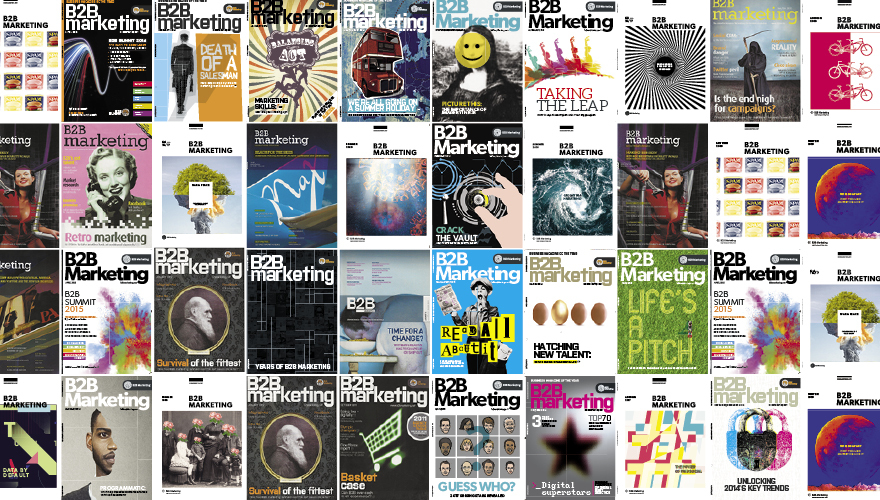
An ode to a publication that shaped an industry
In this feature, Joel Harrison, editor-in-chief and co-founder of B2B Marketing, reflects back on the creation of B2B Marketing magazine and explains why it's time to end the magazine, and for B2B Marketing to move into the future.
1 April 2021 · Content, Creative & Campaigns
Integrate launches its Demand Acceleration Platform
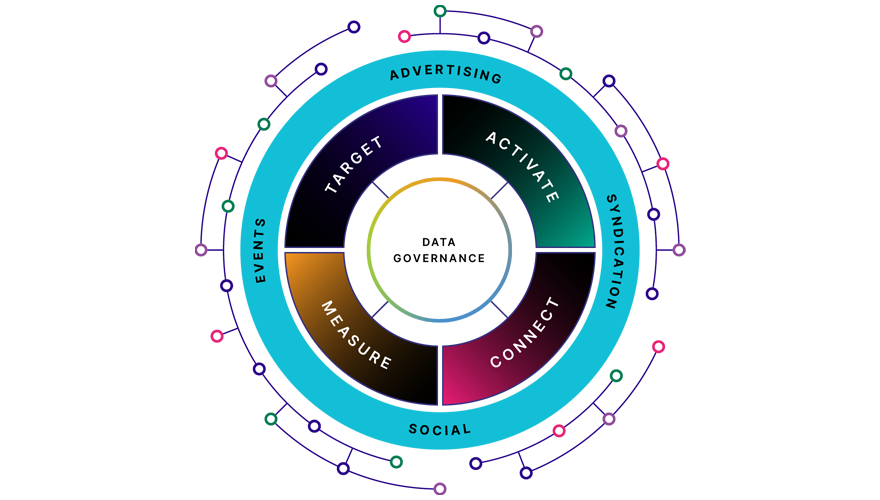
Leader in B2B precision demand marketing, Integrate, has announced its launch of its Demand Acceleration Platform to centralise and connect the B2B buying experience. Integrate’s DAP provides a scalable service for growth and enterprise organisations to drive omnichannel demand strategies, orchestrate intelligent buyer and account journeys, convert leads and accounts to revenue, and demonstrate marketing ROI. In addition, it also includes a built-in martech ecosystem that provides B2B marketers with access to integrated, best-in-class technology and performance solutions. Deb Wolf, CMO, Integrate said: “In today’s buyer-driven world, it’s no longer enough to implement only traditional demand generation or single-channel Account-Based Marketing (ABM) strategies. Today’s new world calls for the next chapter of B2B marketing: Precision Demand Marketing, a more precise, more connected, and more agile marketing strategy that meets buyers where they are and when they want. Integrate Demand Acceleration Platform enables marketers to put buyers and their process at the center of everything they do and execute on a PDM approach that creates buyer trust, confidence, and engagement to accelerate predictable pipelines with precision.”
1 April 2021 · Content, Creative & Campaigns

It's goodbye to the magazine, but hello to the community
B2B Marketing magazine has been the centre of our world for 17 years, but times have changed. We realise that print has been usurped by digital and the growing demand for real-time community connectivity. At B2B Marketing, we have adapted and grown our product and services accordingly, so, with a heavy heart, we have now published the final issue of B2B Marketing magazine.
31 March 2021 · Content, Creative & Campaigns

Our new community for B2B marketers has launched!
At B2B Marketing, we are proud to announce the launch of Propolis – a B2B community, built for and by the community.
25 February 2021 · Content, Creative & Campaigns


