



Articles
News, analysis and expert opinion from B2B Marketing — all in one place.
629 results · page 15 of 27

Major leadership restructure for MOI Global
In their push for growth in the B2B tech space, MOI Global has made significant new appointments to its leadership team over the past 12 months.
25 February 2021 · Strategy and Evolution
a B2B marketers guide to virtual events
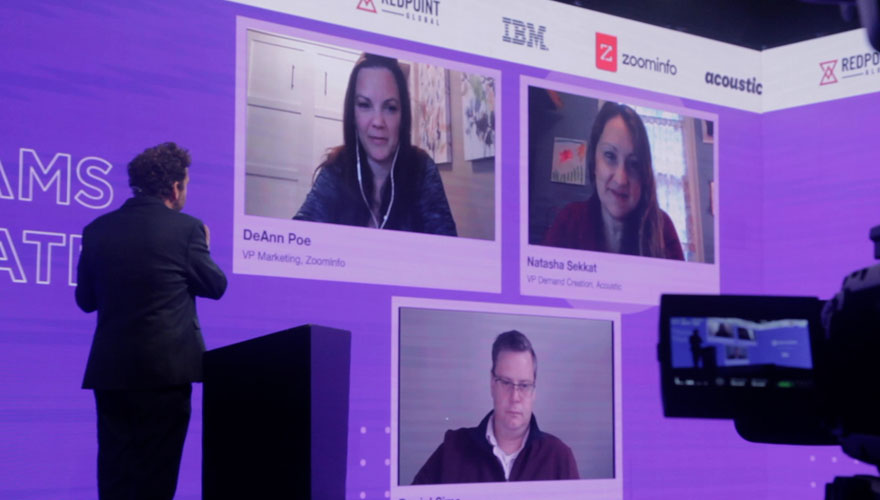
Given the ongoing pause on physical events like trade shows, customer roadshows or exclusive dinner roundtables, B2B virtual events are set to become one of the biggest channels for marketers in 2021. But many people (both marketers and customers) assume virtual events = webinars. But we’re not in 2019 anymore. This article outlines what’s changed. The webinar The trusty webinar is now well known to marketers. It’s quick, easy and gives the impression of activity to the rest of the business. But are webinars the best option for attracting and converting qualified leads? Or could they actually be an outdated, time-consuming and budget-sapping activity? Firstly, with Zoom fatigue a fact of life for the home worker, a webinar is really just a another Zoom call in the diary. And the restrictive one-way presentation format of a webinar doesn’t truly engage attendees, and hampers efforts to build credibility with buyers looking for relevant resources and information. Low attendance ratios versus registrations, added to low levels of interaction, equate to surprisingly low ROI figures, only exacerbated by the amount of time, energy and resources that go into organising them. To say nothing for the all-too-common technical issues. The virtual event grows up Necessity is the mother of invention and the coronavirus has meant a virtual event now covers a dramatically wide spectrum, to fill the void left by physical events. And they have got better and stronger in lieu of competition from their older trade show/exhibition big brother and sister! The hosted event A hosted event is typically managed on your behalf by a third party – usually a specialist events company which can provide all or some of these: its own events platform, event management services, professional speaker/presenter and even post-event sales support. In this regard you could consider a hosted event to be an “Event-as-a-Service,” where the majority of the event’s production is taken care of. Such events tend to have fewer delegates than a webinar, since they are focused on a higher quality of production and a more targeted audience. A virtual roundtable, such as those run by Meet the Boss, is a good example, creating a more focused event with more opportunities to discuss topics that relate to your customers. These debates focus on a single business issue and can be highly interactive, allowing every participant to share insights, ideas and pain points. Such events are similar length to a webinar – usually 90 minutes – but the tighter content focus and higher production values deliver a far better experience for delegates, and significantly higher returns for the sponsor.
23 February 2021 · Content, Creative & Campaigns

Publicis Groupe UK acquires Octopus Group
Publicis Groupe UK has announced that it has acquired Octopus Group – a B2B marketing specialist agency.
16 February 2021 · Content, Creative & Campaigns
MSQ launches global business agency MSQ B2B
MSQ has launched its new business agency MSQ B2B and is aligning nine of its agencies to offer “a unique business-to-business agency model providing end-to-end creative, tech and data-led marketing capabilities”. MSQ B2B will bring together expertise from across the MSQ group, a community of agencies that each offer best-in-breed capabilities and proven award-winning experience working with B2B brands. MSQ B2B pulled together 800 people at nine agencies across 12 offices globally. The nine agencies include: Freemavens The Gate Holmes & Marchant MMT Digital Smarts Stack Stein IAS Twentysix Walk-In Media The agency will be led by SteinIAS chairman and chief client officer Tom Stein and former Gyro CEO, Kate Howe, the executive director of MSQ. MSQ B2B was also recently ranked 5th globally in the 2021 B2B Marketing Agency Benchmarking report and took one of two top spots in our B2B Marketing’s Top 95 UK agencies with Edelman sitting next to it respectively. Kate Howe, Executive Director of MSQ, said: “This is all about new ways of partnering with brands to drive business outcomes. We understand clients need flexibility and transparency and we have significant experience working with clients this way already, including joining them in-house for extended periods of time. By joining-up all of our B2B expertise we can deliver consistent and connected customer experiences across every touch point in the journey, helping marketers and brands behave with the empathy, coherence and integrity they need to thrive in the digital economy. Customers don’t experience your brand in a silo so why manage it that way?”
16 February 2021 · Content, Creative & Campaigns

How sustainability will help enable business growth
The new year marks a time for brands to shift into a more optimistic gear. It is no surprise that we are all Covid-fatigued and looking for positive change in 2021. The good news is that there is a lot to look forward to.
25 January 2021 · Content, Creative & Campaigns

What 15 years of B2B case study interviews have taught me about your audience
David McGuire of B2B content writers Radix Communications reveals three surprising truths about your next customer.It’s a privileged position, writing a B2B case study. Not only am I entrusted with my client’s own client relationship, but the customer will often take the opportunity of talking to a third party to open up, and tell me things they would never say to a vendor direct.As a result, every case study interview makes me a better writer. It lets me hear how customers really talk about their work, and how industry jargon gets handled in the real world. But more importantly, I get to understand how they reach buying decisions – what they care about, and how they really feel about the brands they use.And after maybe a couple of hundred case study interviews, I can reveal there’s one clear pattern: the story is almost never what you thought it was.You have a story in mind. The customer’s reality is different.The best case study process includes an initial background call with the relevant account manager, so the writer can gather all the basic details – the account history, what was bought, etc. – in advance. This lets us focus the interview itself on questions only the customer can answer.At this point, a story might start to suggest itself. The salesperson, after all, should be in a good position to understand why the customer reached the decision, and the benefits the product or service have brought.Indeed, the account has often been chosen as a case study because the narrative seems to meet a marketing need – perhaps illustrating the importance of a certain feature or approach.But when the interview starts, all bets are off.And usually, the real reasons the customer made their buying decision are less clear-cut – and more based on gut feel – than you might have hoped (especially if you have a new feature to promote).
18 January 2021 · Content, Creative & Campaigns

A look into 2021: Reintroducing physical events with Chris Wickson
With the vaccine roll-out underway, Kavita Singh spoke with Chris Wickson, general manager, EMEA at Integrate, about what 2021 might have in store for physical, hybrid and virtual events.Reintroducing physical eventsPhysical events are what most companies are familiar with, so it makes sense that they might be itching to get back to them – especially with the vaccine now being administered.In August 2020, Integrate conducted a research study with 500 senior B2B marketers across the US and UK to uncover the impact of coronavirus on event strategies this year and how this will shape 2021 plans.80% of B2B marketers were expected to run or participate in hybrid events in 2021. Of the 80% of marketers, 32% suggest they’ll return in Q1, with another 29% in Q2. Chris Wickson says they're currently living in a particularly fast-paced environment as he reflects on some of the results.He says: “The thing that stuck out to me was that there was a real confidence when in-person events would be returning. People were by predicting Q4, but we also had a significant number of people predicting Q1 and Q2 for 2021. I think the reality is that it’s pointing toward the second half of this year from safely being able to get back to in-person.”So how do we re-introduce them, and what can we do in the meantime?Chris mentions that there are events happening in other parts of the world, such as the US and Asia, and they are setting the precedent for safely running physical events.Chris says: “I think there will be a lot of waiting, watching to see what the big organisers do seeing how other people are tackling it, and learning much like in 2020 with virtual events – which is looking around and seeing what other people are doing for what works and what doesn’t work.”
14 January 2021 · Content, Creative & Campaigns

Why marketers should know the difference
With more than 300 billion marketing emails delivered every day, savvy brands across the globe are upping the ante in order to achieve the desired cut-through they require from their digital comms.
8 January 2021 · Content, Creative & Campaigns

10 microaggressions to be aware of at the workplace
The Black Lives Matter Movement in 2020 was a powerful moment for many and it has opened up conversations regarding inclusive culture especially in the workplace. Here, Kavita Singh breaks down 10 common microaggressions that can cause harm in a work environment. Late last year, Logz.io’s director of field marketing Tina Morwani wrote a blog for B2B Marketing calling for brands to take a stand in a predominantly white business sector. One thing she mentioned was watching workplace language, especially when it comes to everyday microaggressions marketers might be unaware of.She says: “Microaggressions are daily indignities perpetrated against people because of their affiliation with a marginalised group. They’re psychologically harmful, but also small, cumulative, frequent and often unintentional with much broader social implications – the normalisation of discrimination.”Here, we broke down 10 common microaggressions you might’ve heard or said yourself, along with some insight on why it’s harmful language.“Where are you actually from?”: Asking where someone is from and where they’re actually from are two different things. The focal point shifts to the way someone appears. Tina says: “The effect in which a person is constantly reminded that they’re not like everybody else is deeply problematic, because it places a taxing burden on them to police their own appearance and behaviour, taking energy away from many of the things they want to pursue in life. Microaggressions keep you off balance, distracted and defensive.”“Your name is difficult to say”, or “Can I call you (nickname)?”: If someone tells you their full name, learn it. Don’t try to come up with a shortened alternative or demean the name by saying it’s difficult to pronounce. If someone does have a difficult name, it’s perfectly okay to ask how to pronounce it.
8 January 2021 · Content, Creative & Campaigns

An interview with Susanna Kempe, our new chairwoman
At B2B Marketing, we are pleased to announce that we have a new chairwoman! So, just who is Susanna Kempe, what attracted her to the role, and what's her vision? David Rowlands, editor, spoke with Susanna to find out.
22 December 2020 · Content, Creative & Campaigns

Write like a professional copywriter (with none of the effort)
David McGuire of Radix Communications shares seven quick tips B2B copywriters know, that can make you a better writer too.Every time I deliver a B2B copywriting course, I’m amazed how quickly a few simple tips can make a real difference to the effectiveness of someone’s writing. Sure, the structures and approaches we share are valuable, but invariably it’s the little nugget of an idea that sticks with someone, and makes them say “I’m going to use this at work tomorrow.”I was reminded of it at the UK’s copywriting conference. A virtual amphitheatre of experienced, professional writers, and we kept coming back to the basic principles of the job – simple changes that have a big impact on anything you might write.And I wondered – if I jotted a few of those principles down, would that enable you to get some of the benefit of a career in B2B copywriting, without having to spend all those years writing ebooks and blogs? There’s only one way to find out.So here are seven tricks most copywriters know. Try them for yourself…1. Make the first words countThe single most important copywriting skill you can practise is to craft a good nutshell paragraph, summarising the most important thing you have to say – and making the reader care enough to read on – in the first five seconds.Every B2B decision-maker is busy, so ask yourself what they’d learn if they only read the opening two sentences. As a bonus, you’ll have a clearer idea of what you’re about to write – and you’ll have no space to start with nonsense like “In today’s fast-paced digital world…”
21 December 2020 · Content, Creative & Campaigns

12 predictions B2B marketers are making for 2021
We’ve entered a digitally transformed era in marketing (whether we wanted to or not). With a year like no other, who knows what’s to come in the following months. With 2021 on the horizon, I asked marketers to tell me what their predictions were.Adam Leslie, Product Strategy Leader at Dun & Bradstreet“Our research and conversations with clients indicate that the coronavirus pandemic has disrupted marketing and sales activities in 2020. Teams have had to shift to virtual and online engagement– and those who have been slower to adapt and respond to the changing landscape have fallen behind. A renewed emphasis on digital means that having the right tools and insights in place is more important than ever. Instead of lamenting the dearth of events and traditional engagement, the most successful CMOs in 2021 are likely to be those who embed data and analytics into sales and marketing efforts to ensure maximum return on investment. It will be crucial to reach prospects at the right time, with the right information and the right product or service. We’re seeing a move towards quality over quantity as we move into a post-Covid-19 world.” Annabel Rake, CMO for Deloitte in the UK and North South Europe“The challenge for B2B marketers in 2021 will be balancing the physical and digital brand experience. In 2020, B2B marketing shifted fundamentally to virtual engagement; teams threw their weight behind new online events, webinars and podcasts to continue engaging and supporting their clients during lockdown.In 2021, while the vaccine roll-out offers hope of a return to physical events and meetings, many virtual experiences will remain. People have grown to value the flexibility online experiences offer - allowing them to tap-in to expertise from anywhere and often on-demand. How you embed the human experience in that will be key, and how you do that in a meaningful, blended way alongside physical experiences will be critical for B2B marketers in the year ahead.”David McGuire, B2B technology copywriter, co-owner, Radix Communications“As 2020 has shown, making predictions can be a pretty futile business. But I feel pretty confident in saying the ceasefire we saw earlier in the year – when marketers led their organisations away from cashing in on COVID – is now well and truly over.As we enter 2021, almost all the content being produced is about how to adapt to our newly-changed world of work. That’s no bad thing per se; these changes are real, and B2B audiences do need help and advice. But it does mean the content needs to work harder to stand out. And there’s a real challenge for writers to reflect the surreal nature of the present time, without underplaying the seriousness of a pandemic that has already claimed more than 1.5 million lives.”
21 December 2020 · Content, Creative & Campaigns

Cybersecurity trends, challenges and priorities in October 2020
2020 has been a wild, turbulent ride. Every industry has felt the pressure, but with a remote working economy leading to the emergence of new cyberthreats which put almost every organisation at risk, the cybersecurity sector in particular has been subject to intense demand and pressure.For B2B marketers, now is an important time to understand the current trends, challenges and priorities faced by organization’s in order to be able to assist their audiences.In Kingpin’s latest research, we review Q2’s Surging Security Topics by Region, Most Popular Cybersecurity Topics by Industry, Top Security Challenges, Areas of Focus and more – and reveal some interesting variances across the board.Check out our key findings in the infographic here, and if you have any further questions about the research- do not hesitate to reach out to hello@kingpincomms.com
15 December 2020 · Strategy and Evolution

An interview with Kirsty Dawe, CEO, Webeo
With the ABM Conference 2020 now having passed, David Rowlands, editor at B2B marketing, caught up with speaker Kirsty Dawe, CEO at Webeo, to talk all things personalisation.
7 December 2020 · Content, Creative & Campaigns

Delta Capita CMO talks adaptability, evolution and trust
Global managed services, technology solutions and consulting provider Delta Capita CMO talks future objectives.Leeya Hendricks brings 14 years of digital marketing experience to the role, and has held top marketing positions in businesses such as Accenture, IBM and Oracle. She is responsible for scaling channels and generating opportunities to expand the business as well as leading Delta Capita into a more strategic direction.Leeya said: “I’m incredibly driven. One of my goals when I first started working in the industry was to get different expertise in core areas of marketing and in that, I’ve really focused on being adaptable and comfortable with change. Diversity of skills allows you to become a more robust marketer. Being in different cultures allows you to have diversity of thought and grow in experiences.”Delta Capita recently launched a new strapline: ‘Reinventing the Financial Services Value Chain’, which positions how Delta Capita reinvents its customers' ‘value chain’, and considers the way value is added along the chain, both to the products and services they offer, and what Delta Capita can perform on their behalf. Moving forward, Delta Capita also aims to focus on sustainability, key partnerships and diversity and inclusion initiatives. Leeya also said that despite being in a pandemic, the company has been able to focus on their customers more.Leeya said: “It’s been bringing people closer together. That’s the interesting thing about me joining Delta Capita during Covid-19. You miss those coffee chats but it’s made it so much easier to be one company. We want to make sure we’re focused on our customers, and we’re given that opportunity with Covid because it helped build trust with our customers. Covid has provided a platform for authenticity and it’s so important in B2B marketing as it’s all about relationships, and without trust, there really is no commitment.”
27 November 2020 · Strategy and Evolution

Interview with Martin Simcock, Enigma founder
Following the news that Enigma has been acquired by JUST, David Rowlands caught up with Enigma founder Martin Simcock to discuss the challenges and opportunities that lie ahead for newly-formed Just Global.
13 November 2020 · Content, Creative & Campaigns
JUST and Enigma launch Just Global
US-based JUST has acquired internationally-stationed Enigma Marketing to create a new, independent, global and full-service agency: Just Global.
12 November 2020 · Content, Creative & Campaigns

Virtual event budgets expected to increase in 2021
Research shows that virtual event budgets are expected to increase from 20% in 2020 to 36% in 2021.In August, Integrate conducted a research study with 500 senior B2B marketers across the US and UK to uncover the impact of coronavirus on its event strategies this year and how this will shape 2021 plans. The results showed that both marketing budgets and virtual event budgets are expected to increase next year. In addition, 80% of B2B marketers expect to run or participate in hybrid events in 2021. Of the 80% of marketers, 32% suggest they’ll return in Q1, with another 29% in Q2. While virtual events have created opportunities for marketers, the results indicate that there are still challenges with engaging audiences, recreating networking opportunities and converting attendees into qualified leads. Chris Wickson, VP & GM, Events, Integrate, said: “It would clearly be an understatement to say 2020 has been a challenging year and in our B2B marketing world, events have suffered more than most. From the mass cancellations and postponements earlier in the year, the scramble to virtual and dramatic increase in webinars to the ongoing uncertainty around when we can return to in-person and of course, the looming spectre of hybrid.We’re now in planning mode for 2021 and forming a solid events strategy is a daunting task with the event landscape shifting fast and blurring lines between event formats. However, history tells us challenging times like these also brings opportunity to reset, rethink and reinvent. In 2021, I believe we’ll see events break out of the silo they have for so long operated in and marketers’ ability to leverage events, be it online or in-person, as part of their broader omni-channel strategy will finally be realised.”
30 October 2020 · Content, Creative & Campaigns

What gets measured gets done - and funded
For anyone in marketing, the struggle with measurement of programmes will be all too familiar. “How can you show me that your spend is having an impact?” Or to be reductive; “how do you measure success?” Unfortunately, measurement can be a thorny old issue: marketers want - and need - to get it right, but progress can be frustrating. Because measurement is hard. And while I’m not necessarily qualified to offer advice on measurement of marketing investment across the board, as far as Account-Based Marketing (ABM) programmes are concerned, let me reassure you that it is possible to crack the measurement ‘nut’, trust me. Being closely aligned with my customers on ensuring we deliver success which translates demonstrably for sales and marketing audiences means we *have* to be able to measure impact in order to secure future program spend, to underpin credibility for our campaigns, and to even win awards. Let’s take a step back for a moment. In the world in which I specialise, account-based marketing (ABM), we know measuring and communicating the impact and value of ABM investments is the predominant challenge for practitioners. Findings from leading industry advisory body, the ITSMA (Information Technology Services Marketing Association), and other benchmark research groups repeatedly demonstrates that ABM brings greater ROI than other types of B2B marketing. However, the majority of ABM-ers don’t feel they are effectively measuring their return on ABM investments. In a recent webinar we held on the topic, alongside global partner ITSMA and Fujitsu, a staggering 83% of respondents said they thought measuring ABM was either difficult (58%) or extremely difficult (25%) to measure, with one respondent saying they’d completely given up! So, how do we get past this?
26 October 2020 · Content, Creative & Campaigns

A primer on B2B go-to-market (GTM) strategy
Success in a new B2B venture or product release requires vast confidence and passion for the technology. This is particularly important in securing funding. In most cases, however, customers do not immediately grasp the need for your product. At the same time, buying decisions require approval from a diverse group of individuals, and there is uniform resistance to being “sold”. The solution to this daunting challenge is to abandon the traditional product-centric framework and resist the temptation to lead with product in favor of a more customer-centric GTM strategy. What does customer-centric mean? The optimal approach involves targeting the right accounts and contacts as precisely as possible, creating awareness, and successfully nurturing the buyer’s journey. Essentially, the goal is to deliver the right information to the right person at the right time. By employing a one-to-one versus one-to-many methodology, you will reduce customer acquisition costs (CAC) and minimise the sales cycle.
19 October 2020 · Go-To-Market

Report highlights how Covid-19 and behavioural trends will shape the role of the CMO
B2B Marketing’s latest research has highlighted how CMOs will be crucial in guiding B2B businesses throughout the pandemic and beyond. The research concluded that B2B businesses are shifting towards a marketing-led model overseen by a CMO with a commercial-mindset. The CMO role is already evolving to include growth responsibilities for 39% of respondents’ organisations, although it remains an emerging role. Some 28% of marketers believe the CMO currently has equal influence to other C-suite members but 90% believe this will grow significantly by 2030.The report also warns businesses of the risk of focusing purely on sales and short term goals, when they should be focusing on a customer-driven environment for further engagement and growth. Some other key findings from the report included:61% of B2B organisations have a CMO or equivalent in place, with more (7%) expecting to do so soon. The top three areas of a CMO’s focus will be: value growth, customer experience and brand development by 2030.Covid-19 has accelerated the pace of transformation, forcing organisations to re-evaluate and create solid strategies to build and retain customer relationships and react to changing priorities.The research was commissioned by integrated B2B agency The Marketing Pod, working with B2B Marketing to survey 140+ senior marketers and conduct in-depth interviews with CMOs or equivalents at B2B organisations during March 2020. Jodie Williams, co-founder and director of The Marketing Pod, said: “The CMO’s remit is expanding far beyond what has traditionally been thought of as marketing. It has never been more important for firms to have their finger firmly on the customer’s pulse, and marketing is perfectly placed to provide a 360 degree view of attitudes, needs, behaviour and the wider marketplace. Armed with this knowledge, the CMO role and influence is expanding as recognition grows that revenue and growth are intrinsically linked to a deep understanding of customer attitudes.“Covid-19 has increased the pace of change towards businesses becoming marketing-led. To pull through the pandemic and succeed, businesses are realising that short-term, sales-focused tactics may not be enough. Organisations are swiftly shifting to customer-centric strategies, focusing as much on engagement and retention as acquisition. This research shows that tomorrow’s CMO will spearhead this approach from the boardroom and bring together teams across the business to secure value growth and succeed.”
12 October 2020 · Strategy and Evolution

Why sales enablement is much more than just another buzzword
It’s no secret that buzzwords are rife in the world of B2B technology. New buzzwords are constantly appearing and finding their way into industry vocabulary, much to the delight of some and the annoyance of others.But what about sales enablement? Is it just one more buzzword used by businesses to try and sell another piece of software that doesn’t actually help salespeople? The short answer is a resounding no. Sales enablement is much more than a buzzword – and it’s here to stay.The only complication is that it can mean different things to different people, and its definition has changed significantly over the years. Before technology reigned supreme, sales enablement could be defined as anything that helps teams sell better. For example, a comfortable pair of shoes that allows sales teams to move faster and for longer than their competitors. Today, things are rather different.In the modern world, sales enablement is all about using content and resources in the most effective and efficient way possible, with the goal of helping sales teams complete more sales faster by shortening the buyer journey.
5 October 2020 · Content, Creative & Campaigns

The future of demand generation
The Covid-19 crisis and working from home has accelerated the ‘digital intent’ transformation, forcing B2B sales and marketing into a more digital world through faster adoption of digital technology.Companies have been forced to look at digital channels and communication techniques that they did not use previously. This has shifted the focus to digital marketing, requiring marketers to become more knowledgeable about their customers and prospects. It also means there needs to be a closer working relationship between marketing and sales.
30 September 2020 · Strategy and Evolution

Why B2B marketers need to address the lack of diversity
Inspired Human founder Perrine Farque hosted the diversity panel at our recent Leaders Forum. Kavita Singh shares the insights discussed surrounding the lack of diversity in the marketing sector.Along with Perrine, Cognizant’s Tricia Stinton, AppDynamics’ Ridgy Lemarier, and Omobono’s Jen Hennings all joined for an insightful discussion on diversity. Here were some of the issues raised.Diversity challenges in the workplaceOne issue that was raised right away was the idea of intersectionality. Tricia, who is Cognizant’s head of field marketing, brought up the fact that she is a woman of colour, experiencing different types of challenges related to gender and race. As a mother, she had to start expressing her need for flexibility and couldn’t stay at the office as late as some of her male colleagues.She also addressed microaggressions that she experienced relating to race and recalled a time when her colleague had returned from holiday.She said: “He came up to me and held his arm out and said “oh, I almost caught up with you in skin complexion.” He didn’t mean anything offensive by it, but he hadn’t really thought about the implications of it.”These microaggressions can manifest in different ways and make marketers feel uncomfortable in their own workplace. Omobono’s Jen Hennings mentioned that, from an LGBTQ perspective, Omobono found that, among the 18-24 demographic, over 50% identified as not straight, with about 60% feeling like they need to go back in the closet in the workplace due to the lack of representation and role models. That means 30% of the workforce don’t feel comfortable being themselves – and that’s just one aspect of diversity.
21 September 2020 · Content, Creative & Campaigns


