News, analysis and expert opinion from B2B Marketing — all in one place.
1,471 results · page 6 of 62

Marketing operations or MOPS, is increasingly the engine room of large-scale demand generation or account-based marketing (ABM). Once seen as something opaque and hard to identify, MOPS is having something of a purple patch. The increasing reliance on martech and CRM automation alongside the standardisation of ABM means that MOPS is now a crucial role in b2b marketing. Read on to find out more on marketing operations and how it supports the middle of the funnel. Not so hidden anymore It wasn’t so long ago that MOPS didn’t even have a proper name. You could Google it and not find a lot of information at all. Now however, most small to medium b2b businesses have at least a MOPS role, if not a team. So, how has this transformation come about? In essence, its all about data and effectiveness. Where the typical marketing skillset is seen in the creative or digital realm, MOPS is rooted in CRM systems, sales funnel analysis, sales and marketing processes and automation. Hidden? No, quite the opposite. Sometimes the MOPS role is the key interface between sales and marketing below the c-suite. It’s a tough job, but someone has to do it Perhaps once seen as a less attractive role in marketing or even sitting outside the function in an IT department where the database experts typically reside, MOPS is the foundation of a b2b marketing department. According to Gartner, “Marketing operations is the function of overseeing an organisation's marketing programme, campaign planning and annual strategic planning activities. Other responsibilities include technology and performance measurement and reporting and data analytics.” If your business is owned by private equity or your finance function has a significant degree of pull, they are looking for data and numbers to demonstrate ROI. MOPS is the answer. Not only that, but the drive for greater effectiveness needs good data and reporting to find those savings and leakages. As master of the marketing view of CRM, funnel metrics and crucially, attribution, MOPS is a key defence for the CMO as well as a vital lever to better sales and marketing performance.
11 May 2021 · Marketing Operations and Technology (MarTech)

If your sales team is constantly struggling to turn leads into tangible results, then you might want to consider using a sales intelligence tool, but which one? With tonnes of platforms to choose from, Kavita Singh spoke with Satish Sadasivan, chief mentor and advisor at Evolve BPM, to help single out the top ones. Satish says: “Sales intelligence must be one of the most researched topics in the new millennium. With the emergence of the new-age ‘connected’ buyer, close to 65% of buying decisions are made even before they contact a vendor/supplier for the required product or service.” The game-changer for sellers is how to identify a prospect early in their buying cycle and navigate them through the journey, while increasing the chances of selecting your product or service. The era of having calling lists with right party contacts and cold calling them for a possible breakthrough are long gone.” Satish also offers the top benefits to applying a sales intelligence tool to your business: Find the right contacts more quickly. Gain insights on your competitors, the buying habits of prospective clients, and their position in the marketplace. Automate and centralise data on both cold-call and established contacts. Increase general sales volume with increased automation and data accuracy. Improve sales efforts targeted at prospects that are more prepared to buy. LinkedIn Sales Navigator If your sales team is already using LinkedIn to connect with prospects, then LinkedIn Sales Navigator might be the obvious choice to turn to. With the LinkedIn premium version, the all-in-one sales intelligence tool allows you to use its massive network and advanced search features. Sales Navigator also allows extra InMail credits for outreach and even recommends qualified leads for you. SalesIntel For both affordable and accurate sales and marketing data, Satish mentions Salesintel as an ideal platform to utilise. Salesintel guarantees every direct dial number and email both be tested and re-verified every 90 days. With 95% accuracy and integrated insights, you’ll be able to sort data by tech stack, location, industry, intent and position. Satish comments: “Salesintel is a provider of B2B databases which is integrated with both Bambora (online payment software) and HG insights (tech intelligence tool). This gives the sales folks the opportunity to identify customers based on firmographics, technographics and intent. So, in lieu of focusing on 1000 potential companies or contacts, they can narrow down to the most relevant 50 buyers using the tools provided.”
10 May 2021 · Content, Creative & Campaigns
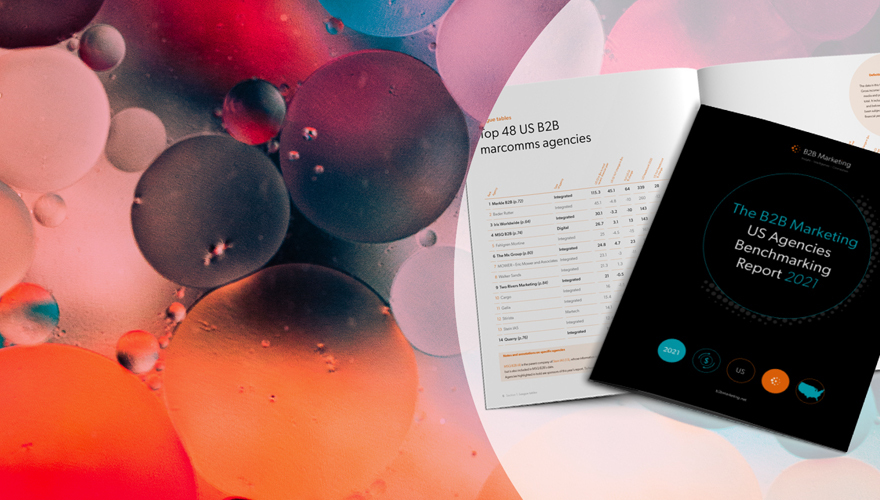
Each year, our US Agencies Benchmarking Report asks agencies about their income, headcount, challenges, focus areas and more. In this feature, David Rowlands, editor, takes a look at their replies, and presents a lay of the agency landscape.
30 April 2021 · Content, Creative & Campaigns
When it comes to aligning your stakeholders and technology, it’s not the technology that has limitations, it’s usually the people. Shelby Torrence, head of marketing for Deliverect, gave some top tips to creating this alignment at her Get Stacked 2021 session. Kavita Singh reports. Visualise what success looks like When creating a shared vision, Shelby says people often make the mistake of using a competitor or using a former employer as a model. However, this can create some ill will when compared to your competitors. A more successful alternative is using a partner or customer to create a shared vision. Shelby explains: “If you do it based on a partner and the customer, even if their business is not exactly the same, it helps people get behind you a little bit more because it's someone you have a good relationship with. The other piece I found that's really good is that partners and customers will share a little bit more insight with you.” A couple years ago, Shelby did this when her company had to launch a new website. There was a lot of back and forth on the mass and the requirements of building it correctly. They had a partner with an excellent website and when she spoke with them, she was able to use them as a model of success. They had shared their website, the agency they worked with, and the mistakes they made along the way. Another key to visualising success is to echo the shared vision constantly. Throughout the process, don’t just use it in the beginning. When creating documents for meetings, you don’t have to spend a lot of time on it, just be sure to reiterate what the end goal is. She says: “A lot of times it’s for stakeholders, it's more sort of the visual or a quick note of saying ‘hey, remember, we agreed that we were going to take a certain approach.’ So this kind of keeps things top of mind, it helps to keep people on the same page.”
21 April 2021 · People, Teams and Skills

Community is not a new thing. In fact, there’s a community (whether online or in person) for pretty much everything. But, until January 2021, there was not a community for B2B marketers. That’s right – a sector worth billions did not have a dedicated 24/7 365 space for its people to gather, share ideas, overcome challenges and help their organisations and careers grow.
7 April 2021 · Content, Creative & Campaigns
Our Get Stacked 2021 conference was another virtual hit, with our roster of B2B marketing leaders discussing everything from marketing technology, to operations, data insights, digital execution and processes. Kavita Singh reports on the highlights. Hosted by editor-in-chief Joel Harrison and Propolis Hive experts Shane Redding, Steve Kemish and Tony Lamb, the conference took place on event platform Hopin, with 40 industry expert speakers, 34 sessions overall, and the Martech Award winners announced in between. Keynotes In our opening session, we kicked the event off by sharing exclusive insights from our first Hive report Moving forwards with a marketing operations function. This Hive report is the first of many (one per Hive, each year). In it, we share how marketing teams can accelerate martech adoption, and assemble the right mix of expertise and processes to deliver business needs. The steps toward marketing operations maturity included: Examine existing skills and capabilities. Take control of your destiny in terms of tech, budget and processes. Ensure focus on the right day-to-day activities. To check out the report, click here. Integrate’s Chris Wickson followed up with a presentation about the shift to precision demand marketing and how B2B marketers can respond to our new era with advice on targeting in-market accounts, connecting data and buyer journeys across channels, activating buyers to fit ICPs, and measuring results to defend your spend. Some key tips to defending your spend included: Aligning with sales and finance to start deriving goals. Creating a deep understanding of conversion rates at a campaign level. Calculating ROI, CPx and CAC. On Day Two, PWC’s Laura Sloane, discussed how to create an award-winning martech team. Some key takeaways included to: Build a compelling vision which others can rally around. Lead from the front within marketing when rolling out martech transformation programmes. Invest as much time in change management as you will in technical enablement. Don’t be afraid to start off small and scale. Get the right skills in place to support your ambitions across the short, medium and long-term, .but competition is fierce.
29 March 2021 · Marketing Operations and Technology (MarTech)

In our recently published UK Agencies Benchmarking Report, David Rowlands spoke with a handful of this year’s highest performing agencies, seeking to understand how they performed so well, what challenges they foresee this year, and more.
24 March 2021 · Marketing Operations and Technology (MarTech)

As I write this (well ok, not literally as I write, my multi-tasking skills aren’t quite that honed!) I’m preparing my Get Stacked talk where I’ll be presenting highlights from B2B Marketing’s latest report, Moving forwards with a marketing operations function. In addition to this privilege I’ve also enjoyed being part of the research behind the report and the opportunity to learn more about marketing operations in practice has been illuminating. As I say in my introduction to the report, MOPs is much more than just marketing technology, although it’s certainly a central aspect of its remit. You’ll need to wait for the report itself as well as my session for the detailed research - I know, I’m a terrible tease – so sign-up now, registration is free! Accepting the importance of marketing technology to Marketing Operations though raises another question, which is what exactly is martech? On the face of it this would seem to be entirely obvious, comprising the tools we use in marketing to manage audiences, execute campaigns, capture response, analyse results and more. Where, though, do tools like work management (Asana, Monday.com, Teamwork), collaboration (Slack, Teams) or even marketing resource management (Allocadia) fit in? Well fair enough, while the latter is an obvious fit the others have applications beyond Marketing, yet what modern marketer wouldn’t consider them a core part of their tool kit? Hearteningly a number of comments that were included with responses to the survey that informs the report mentioned such tools, so clearly there is growing adoption already. There is a risk though in throwing the net a little too wide and as well as including technologies like work management that clearly have applications outside Marketing, also including generic applications up to and including Microsoft Office! This intuitively can’t be right and so I think we can draw the line a little further back, perhaps at tools that only marketers use to do their jobs? Still, there’s no reason that work management tools should not appear in the marketing stack schematic, but I don't think that means they’re martech as such. The entire discussion may of course be approaching pinhead-dancing territory! In a similar vein, martech’s little brother salestech is also starting to make its presence felt. While tools exclusively used by Sales are of course nothing new, there seems to be an increasing prevalence and focus on them as a category. This particularly includes Sales enablement and engagement technologies, which also came out in the survey responses. This leads to the question of who should be in charge of all this stuff – Marketing Ops or Sales Ops? Or is it finally time for the fabled and much heralded Revenue Ops to take their place and provide the holistic, end-to-end management that would seem to be required? One of the other things that struck me from the research – albeit somewhat anecdotally – is the number of people saying they’re using or adopting CRM and marketing automation platform HubSpot. Simultaneously competing as well as playing nicely with de facto industry standard Salesforce.com, HubSpot seems to be making headway with a number of businesses I’ve spoken to recently. A little bit of diversity certainly can’t be a bad thing. Well, perhaps some of these points and no doubt many more will come up in the discussion with my fellow B2B Marketing Propolis Hive experts Shane Redding and Steve Kemish together with B2B Marketing Editor-in-Chief Joel Harrison when we discuss the research after my talk. I know they will all bring a unique perspective from a strategic and digital execution standpoint and so I commend you to join us if you can!
22 March 2021 · Marketing Operations and Technology (MarTech)

In just a little over two weeks, B2B Marketing will be announcing the winners of our Martech Awards. Now in its third year, the Martech Awards celebrate all those transforming the B2B marketing landscape through marketing technology. With a total of 12 different categories, these categories range from ‘Best UK-founded martech vendor’ to ‘Best digital content programme’ to ‘Best use of marketing automation’. This year, we’ve also included three new exciting categories including ‘Best digital content programme’, ‘Most innovative use of martech’, and ‘Best use of martech for brand building’. Leading the shortlist is Lead Forensics with a total of three nominations including ‘Martech vendor of the year’, ‘UK-founded martech vendor of the year’ and ‘Best use of martech for demand generation’. With two nominations under their belt are twogether, WebInsights, CRMT Digital, Cogniclick, JTF Marketing, MarCloud Consulting and Webeo respectively. The 2021 Martech Awards winners will be announced at Get Stacked the B2B Marketing Martech conference on 24 and 25 March at 2:40 pm on both days.
8 March 2021 · Marketing Operations and Technology (MarTech)
Each year, the B2B Marketing UK Agencies Benchmarking Report reveals the fastest growers in the UK agency marketplace. This year, however, we’ve added a new category of high performers: the rising stars.
2 March 2021 · Marketing Operations and Technology (MarTech)

Customer experience management company Merkle B2B has announced its enhanced collaboration with LinkedIn Marketing Solutions and Madison Logic. The collaboration will give marketers better access to LinkedIn Marketing Solutions and Madison Logic’s capabilities, marketing activation and audience engagement and insights. LinkedIn Marketing Solutions’s B2B product suite aligns with Merkle B2B’s areas of focus: 1) marketing and media 2) data insights and analytics 3) technology 4) research 5) CRM 6) creative The cooperation will provide marketers with joint innovation and planning, custom data and insights, access to product alphas and betas, and certified teams and custom training opportunities. Account based marketing platform Madison Logic allows Merkle B2B to inform and drive client strategy with insights from Madison Logic’s proprietary ML.Data Cloud. The combined intelligence from Merkle’s own identity services and the ML.Data Cloud identify and prioritise clients’ most active buyers. Madison Logic CEO Tom O’Regan said: “The only way to reach today’s overloaded B2B buyer is through multi-channel digital account-based marketing and by enabling sellers with information about buyer intent. We’re delighted to partner with Merkle B2B to help our mutual clients make informed decisions about how best to reach buyers at every stage. We’re also giving Merkle B2B account teams our advanced ABM certification programme, so they know how to execute full-funnel, always-on digital campaigns.”
29 January 2021 · Marketing Operations and Technology (MarTech)

Kavita Singh spoke with Steven Cozens FCCA, co-founder of Think Beyond, on what CMOs should and shouldn’t do when slicing up their marketing budgets.Steven is an ex-finance director with 20 years’ experience from a 50-employee SME to a 130,000-employee blue-chip. In addition, he has worked with boards and non-finance teams, working alongside marketing, sales and commercial. With plenty of experience in finance, he gives some top tips for CMOs to consider when planning their marketing budgets.DO: Cultivate a relationship with your CFOThe CFO is typically responsible for everything from long-term investment strategy, to the annual budget cycle, to daily forecasts of cash flow. They often have to balance competing investments and overheads against the long-term view of profit. If they haven’t already, CMOs should be cultivating strong relationships with their CFOs. Steven mentions a huge reason this relationship often goes overlooked is because the business performance is already right on target, so, in other words, ‘what’s the point?’Steven says: “As is so often the case when things are going well, human psychology dictates that we may choose to ignore some of the negative aspects of performance. The efficacy of marketing investment and the effectiveness of marketing activity is one such area that many CFOs only have the bandwidth and strategic focus for when business performance begins to deteriorate.”However, even if you’re right on target, it is important to have a pulse for where the CFO’s head is at when making budgeting decisions.He adds: “In the absence of a strong relationship with the CMO, the CFO may have no other option but to reduce areas of 'discretionary' expenditure, such as travel and expenses, training, consultancy and marketing. The underlying reason is a lack of reporting and insight that ties marketing expenditure to profit.”
19 January 2021 · Marketing Operations and Technology (MarTech)

Nancy Harlan, senior director in account-based marketing at Qlik, explains how to use ABM to support customer success to drive expansion and renewal in a SaaS world.
8 January 2021 · ABM & Demand Generation

Everyone knows the four 4 Ps of marketing, but what about the four Ps of sales effectiveness? In a recent B2B Marketing webinar, Sonny Dasgupta, head of product marketing at Conversica, presented a new list of tenets by which to live by. So, what’s it all about?
4 January 2021 · Content, Creative & Campaigns

As editor at B2B Marketing, I quite often find myself conducting interviews with the best of the best in the world of B2B. At this year’s ABM Conference, however, Capita’s Kate Owen took the reins and interviewed her colleague Christa Norton, probing into the organisation’s success with ABM.
18 November 2020 · ABM & Demand Generation

Widen has been named Best Digital Asset Management Platform in Martech Breakthrough Awards 2020. Widen’s software enables brands to plan, create, manage, publish, and analyse content across channels. It also helps marketing teams to be efficient, agile, and focused in their efforts to build brands and connect with audiences. Most recently, Widen has also appointed Deanna Ballew as its first chief innovation officer. Its DAM+PIM solution has broadened Widen’s repertoire with tools for creating accurate, content-rich product listings for e-commerce sites.In addition to launching its DAM+PIM service, Widen introduced other offerings in 2020 including:Upload Experience v2.0, a guided process with improved upload profiles and a metadata importer.Related Assets, which enables users to search for assets similar to one they’re viewing.Design Services, a design team that helps customers optimise site functionality, UX, and adoption.New integrations for e-commerce syndication and through-channel marketing automation (TCMA).Jake Athey, VP of Marketing and Customer Experience at Widen said: “For us as a company, the recognition of the MarTech Award has been very rewarding. We are devoted to advancing our DAM+PIM product further so it wholly supports marketers in their quest for brand and product content management, and e-commerce syndication.“As with all industries, we expect to see further innovations in data management and analytics, AI and machine learning, and for Widen, this will enable us to provide the highest quality customer service, from consulting and implementation, to growth, via our software, which serves over a million users worldwide. And in the near future, we will be launching new online community offerings including the ‘Widen Connect’ and virtual ‘Widen User Groups’ to meet the demands of our customers.”
7 October 2020 · Marketing Operations and Technology (MarTech)

Sales enablement platform Seismic raised Series F round $92M led by global private equity firm Permira. The aim was to accelerate Seismic’s innovation, international growth, and marketing automation. This round brings the total raised by Seismic to approximately $270M to-date and values the company at approximately $1.6 billion. In addition to its primary capital investment, the Permira funds have also made a significant secondary investment in Seismic, becoming Seismic’s single largest shareholder.Additional new strategic investors include Ameriprise Financial and EDBI. Existing investors participating in the round include Jackson Square Ventures, Lightspeed Venture Partners, and T. Rowe Price. Last year, the company expanded its Seismic Storytelling Platform with the acquisition of Percolate. In the first half of 2020, Seismic achieved a 148 percent increase in active users over the prior year period, driven in part by the world’s shift to digital and remote work.Doug Winter, Seismic Co-Founder and CEO, said: “Permira’s investment in Seismic is a tremendous testament to Seismic’s market opportunity, team, and overall momentum. Permira’s experience investing in leading enterprise software companies will help us accelerate Seismic platform innovations, international expansion, and M&A efforts. We are also thrilled to have Ameriprise Financial, a valued Seismic customer, expand their relationship with us as a strategic investor. In addition, I’m excited to welcome EDBI, a leading global investment firm in Asia, to the Seismic family as we continue to expand our footprint in the Asia-Pacific region.”
29 September 2020 · Marketing Operations and Technology (MarTech)

If global lockdown has taught us anything, it’s that people really cherish their connections to the outside world. We’re being reminded of what is important – and connectivity is high on the list.The workplace, meetings, tradeshows, festivals – all of these have had to be conducted online, meaning B2B businesses have an opportunity to really cement their standing with prospects, and existing customers, via empathetic, relevant personalised digital experiences.Because of this, organisations need to be more agile. As lockdowns continue to be turned on and off, they need to respond quicker, with ways to engage that fit the moment. The pandemic has forced marketers to think of new, innovative ways to generate revenue, which has in turn pushed them to evaluate the technologies they are using in order to do so.For organisations that have already baked Artificial Intelligence (AI) into their technology systems, this is easier than for others. And, in a world where shifting sands might be all we have to base strategy on for the foreseeable future, marketing automation will increasingly become a must.The popularity of AI is growing, with the global AI software market expected to reach $23 billion by 2025, according to data from Statista. But with it being such a vast ocean of a topic, where do organisations begin?Here are four key tenets that those in the B2B marketing space should understand before dipping their toes in.
22 September 2020 · Marketing Operations and Technology (MarTech)

Professional development Martech consulting service Clevertouch Marketing has achieved Marketo Engage Specialisation in the EMEA region as part of the Adobe Solution Partner Programme. The specialisation is awarded to Marketo Engage partners that have at least eight Marketo Certified Experts (MCE), two Marketo Certified Solution Architects (MCSA) and two Marketo Engage: Sales Accreditations, along with numerous positive client feedback submitted directly to Adobe.In the past few months, Clevertouch has significantly invested in employee training, increasing the total number of Marketo Engage certifications to 20. This specialisation further expands the ever-growing list of Adobe achievements and recognitions for Clevertouch and emboldens the company’s reputation as the world’s leading Marketo consulting agency. Clevertouch CEO Adam Sharp said: “Marketo has been a big part of our DNA - from being the first winner of its International Partner of the Year award, to becoming the first partner domiciled in Europe with Platinum Partner status, we are now delighted to be recognised with this specialisation status. It means that customers who choose to work with us know they are being given the best Marketo consulting service levels and best advice available anywhere on the globe.”
15 September 2020 · Marketing Operations and Technology (MarTech)

Here is a reminder of the damning insights we’ve gleaned in this report: Only 13% of respondents consider their martech stack to be good enough.The number one issue with martech is the lack of staff and skills to fully-use the software. Most stack elements are siloed and not integrated within marketing, let alone to the rest of the company. How did we get here?The cause of this is a combination of various factors: A rapid adoption of martech without due consideration of necessary process changes and resource planning (trained staff). A stack approach, collecting shiny new objects to fill out a highly schematic and theoretical architecture without first considering specific business objectives and having a plan. Rogue and individual SaaS subscripting to a plethora of discrete marketing apps Allowing vendors to diagnose problems and blindly believing their solution prescriptions. If anything, this scenario has been exacerbated by a renowned and often celebrated churn in marketing executive positions, leading to a wind of martech change every time a new CMO or marketing director is installed and they promote their favourite software partners.
27 August 2020 · Marketing Operations and Technology (MarTech)
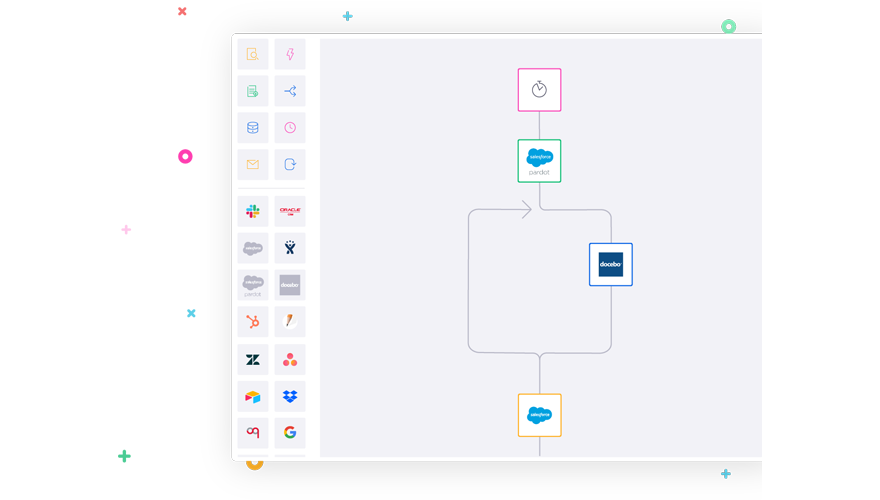
Marketing technology Demandbase has automated campaign experiences with Tray.io to qualify and nurture customers.Tray.io enables automators in any business role to build enterprise-class integrations and automation themselves in a low code environment. The Tray Platform’s flexibility and ease-of-use help Demandbase encourage marketers to complete its series of industry-leading online ABM certification courses. Demandbase has already observed that customers that complete its training have 2.6x higher customer lifetime value and are 12% more likely to renew. Using the Tray Platform to automatically track and engage with customers across their journey has resulted in a 38% increase in certification completions.
26 August 2020 · Content, Creative & Campaigns

Demandbase’s acquisition of fellow ABM-tech pioneer Engagio puts them on track to become B2B marketing’s next industry defining platform, following in the vapour trail of Marketo (and others). Success is likely to hinge on the close personal alignment and affinity between company principals Gabe Rogol and (Marketo veteran) Jon Miller
17 June 2020 · Marketing Operations and Technology (MarTech)

Dr Chris Boorman, marketing leader EMEA and APAC, Forcepoint shares the top 10 tips for making your marketing technology a success. Kavita Singh reports. Be data driven, not deliriousIt is important to stay on top of your data processes. Being in control of your data in the B2B world will be imperative to understanding what your goals are in the first place. If you can understand the pipeline and the conversion metrics at every stage of the funnel, then you can start looking at your data, and draw conclusions on what issues have developed.Chris used to work for a business automation vendor as its CMO a few years ago, and at the time, the company saw the conversion from web visitors to fulfils was less than 0.2%.Because of the poor showing, Chris brought in an agency to help the company rework all of the pages and how it presented the information to make it more engaging and emotive. It moved the corporate lingo to a human engagement perspective, and the result showed an increase from 0.2% to 7%. He says: “Believe me, there are always areas for improvement. Don't try and boil the ocean though, take it step by step, and issues with lead flow and data won’t be too tricky to spot. Identify what is causing them and focus on the technology, people and processes, and this will be the only way to get a comprehensive lay of the land.”
2 June 2020 · Content, Creative & Campaigns

With all the misconceptions surrounding personlisation in B2B marketing, Kavita Singh shares managing director at Webeo, Kirsty Dawe’s insights to discuss the importance of relevance. Personlisation (n.): The action of designing or producing something to meet someone’s individual needs. In B2B marketing, this means segmented messaging at scale.Kirsty highlights the ‘individual’ part of the definition because many marketers fail to tailor messages to the individual decision makers in their B2B campaigns.Kirsty says: “If personalisation is utopia, then how can we bridge the gap using technology so that, at some point, we will get to creating those great experiences for those individual decision makers within our campaigns.”
26 May 2020 · Marketing Operations and Technology (MarTech)





