


The number one go-to-resource for B2B marketers across the globe


News, analysis and expert opinion from B2B Marketing — all in one place.
1,029 results · page 6 of 43

With just over two weeks until the UK’s leading martech conference, Martechopia, Holly Gage, Okta’s senior manager, marketing technology EMEA, Holly Gage gave us an exclusive taste of her talk on talent in marketing operations. Lucy Gillman reports.
10 March 2022 · People, Teams and Skills

10 March 2022 · People, Teams and Skills

The UN defines International Women’s Day (IWD) as a time to celebrate and reflect on the progress made on women’s rights and a day to call for the end to gender inequality. With this in mind, we asked marketers to reflect on #BreakTheBias and what marketing can do to challenge gender inequality in the workplace. Here are their thoughts.
8 March 2022 · People, Teams and Skills

The UK’s leading conference on all things martech, Martechopia, is fast approaching. So, with that in mind, we wanted to give you a taste of some of the actionable insights you’ll get. Here are some highlights from Toni Allen’s fireside chat.
4 March 2022 · People, Teams and Skills

Lucy Gillman sat down with Ignite USA’s co-host Katie Martell to discuss the main topic of the event - brand. Lucy and Katie talk all things socio-political content from the dangers of so-called ‘brand authenticity’ to why you don’t need to produce your International Women’s Day piece.
25 February 2022 · Brand

This blog is the final instalment in a series of three on B2B vs. B2C marketing. You can read the first blog here and the second here.
1 February 2022 · Brand

1 February 2022 · People, Teams and Skills
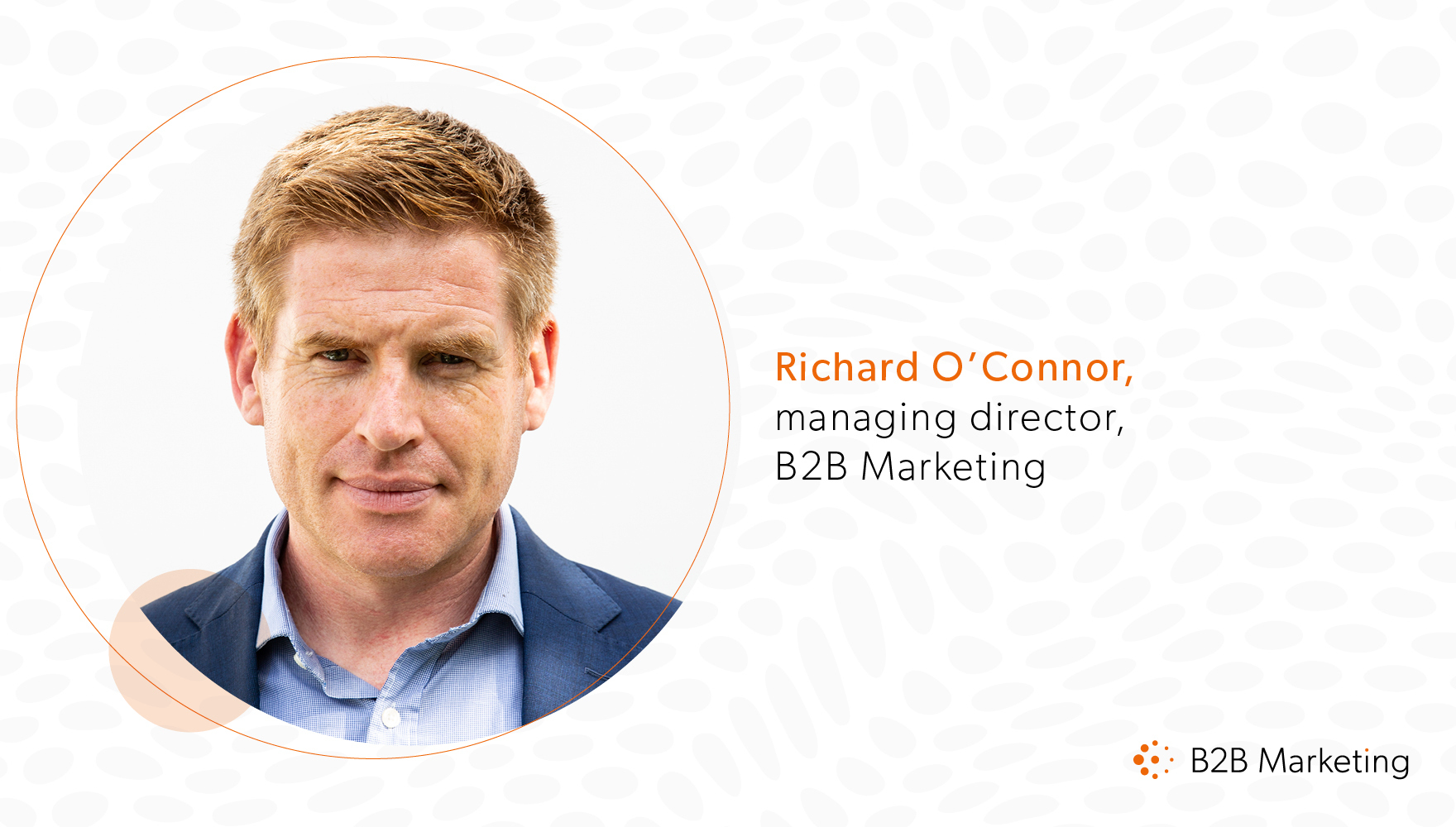
B2B Marketing has announced that it has appointed a new managing director, Richard O’Connor. This is the first time the position has been held at B2B Marketing since it was founded in 2004 by James Farmer and Joel Harrison.
26 January 2022 · People, Teams and Skills

Want to know the all-important new hires in B2B in December? Look no further!
21 December 2021 · People, Teams and Skills

Lucy Gillman, junior copywriter at B2B Marketing, spoke with Brand Symphony Marketing’s CEO, Jill Pringle on all things brand: how your brand identity should travel through your organisation, the key challenges facing marketing and the importance of keeping your brand fresh.
10 December 2021 · Brand

Thought leadership is a regularly used phrase but often misunderstood. A study from Edelman and LinkedIn explores how building trust drives demand, the importance of quality content and the impact thought leadership has on sales.
2 November 2021 · People, Teams and Skills

Global virtual events platform Hubilo has raised £92 million in Series B funding, bringing the total funding to £113 million in less than 18 months. One of the largest investments in event technology, this signals a revolution in the ways people connect and communicate in an era marked by uncertainty.
13 October 2021 · People, Teams and Skills

According to the Edelman and LinkedIn’s fourth annual Thought Leadership Impact study, the demand for B2B thought leadership has increased since the pandemic, but the market is oversaturated with poor quality content. The study is based on insights from nearly 3,600 business decision makers across a range of industries in the UK, USA, Canada, Singapore, Australia, and India.
7 October 2021 · People, Teams and Skills

Thinkific Labs Inc, a platform for creating, marketing and selling online courses, has announced this week two strategic appointments to its executive team. Henk Campher joins Thinkific as CMO, and Chris McGuire as CTO. The new executive appointments aim to drive marketing strategy and support strategic growth plans.
1 October 2021 · People, Teams and Skills

Demand for marketing automation software is expected to soar in the coming years, reaching an estimated global market value of $10,418.6 million by 2025. It’s not just enterprise businesses adopting automation platforms either. In 2019, more than half of the automation market in Europe was driven by small and medium-sized businesses. This means that now, more than ever, businesses of all sizes need marketers with the skills to manage automation technologies.
28 September 2021 · People, Teams and Skills

Often – and we’re guilty of this at B2B Marketing too – we spend a lot of time talking about marketing’s relationship with sales, but not with other departments. When David Rowlands, editor at B2B Marketing, recently spoke with Andrew Colwell, marketing director at Fleetsolve, Andrew mentioned that the relationship between the two departments has grown significantly closer over the course of the pandemic, and not without its benefits. With that in mind, David spoke with Andrew and his co-worker Liz Brocken, HR business partner, to learn more.
9 September 2021 · People, Teams and Skills

As marketers, we love getting creative. We’re often at our best when we’re using the right side of our brain to dream up new campaigns, produce thought leadership pieces or develop innovative digital experiences. And let’s face it, most of us would choose a brainstorming session over a resource planning meeting.
1 September 2021 · People, Teams and Skills

If you’ve been in alliance partner marketing for a while, you know the oft-discussed pitfalls. Chances are, you’ve experienced one or more of them: the lack of a shared vision, lack of resources, lack of openness, weak planning, weak metrics, poor communication…. The list goes on. These pitfalls are real—any of them capable of kneecapping your alliance marketing effort. But they’re not specific to alliances. They are fundamental failures that could hobble any marketing effort. In our decades of experience with alliances, we’ve seen marketers fall victim to several less obvious planning and implementation problems. Consider avoiding these seven, to boost your alliance marketing success. 1. Thinking that you and your alliance partner share common goals You might define an alliance partnership as two companies working toward common goals. But are your partner’s goals exactly the same as yours? Wouldn’t this description better define competitors? More accurately, an alliance partnership refers to two companies working together to achieve complementary goals—goals that are not exactly the same but complement one another and can therefore be achieved more effectively through collaboration. You might think this is just semantics. But it’s important to remember that your partner isn’t typically focused on your specific goals. Each partner needs to identify, plan for, and measure its own separate goals to ensure mutual success. 2. Neglecting to assess differences in customer journeys At times, partners with complementary offerings, target markets, and goals find that joint marketing and selling don’t work well. This can be due to differences in their customer buying journeys. For example, one partner may typically be far into the sales cycle before prospects are interested in talking with the other partner. (We’ve seen this occur between software companies and their computer hardware alliance partners.) Their customer journeys are “sometimes” not in sync. Differences in customer journeys don’t mean an alliance is doomed. But partners need to understand customer journey differences ahead of time and focus on the best opportunities for mutual benefit.
26 August 2021 · People, Teams and Skills

We often discuss the technical skills that every B2B leader needs to possess, but what about the softer skills and personality traits? We asked Cara Brennan Allamano, SVP of People, Places, and Learning at Udemy to outline these top essential traits. Coaching Employees are looking for mentorship and coaching today more than ever. On a monthly basis, our Udemy Business team analyses and releases the skills that employees are learning across our enterprise customers, and last month we witnessed a 288% increase in consumption of coaching skills. Similarly, career coaching and executive coaching courses were surging over 50% in consumption. Empathy Creating a culture of empathy in an organisation is always important. But empathy from managers is needed now more than ever as we emerge from a year when everyone’s lives were turned upside down. Being empathetic to what employees are experiencing lays the groundwork for a more positive and open work environment. Growth mindset For a manager overseeing a team during this era known as “the Great Re-Entry,” a growth mindset allows for mistakes to be made, all in the spirit of figuring out how to work in a new and better way. Communication Managers need to communicate clearly and constructively so employees are clear about team and company goals. But stellar communication isn’t only about speaking clearly. It’s about actively listening to your team members. Inclusion Managers should be intentional about creating a culture of allyship that is a physically and psychologically safe place to work. Ideally, their organisation is thinking far beyond filling quotas and genuinely working to create a broad and diverse workplace founded on a culture of belonging.
19 August 2021 · People, Teams and Skills
The Marketing Practice has acquired Omobono bringing together two B2B agencies. Supported by Horizon Capital, the monetary details about the acquisition were not disclosed. The deal aims to unite the market leader in ABM and demand generation with the brand and creative capabilities of Omobono. This acquisition is also the first step to integrating specialist B2B marketing businesses under the banner of The Marketing Practice. Over time, acquired agencies will work together to the benefit of clients as a single unit rather than within a network. The combined group has announced they will employ 250 people with locations in the UK, US, Germany and Australia. They will also continue to work with clients such as ServiceNow, Salesforce, Lenovo, SAP and Thomson Reuters. Matt Harper, CEO of The Marketing Practice, said: “From our first conversation, it’s been clear TMP and Omobono have a shared passion for the potential of B2B marketing, and for delivering outcomes for clients. We’ve known each other for many years and always respected one another’s strengths. I’m delighted we can now bring them together as one business.'
17 August 2021 · People, Teams and Skills

In this week’s episode, David Rowlands, editor at B2B Marketing, spoke with managing director, marketing for consumer industries at Accenture, Joseph Taiano about inclusion and diversity initiatives in B2B marketing. They dived into the difference between inclusion and diversity, what an audit committee is, and why marketers should care about diversity from a business perspective. 1. Hi Joe, thanks for joining me today! Before we really get into it, you’ve mentioned before that diversity and inclusion are actually two very different things. Can you please just give us an overview of what the differences are, and how the two interact with one another? Sure, thanks for having me. As you know, diversity and inclusion has become a buzzword and is referred to in different ways. Some say Diversity and Inclusion, others use the term DEI (Diversity, Equity & Inclusion, and others are starting to bring in the term belonging. Whatever you call it, the terms tend to be used interchangeably but they actually mean very different things. Diversity refers to a number; so having different groups represented such as race, gender, sexual orientation, etc. Inclusion on the other hand is a behaviour. Making people feel safe, heard, valued, and creating a sense of belonging. The easiest way to describe it is if you were having a dinner party, diversity is represented by who is at your table and inclusion would be making sure everyone feels welcome, heard, and seen at your party. At Accenture we flip the term and say Inclusion & Diversity. We lead with inclusion because we believe you need to have a culture of inclusion in order for diversity to flow. What some people don’t realise is that just because you represent a marginalised group, doesn’t necessarily mean you exhibit inclusive behaviour. 2. Obviously, encouraging diversity and inclusion is a good thing from a moral point of view, but how important do you think it is from a pure business perspective? It’s incredibly important in two dimensions, the first is the workforce and the second is from a consumer perspective. Coming out of this year with the pandemic and rise of racial injustice, people are increasingly questioning the work they are doing and want to contribute to a bigger purpose. This is especially true of the next generation of talent. People want to work for a company where their differences are celebrated, not tolerated. From a consumer standpoint, people are demanding authenticity and the days where corporations were silent on social issues is no longer an option. Axios recently did a poll on consumer trust and the government ranked last. Which means that consumers are now looking to the private sector to fill that void. With the rise of social media, companies can no longer control their brand fully and one bad incident can go viral in seconds. There is also greater transparency into what consumers can see nowadays. What you say, needs to match what you do. You can’t say you support a particular marginalised group but then have your executives make contributions to political campaigns that support legislation against that group. Consumers are watching and voting with their dollars. 3. B2C is arguably leading the way in terms of creating campaigns that incorporate clear D&I messages. One only needs look at Nike’s adverts with Colin Kaepernick as an example. What do you think B2B can learn from B2C in this context? The interesting thing is although we oftentimes look at B2C and B2B differently, at the end of the day they are both marketing and selling to people. In B2B, I think focusing more on inclusive marketing; representation of all forms of diversity in imagery and storytelling is a start. Working with creative agencies that share your values and also represent diversity. Not just in their work but with the teams they bring to the table. Being bold and a bit fearless when it comes to I&D is important. The Kapernick ad was a great risk for Nike but they stood for what they believed in even though they knew it would be unpopular with some of their customers. Knowing that mistakes will happen but inaction is not an option. It’s a journey and we can’t let fear of getting it wrong stop us from doing anything. Our employees, our clients and customers are demanding it in both B2C and B2B.
26 July 2021 · People, Teams and Skills

With content becoming increasingly essential to a sound B2B strategy, Kavita Singh broke down the difference between content aggregation, curation and writing with our very own Propolis Hive ambassador for Brand and Content Strategy, Scott Stockwell. So, what is your company currently doing, and why should you care? Creating meaningful content is essential in B2B marketing as it can keep audiences and prospects engaged, but what further creates trust is when that content is purely yours. There is content writing, and then there is content curation and content aggregation, so let’s break down the differences: Content aggregation is pulling data from multiple sources into a single piece of content without attributing where those resources came from. Content curation is choosing data to pull from, crediting them, and adding some additional original commentary. And then there is content writing, which is just that – it’s where you gather research through first-hand interviews and use your own additional thoughts to create rich content. Scott says: “So it’s kind of like a fashion analogy, it’s like writing is a tailor or seamstress making the actual thing, aggregating is bringing outfits together, and curating is being a personal shopper or a stylist, where with the customer, you know the merchandise, you go and find things that go together for that customer.” So if that’s the case, is content aggregation and content curation a bad thing? Not necessarily! Content curation can definitely be applicable for content pieces such as listicles, roundups and news stories based on press releases. However, when it is an issue is when it’s not attributed to the original author, which would be content aggregation. Scott explains: “Is content aggregation a bad thing? It’s a bad thing if someone believes they’re getting curation, and it’s a bad thing if you think it’s the equivalent of writing. But as a thing by itself, it’s pretty useful. You’re basically just fishing for stuff that’s going to meet your needs. But there’s no quality assurance, there’s no quality check. You also don’t know if it’s really going to be relevant.”
22 July 2021 · Brand

As we should all know by now, it’s critical to support your employees with their mental health. Kavita Singh spoke with Paige O’Neill, CMO of Sitecore, who broke down how managers can continue showing empathy and understanding towards their employees' mental health. Some 60% of adults said their mental health got worse during lockdown. In addition, about one in five adults have experienced some form of depression in early 2021, according to the Office for National Statistics. For the marketing sector specifically, it has been challenging for employees on all levels and, according to research conducted by Sitecore, it was cited that 79% of marketers said the past year has been the worst year for them in their careers. Paige says: “If you unpack why that’s true, we all had to throw our plans out the window, we had to go fully virtual. Marketers especially might have been more social or extroverted in the office. And yet, we had to figure out how to do it in truly unprecedented circumstances. It caused a lot of stress. It’s important to be mindful of that in the marketing world and going forward.” Be vulnerable yourself From a managerial perspective, it is essential to show your employees that it’s okay to be struggling on a personal level. However, talking freely about mental health issues such as depression, anxiety and stress isn’t normalised in the workplace as much as it should be. Paige says: “Sometimes managers are reluctant to bring it up because they think they might be trespassing on personal boundaries, and employees don’t want to bring it up because they don’t want to seem like they’re having a problem that might impact their perception of them in the workplace. You really have to create a safe space for employees to feel like it’s okay to express what they need at the company.” The key here is vulnerability. As a leader, it might be beneficial to be transparent about your own struggles as well. Whether it’s a cancelled holiday because of Covid-19, some frustrations at home, or feeling burnt out – all of these feelings are valid to express, so if you start sharing your own experiences, it’ll create a safer space for others to be vulnerable as well. It can be difficult to achieve that comfortable space, but there are some ways to open up the conversation. She continues: “For me, I’m relatively comfortable chatting and asking how are you doing personally, or do you need help with anything? It is just about taking a moment whether it’s before you cover the business matters or after, and just having that pause and saying: ‘How are you doing? Is there anything you need to talk about?’ Those types of questions create some space for an employee to come forward with things they might want to share.”
22 July 2021 · People, Teams and Skills
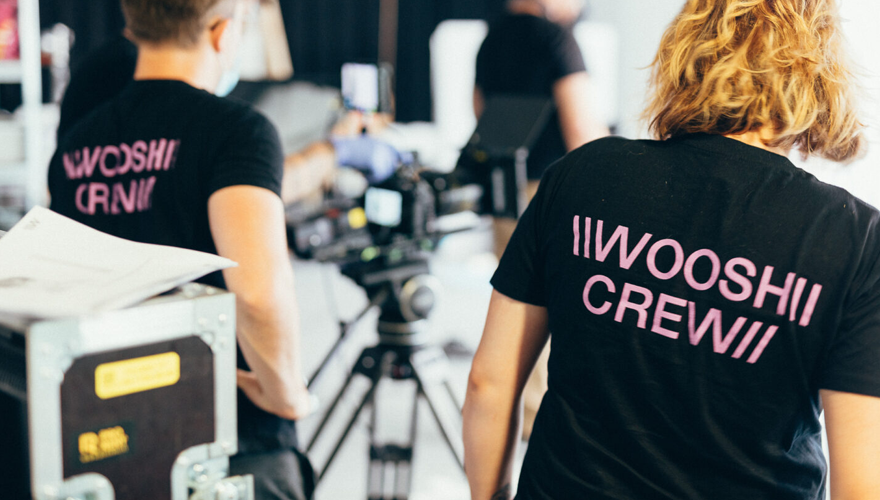
Video content and software provider for blue-chip companies, Wooshii, has received investment from YFM Equity Partners to continue its growth. Based in the UK and founded by CEO, Fergus Dyer-Smith, Wooshii aims to build out its sales and account management teams to enhance relationships with key customers. The business was first backed by YFM in 2019 with a £3.6m investment, and this latest investment grows YFM’s stake in the firm and provides further growth capital for the company. Wooshii offers clients the quality of a traditional production service with the additional benefits of a decentralised, global creative network, connected and enhanced by proprietary technology. This helps the business to provide clients with a video content management solution that scales with their needs, delivers international reach and makes video production faster and more transparent. Fergus Dyer-Smith, CEO of Wooshii, said: “The massive growth in video production over the last ten years saw an even greater acceleration in 2020 as businesses worldwide turned to online marketing with video being recognised as one of the most powerful communication tools. With lots of companies wanting to grow their output, Wooshii offers the benefits of a global network of production agencies and freelancers, able to make videos anywhere in the world, combined with sophisticated technology to connect that network with us and our customers. In addition to creating content, we also have the expertise to manage the process of running video operations and even to help evaluate a company’s video assets and so help them make the most of their content.”
12 July 2021 · People, Teams and Skills
