


The number one go-to-resource for B2B marketers across the globe


News, analysis and expert opinion from B2B Marketing — all in one place.
1,029 results · page 7 of 43

We see it being thrown around left, right and centre – the concept of becoming a ‘thought leader’. But what is a thought leader and how do we become one? Atlassian’s Ashley Faus breaks down the four pillars to becoming an influential and impactful thought leader. Kavita Singh reports. Before diving in, it’s critical to note that these four pillars work together in tandem. You can’t just be outstanding on one pillar and neglect the others. Chances are you’re lacking in at least one of these. Credibility The first pillar revolves around credibility. This is when you need to ask yourself: Do you trust what you’re saying? Do other people believe what you’re saying? Do they think you know what you’re talking about? From a tactical point of view, there are several ways to establish authority and boost your credibility. This means you have other colleagues coming to you for advice and expertise, and, when you give them information, they simply don’t question its validity. That is a form of trust that is earned over time. Credibility can be cultivated in many forms of authority. It can come in the form of a positional job title, experience, formal education credentials, licensing or certifications. However, it can also come from putting your company name behind yours. It can build the reputation of your company, as well as your own. Some useful tactics include sharing your point of view on ongoing projects and research, being the spokesperson on behalf of your company, and testing out new tactics and strategies for teams to adopt.
23 June 2021 · People, Teams and Skills

With so many different speaker sessions, Ignite USA touched upon many important topics, one of which was diversity. Here are some of the key diversity themes at Ignite USA that we need to continue talking about. Being an ally in B2B Being an ally in the workplace goes beyond the bare minimum, especially in B2B. Podcaster and author Shanita Akintonde started the conversation about being an ally in the workplace by explaining why it’s essential to care in the first place. She outlined some rules for marketers to use: Determine your attributes: create the perception of what you want people to take away from your company. Identify your target audience and audience needs: you can track analytical data about your customers, so bring that to the DEI space. Create and enhance your DEI platform: use steeped research to generate insights and a foundation for your DEI efforts. Creating a template can be incredibly helpful, especially for those that might be hesitant or even fearful of making or saying the wrong thing. Another concept marketers need to embrace is to aspire to greatness without fear. Talking about diversity can be scary, but, to be blunt, you need to overcome that fear, otherwise, you’ll never grow and be an advocate or ally. Shanita said: “What I want you to think about is what is the culture of your organisation? If I walked in, what would I feel like? What would I feel like when I walked into your space when I look around and see anybody that looked like me? Would I feel that people could relate to me? Probably not, because I'm a bit of an outlier.” These sets of questions establish why having allies is so important, as minorities and underrepresented groups are just that: the minority. Joseph Taiano, CMO of Accenture, continued the discussion on diversity as he shared his experiences as a member of the LGBTQ+ community. When he first joined Accenture, he joined an affinity group which brought together marginalised groups around a cause. At the time, Joe said he didn’t have many gay friends so he joined an LGBTQ+ employee resource group.
17 June 2021 · People, Teams and Skills

Marketers have always had to cope with complicated workflows, long hours, and high expectations. But the challenges of the past year have been unlike any we have seen before. Marketing organisations had to adapt to accelerated consumer demand for seamless digital experiences, solve a myriad of team collaboration issues, and pivot away from in-person events—all while continuing to prove ROI. Add on broader mandates around social justice and sustainability, procurement pressures, and of course, the pandemic’s toll on each of our personal lives, and it’s no wonder so many marketers are feeling the strain. For proof, take a look at the findings from a recent independent survey commissioned by Sitecore. We asked marketers to reflect on the impact of COVID-19 and their priorities going forward. The results show that: Marketers are stretching themselves to the breaking point. Nearly three-quarters of UK marketers (74%) said the past 12 months were the most challenging time in their career. Most (61%) considering quitting their jobs at least once. The challenges facing marketers are complex and diverse. In response to the pandemic, marketing organisations had to fundamentally change the way they engaged with customers. For many, that exposed gaps in training and experience, and seven out of ten of the marketers we polled (72%) said they have had to upskill. In addition, much of what was created over the past several months involved short-term fixes that now need to be cleaned up. Others have reported similar results. For example, a study by Merkle found that 93% of B2B CMOs work at organisations that have been negatively impacted by the pandemic. Even so, 52% have increased their marketing spend and 74% have changed their approach to customer content. Finding like these indicate that several pressure points are looming, and that it may take some time for marketers to regain a sense of balance. What can we do to support one another as we grapple with the challenges that lie ahead? In order for us to improve our well-being and continue to best serve our customers, marketers—and enterprises as a whole—need to: Recognise the impact that the pandemic has had on both the workplace and the marketing industry overall. Managing the uncertainty of the past year hasn’t been easy, and many marketers continue to feel anxious and overwhelmed. What’s more, these emotions may intensify as the workplace shifts again and new hybrid environments emerge. Check in with your team. How are they adapting to return-to-office policies? Acknowledging the issues we face and working together on solutions is the first step towards alleviating the stress that marketers are experiencing. Leverage technology. As mentioned earlier, many companies have had to change the digital experience they offer to customers. Investing in the right technology can make those gains permanent and make it easier to reach customers, deliver seamless experiences, and prove ROI. For example, a digital experience platform combines customer data, analytics, AI, and marketing automation capabilities to nurture customers throughout their journey with personalised content in real-time, across any channel. Technology like this enables marketers to provide better end-to-end customer experiences in a marketplace now dominated by digital selling. Put people first. A strong work culture impacts business performance. Enterprises must prioritise the employee experience and create workplaces where everyone feels included and valued. Marketing hiring is expected to outpace the labor market in the years ahead, so address any job satisfaction issues now—before they cascade downward. Support employees through mentorship. Mentors can serve as tutors, counselors, or coaches—or a mixture of all three—and formalized mentorship programs have been shown to improve retention and employee engagement. I know I would not be anywhere close to where I am today without the smart, talented women who were my mentors along the way
2 June 2021 · People, Teams and Skills

With May being Mental Health Awareness month, it’s about time we address the inevitable burnout and Zoom fatigue we’re all feeling. After reading Grace Beverly’s latest novel, Working Hard, Hardly Working, I decided to outline some of the top takeaways that you can use to work smarter, not harder. Coming from New York, I always had a mentality that we ‘live to work’, but, after spending a few years here in London, I’ve realised that it’s more of a ‘work to live’ mindset here – and for the better. Too many of my friends and family back home work the weekends, incredibly long overtime hours and have little time for a personal life. And, while it’s only human to get a bit overwhelmed with work and want to work a bit extra, it can lead to burnout and chronic stress over time. With more flexibility with work than ever, you and your team can start to figure out how to be more productive during your work hours. Set goals accordingly Take your standard to-do list to the next level, and start creating goal-setting prompts. These can be for both yourself and your employees to use especially during monthly reviews. But before you set a goal, be sure to ask yourself if it’s worth setting in the first place. Grace suggests evaluating the following first for yourself: A professional goal you’d like to achieve. A professional habit to instate. A personal goal. A personal habit. The feeling you want to achieve by setting these goals. This is for your personal use as you’ll be able to clearly outline your own, as well as your employee’s, long-term trajectory. An even better template Grace suggested can be useful for project management. For each project or task that you take on, you need to make sure they’re SMART: Specific: clearly defined. Measurable: criteria are specific enough to know when something has actually been achieved. Achievable: attainable. Relevant: aligned with your views of success and company trajectory. Time-bound: gives a realistic timeframe. This not only helps keep you accountable, but it can be really useful to use if someone on your team is being overly ambitious. Maybe one or two of the criteria are a bit off and, rather than disagreeing, you can point to the SMART template to say what works and what doesn’t work.
25 May 2021 · People, Teams and Skills

Most businesses have called it: they’re going to be adapting to a flexible working environment in the upcoming months. That means the days of working in the office five days a week are long gone (at least, for now). With that in mind, Kavita Singh spoke with our Propolis Hive Expert for Teams, Resourcing and D&I, Maria Cameron, to reveal some top tips to adjusting to what looks to be the ‘new normal’. Clearly communicate everything to staff Maria said: “The businesses that are getting this right are the ones that have a real clarity on how this is going to work, so it’s not left for people to wonder certain questions such as: are they going to return to the same desk? What are the expectations of me moving forwards? This is communicated very clearly. The expectation for a lot of companies is that you will come into the office when it’s suggested or required, but you won’t be expected to be there.” Providing very clear instructions to people takes away the worry of what it’s going to be like when they start coming back to the office. Companies are providing lots of information around cleaning regimes to ensure safety in the workplace. Back in the summer of 2020, we saw a slight return to the office, as companies were utilising safe work practices, such as providing hand sanitizers, strictly assigned seats and one-way signs to navigating the office. Some companies even used ‘back to work wristbands’, which are bracelets designed to state social distancing comfort measures. For example, if there are green, red, and yellow bands, they can indicate each employee’s comfort levels with red meaning they’d like to social distance and green meaning they are a bit more comfortable with people approaching them. This tactic might be used in the future, perhaps with the wristbands meaning something different, such as ‘vaccinated’ and ‘unvaccinated’, for example. These types of measures promote the two essential aspects to an employee’s return: their confidence and comfort being in the office. Make meetings all inclusive While marketers are still wrapping their heads around hybrid events, hybrid working is inevitable. That means that half of your team might be in the office and half might be working from home. When it was 100% remote for everyone, a sense of inclusiveness was a bit easier to achieve. Everyone was on the same playing field, doing post-work pub quizzes, company meetings and stand up calls from home. If your team is having a meeting, and half the team are in the office sitting at a board table while a few people are tuning in via Zoom, it can be quite awkward, especially if there are materials being shown or something being written on a whiteboard. Maria suggests that hosts really need to consider looking at behaviours at meetings. Should they structure them differently? Should the length of the meeting be amended? Another solution might be to make everyone on the same page, so either everyone tunes in virtually or all in-person. Maria says: “It’s about redesigning the teamwork framework for hybrid working, which is very inclusive to people and recognises that you might not have everyone in the office.” In many of these instances, it comes down to overcommunicating, specifically to your team. She continues: “That is such a big driver. Teams have the opportunities to ask for support, how their projects are going, and, in terms of how work is structured, there is a big ask for leaders to be prioritising their projects more strategically.”
25 May 2021 · People, Teams and Skills
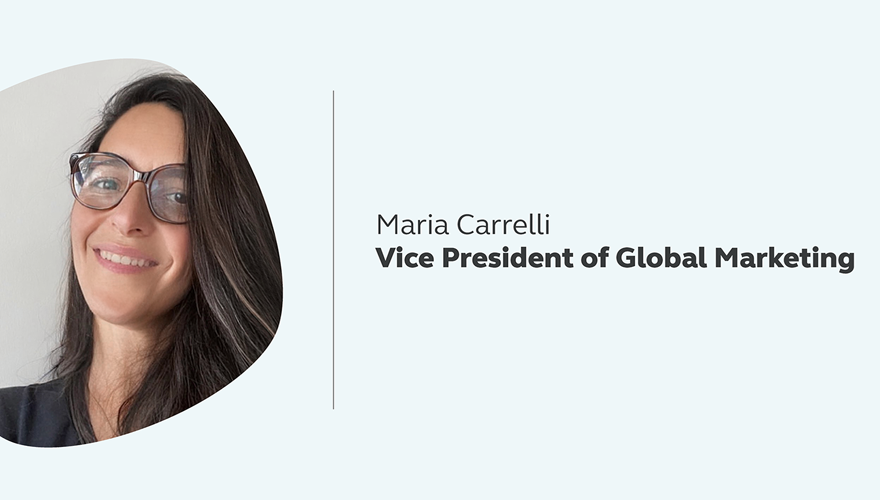
Cloud communications company, Infobip, has hired Maria Inès Carrelli to the board of directors as VP of global marketing. She joins in hopes of leading the company’s marketing strategy and implementation overseeing over 100 employees. She also aims to launch brand management initiatives and improve customer marketing capabilities across all regions. Her role will be critical in scaling the company’s growth in new and existing markets. With over 10 years of experience, Maria Inès joins from Selligent Marketing Cloud where she was VP of product marketing and analyst relations. Silvio Kutić, CEO at Infobip said: “This year we're adopting an exponential growth mindset with ambitious revenue targets that we plan to achieve through customer centric processes, organic growth, an enhanced partnerships programme and new acquisitions. Maria Inès’s expertise in driving awareness and customer engagement with the brand will be central to achieving this. I'm incredibly happy to have Maria Inès as part of the executive leadership team to help take us to the next big milestone.”
21 May 2021 · People, Teams and Skills

Over the past year, the pandemic has had substantial implications for B2B marketing with the absence of in-person events, such as trade shows. Due to this major impediment, businesses were forced to adapt and totally reinvent business networking strategies geared toward the growing online demographic. Today, digital marketing is the number one common denominator in every B2B strategy. But what does that really mean, and what’s next? Let's explore the core components that make up a compelling and engaging B2B digital marketing growth strategy in today’s evolving climate. Brand awareness is critical; let’s not neglect it. First on the list is brand awareness. It’s been the focus of B2C marketing conversations for the past year. How can brands ring authentic and true by showing their target consumer audience that they care about deeper cultural and societal issues, and are willing to put the time and effort toward making a positive impact? 2020 taught us that black boxes were no longer enough; lip service was overrated and it was time for action. But did that conversation happen on the B2B side of the equation? It should be a top concern. Strong brand awareness is usually linked to increased financial performance, higher sales volumes, and profitability. What many B2B businesses fail to realize, though, is that implementation starts from within.
17 May 2021 · People, Teams and Skills

Sales and marketing specialist Purechannels has expanded into North America after record growth and demand for its services. The move comes after Purechannels experienced growth over the span of 12 months, as they had recorded a 50 percent increase in client acquisition and tripled its staff headcount. Purechannel’s US headquarters will be located in North Carolina with channel executive Mike Ammann who will be leading the operations. Mike has worked for vendors such as Fujitsu, Dell, Hitachi and Quantum. Glenn Robertson, CEO, Purechannels said:“We’ve always served clients internationally from our UK offices, working with some of the world’s major IT vendors and channel companies. We provide clients with much-needed creativity and strategic thinking that is aligned to output and results – something we see that is often missing in channel campaigns. “As such, we realised there was a gap in the market for dedicated sales and marketing agency activity for the channel in North America. We believe we are the first agency of our kind to expand from the UK to the US.”
13 May 2021 · People, Teams and Skills

Intermedia Global has announced the acquisition of award-winning B2B marketing agency Junction. Using its strategic, creative and technology capabilities, Junction will assist with Intermedia Global’s data marketing solutions. They will now offer services that power marketing and sales for a range of B2B organisations including ABM programmes, mass-market approaches and much more. Junction is a B2B marketing communications agency that specialises in content, creative and digital marketing. They have also won several awards including best Marketing Agency and a number of B2B Marketing awards. Steve Kemish, managing partner of Junction said: “We are delighted to combine our services with IMG. Having partnered on several projects over the years, we know that our services are incredibly complementary. They share the same values as us and the whole team is looking forward to working as one. I personally relish the chance to lead the new organisation as CEO, working closely with Neil in his new role as Executive Chairman.”
21 April 2021 · People, Teams and Skills
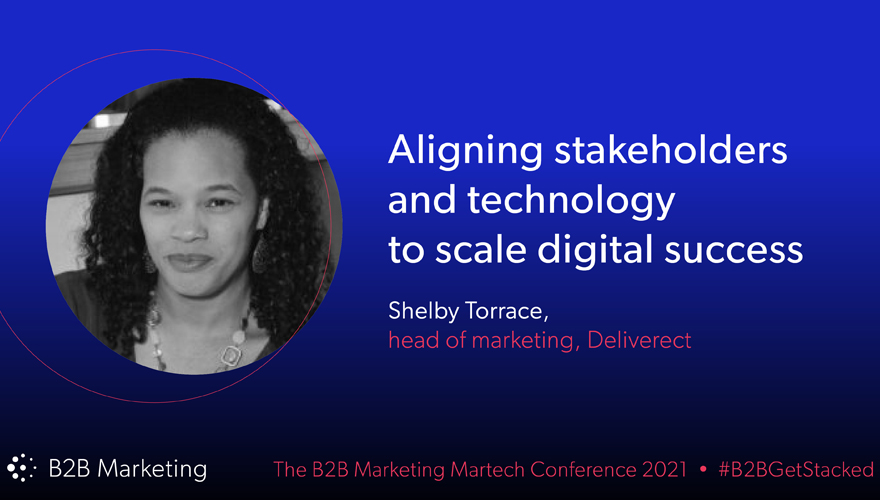
When it comes to aligning your stakeholders and technology, it’s not the technology that has limitations, it’s usually the people. Shelby Torrence, head of marketing for Deliverect, gave some top tips to creating this alignment at her Get Stacked 2021 session. Kavita Singh reports. Visualise what success looks like When creating a shared vision, Shelby says people often make the mistake of using a competitor or using a former employer as a model. However, this can create some ill will when compared to your competitors. A more successful alternative is using a partner or customer to create a shared vision. Shelby explains: “If you do it based on a partner and the customer, even if their business is not exactly the same, it helps people get behind you a little bit more because it's someone you have a good relationship with. The other piece I found that's really good is that partners and customers will share a little bit more insight with you.” A couple years ago, Shelby did this when her company had to launch a new website. There was a lot of back and forth on the mass and the requirements of building it correctly. They had a partner with an excellent website and when she spoke with them, she was able to use them as a model of success. They had shared their website, the agency they worked with, and the mistakes they made along the way. Another key to visualising success is to echo the shared vision constantly. Throughout the process, don’t just use it in the beginning. When creating documents for meetings, you don’t have to spend a lot of time on it, just be sure to reiterate what the end goal is. She says: “A lot of times it’s for stakeholders, it's more sort of the visual or a quick note of saying ‘hey, remember, we agreed that we were going to take a certain approach.’ So this kind of keeps things top of mind, it helps to keep people on the same page.”
21 April 2021 · People, Teams and Skills
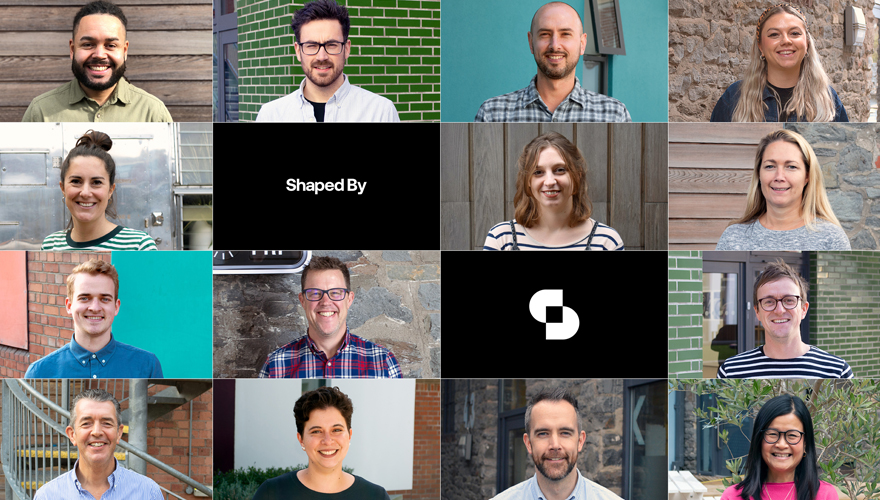
Creative agency Workbrands has relaunched as Shaped By, a creative studio for global technology brands. Shaped By is based on the idea that there is a direct link between the level of creativity invested in marketing. Shaped By’s brand launch is marked by a new website and social channels. Workbrands was founded by Nick Farrar and Steve Goss in 2005 with software firms such as Autodesk, Rubrik, and Nutanix. With its new name, Shaped By will continue to deliver brand identity and creative marketing that helps brands communicate their technology to their audiences more effectively. Nick said about the relaunch: “The marketing landscape has changed dramatically over the years. Now, the need for effective communication through great design has never been more important. As an agency we’re continually evolving to meet this challenge and felt it was the right time to recognise this with an ambitious and playful new brand.” “The Shaped By brand name and core concept reflects the fact that, as humans we are all shaped by our life experiences, our environment and the people around us: we are a constant work in progress. Similarly in a work context, the Shaped By team shapes the outcome of a project through our collaboration with clients.”
15 April 2021 · People, Teams and Skills

When you think about it, you spend more time at work (even virtually) than anywhere else during the day. So, imagine how uncomfortable it would be to not feel like your workplace is a safe environment for your ideas, work ethic and mental health. I’ve been doing a series of diversity and inclusion articles for B2B Marketing and one phrase I see being tossed around is teams being ‘psychologically safe’ in the workplace. Psychological safety is the idea that your team feels they can be themselves at work, that they can make mistakes and they don’t feel threatened. Harvard business professor Amy Edmonson cited psychological safety as a key attribute in high-performing teams. Amy did some research studying medical teams to see which type of teams perform the best. She was shocked to learn that the ones who made more mistakes along the way were the ones who outperformed the teams that were more cautious. To put that into perspective, imagine one employee who tip-toes around everyone and constantly has to walk on eggshells versus another employee who feels absolutely comfortable sharing their ideas, regardless of what others might think. This is why it’s so important for teams to feel psychologically safe. Employees need to feel like they can bring their whole selves to work so they can bring their most creative, innovative ideas, feel comfortable speaking at meetings and much more. Amy identified the following six traits of psychological safety: 1. Being true to their unique self Allow all employees to be themselves on both a personal and professional level because, if they’re not, it can hold them back in their work. According to a Deloitte DEI 2021 Report, about 61% of the workforce feel like they need to cover up aspects of their life in front of their colleagues. Be sure to check in and see how your employees are coping. If you’re being vulnerable and authentic to your employees, they’ll feel the freedom to be able to do the same. That also sets up a positive trajectory for good communication in the future. 2. Asking for help frequently In today’s virtual day and age, over communicating is never a bad thing, especially if it means your employees asking a simple question just to clarify something they’re unsure of. You want your employees to feel comfortable and confident coming to you. So when they do go to you with a question, always make sure you’re giving them the freedom to ask whatever they like – no matter how silly the question may sound. If you make them feel uncomfortable, the likelihood of them returning to you again is much slimmer.
13 April 2021 · People, Teams and Skills

In this week’s episode, editor in chief Joel Harrison spoke with Maria Jennings about PwC’s recent win for ‘Marketing team of the year’. They talked about her criminal psychology background, how to communicate effectively with your team during the pandemic, and the reason they bagged the coveted award. JH: So, let's start with you. Start telling us a bit about yourself. Have you always been a B2B marketer and have you always been a marketer? MJ: Yeah, good question. I am the example of the marketer that has been in 20 plus years of business development and marketing in professional services only. And, in fact, I have a little fact about myself and I've worked at numerous different professional services firms, including EY, Norton Rose, and now PwC, and most of my career has been spent in ‘More London’ in that little area by Tower Bridge. I’ve spent most of my career there. BD before pure marketing at Norton Rose, account management at EY. I’ve led account teams, so I’ve looked after clients in a key client role. JH: So you know this sector really well. Did you train as a marketer? MJ: Well, interestingly, much to my Dad's despair, when I went to university, I studied criminal psychology and he said, “Why would you want to do that? What are you going to do with that when you graduate?” But I was fascinated. I did Law A level and psychology, I was just fascinated by the topic, and I then graduated and started off my career as most people do as a bit of an admin role in a US law firm. It kind of went from there. I fell into marketing, and I studied and did some of my CIM many moons ago, and I guess you could say I’m self-taught. I’ve learned along the way and been working for some great leaders and over that time who I've learned a lot from. JH: Okay, your story sounds like it echoes a lot of marketers along the way, who've, maybe not come in on a kind of purist route but have got some great experience, which contributes to them being a great marketer in their roles. I have to ask you about criminal psychology. Can you use any of that in what you’re doing now? Is there any of that topic that aligns in your marketing? MJ: I mean, thankfully I don't work with any criminals so that's a good thing, and the psychology aspect is always fascinating. I think it definitely has helped how I analyse situations, how I talk to people and manage stakeholders. Some of my friends would say though that perhaps it didn’t do me any favours when I overthink things. JH: Well, I'm not going to be complaining about people doing that. I'm definitely in that camp as well. So tell us, what is it about marketing now and your career, that it really engages you about it as a profession? MJ: I'm really passionate about marketing, and I came from a BD background, which is a mix of business development and marketing. I have spent my time at PwC for nearly eight years now in a pure marketing role, but really, my passion is storytelling. And I think that at the heart of great marketing is great storytelling. Even if that’s in a lead generation campaign, your story still needs to be there, versus if you are positioning under a big brand advertising campaign for example. But yeah it's something I'm really passionate about. I was head of content and thought leadership at PwC for a number of years when I came to PwC. And even now, it's the bit that I love to kind of roll my sleeves up with and get my hands dirty. I enjoy looking at our messaging, narrative and how we position ourselves around language in the market. I love to write so I've got a personal little hobby in the background where I write in a blog. And I use that as a bit of an outlet really. I get my free therapy as I like to call it.
1 April 2021 · People, Teams and Skills

Modern, B2B Marketing’s number one ‘rising star’ in the UK Agencies Benchmarking Report 2021, has announced that Emily Grice has been appointed as strategy director.
1 April 2021 · People, Teams and Skills

Optimising the way sales and marketing teams work together and collaborate for go-to-market (GTM) success has long been a key consideration for B2B businesses. Aligning these two departments is vital to building a more powerful business engine and removing inconsistencies across the GTM process. However, achieving the desired level of symbiosis can be easier said than done – often having a direct impact on business success. For example, IDC suggests that the misalignment of sales and marketing can cost companies an average of 10% or more of annual revenue. Another recent report suggests that companies are 70% more likely to see revenues grow year over year if their sales and marketing teams collaborate effectively, with cooperation around strategic and tactical initiatives and KPIs being particularly beneficial. With employees working remotely and the pressure to drive sales higher than ever as a result of the disruption caused by Covid-19, empowering these two teams to work together more efficiently and effectively has taken on a newfound importance. And there are plenty of opportunities available for those businesses that are prepared to rethink the way they foster these internal relationships. Now is the time to break down any internal silos that may still exist once and for all. But how can B2B businesses successfully bridge the gap between sales and marketing and start driving GTM effectiveness? Cultivate a collaborative mindset The first step any business must take is to actively promote and encourage the idea of collaboration across the organisation. Internal alignment won’t just happen by itself; it must be nurtured from the very top of the organisation, all the way down to the bottom. Sales and marketing leaders should implement frequent and direct communication between their teams and define common goals to ensure that everyone is pulling in the same direction. As joint workshops and informal in-person gatherings aren’t possible at the moment, team leads must find other ways to share key information. Virtual meetups offer an effective alternative. Also, be sure to establish performance metrics and track against them. Although sales and marketing may be on different teams, everyone involved has the same objective – completing sales to drive business growth. This can all go a long way towards breaking down the barriers and misconceptions that sales and marketing may have about each other. With 46% of marketers feeling that sellers don’t understand what’s important to the marketing team, and 31% of sellers perceiving a disconnect between the two departments, overcoming these attitudes is vital to creating one cohesive unit. Amidst such ongoing disruption, cultivating a collaborative mindset across the organisation represents a vital first step towards true sales and marketing alignment.
30 March 2021 · Go-To-Market

When I was in university, I was the editor-in-chief for my local newspaper and was given my own separate desk from the other writers I worked with. I can’t tell you how many times an interviewee or employee would walk in and ask one of my male colleagues if they were the one in charge. As a female woman of colour, I always felt little frustrations like this on a daily basis, but never knew how to vocalise it. So, I just never spoke up for myself. This was back in 2016. The Women’s March had just taken place following Trump’s election as president. There was a LOT of work to do. Now in 2021, we are making headway, but there’s still so much work to be done. And as I've gotten older, I’ve been able to find the words to express my frustrations because of the work that other powerful women have set as an example. And as we celebrate International Women’s Day (yes, it’s today), I want to share four changes I’d like to see. 1) More men being allies in the workplace: Global agency LEWIS created a report in support of the UN’s HeForShe movement titled Women: Progressing Gender Equality. The report found that only four in 10 men are ready to tackle gender equality, despite the fact that 98% of women want men to be more involved. It’s not just up to women to support women – men should be advocating for their female colleagues regularly. The report also found that 18% of women who witnessed gender-based discrimination did not report it in fear of possible retaliation, which is why it’s so important for men to step it up when they see any discriminatory behaviours or exclusion in the workplace. Male employees were more than twice as likely as female colleagues to say that gender inequality is no longer an issue facing women. Being an ally means educating yourself as much as you can about the issue at hand. Blatantly saying it’s not an issue anymore without any evidence is shortsighted, and, if someone is making comments like that, they are harmful regardless of the intention. Chris Lewis, CEO of LEWIS, said: “You don’t need to personally be a victim of discrimination to understand why we need to fight it. It’s clear that men can – and should – do more to help. Our hope is that this research will help shine a light on the challenges women face to make all of us stronger allies in the fight against inequality.”
8 March 2021 · People, Teams and Skills
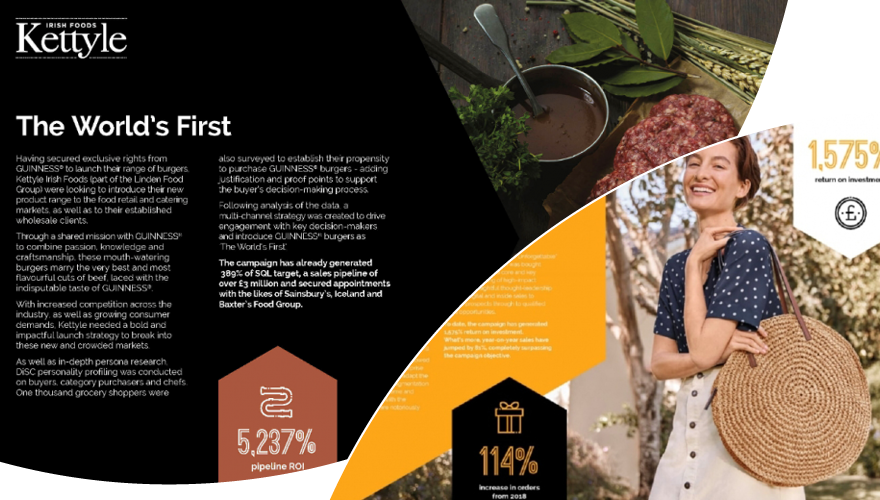
David Rowlands, editor at B2B Marketing, recently sat down with Charlie Nicholson, head of planning at Really B2B, and Kristina Haddrell, group account director for Really B2B. They dive into two of their most successful campaigns for M&S Corporate Gifts and Kettyle Irish Foods (part of the Linden Food Group). DR: Hi Charlie, thanks for joining us today! Do you want to introduce yourself and just say a little bit about yourself? CN: Yeah, of course! I'm Charlie, head of planning at Really B2B, which basically means that we look after the strategy side when we've got new prospects coming in, and work out what we think is the right fit of our product services for what their need is and matching it to that. Then, we continue to work with them, and they become clients of ours. So, we're constantly bringing in all of the new innovations, giving our clients the best service possible. DR: Brilliant, and Kristina, what about you? KH: Thank you, Dave! So I’m the account director at Really B2B. I've been with Really B2B for five years, and my role is really to oversee all the projects that we deliver for the clients we work very closely with, such as the planning, strategy and creative teams in order to deliver on those projects and keep everything running smoothly for everybody. DR: So Charlie, can you give us a little overview of the Kettyle Irish Foods campaign? What were you trying to achieve in the first place and what challenges were you facing? CN: Yeah, sure. So it all started back in 2017. Guinness was trying to grow their share of the food market and agreed a partnership with the Linden Food Group, which is the owner of Kettyle Irish foods the brand. They agreed to the partnership so that they could be the solo licensee of Guinness burgers. So, Linden decided to use their premium brand Kettyle to push that product to market, but, after about two years, they’d had little to no success, and not been able to prioritise it as a project with their account managers because they were very time poor and, frankly, they simply didn't have the evidence to justify a buyer taking on the new product, especially given there was a slightly restricted perceived target of a Guinness drinker. So, they needed to make a decision on whether they were going to continue to invest in this product or cut their losses. And that's when Maurice, the MD of Kettyle, got in touch with us. He knew about us and knew that we prided ourselves on our candour, so he could trust us to give them a frank answer on whether or not they should proceed with this. And so we went away, reviewed their challenge, and the market, and we thought there was an opportunity for them, created our framework to give it one last try, and I guess the rest is history!
2 March 2021 · People, Teams and Skills
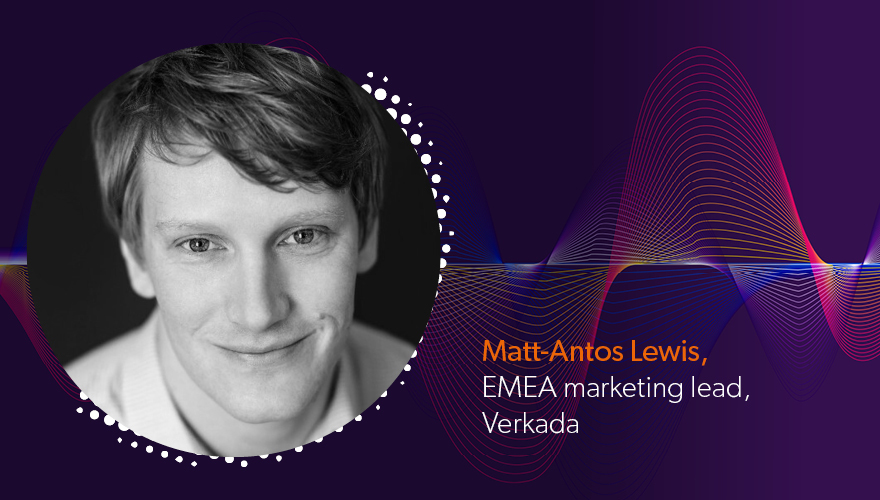
Lead scoring can be utilised to separate the strong prospects from the weak, but it can be tricky to implement a sound process. Kavita Singh spoke with Matt-Antos Lewis, Verkada’s EMEA marketing lead, to learn some top tips when using a lead scoring system. Break down the points based on ICP An ideal customer profile (ICP) defines the demographic and behavioural attributes of accounts expected to become a company's most valuable customers. For lead scoring, this includes fixed factors such as: Title Industry Size of the business Individual’s seniority Location of company. And behavioural factors such as: Email click-through rate Downloading content Attending webinars/events. Matt-Antos Lewis, EMEA marketing lead at Verkada, says: “Your starting point is going to be based on what you believe your company’s ICP is, but a lead scoring matrix should always be your living, breathing document. I think a common mistake some people make is to picture who they want and sort of try to fix their lead scoring to that specific threshold rather than necessarily reflecting reality.” Typically, businesses use a 1-100 scoring system (although some vary), where 50 is the threshold score where sales will reach out. When it comes to assigning points to every action, Matt advises marketers to really focus on those fixed factors. “Engagement is also important, but you could still sell to someone who is the right type of person who perhaps hasn’t engaged with you enough to trigger the lead score threshold. However, you might not sell to someone just because they’ve downloaded all your whitepapers or webinars, so I would say the scores related to who they are more important than what they’re doing.”
23 February 2021 · People, Teams and Skills

Crowdsourced data community for B2B salespeople Lusha, has raised $40 million in a Series A funding round from PSG, a growth equity firm. The funding will allow Lush to grow its sales community to make accurate data accessible to sales professionals through its technology. Yoni Tserruya, Co-Founder & CEO of Lusha said: “Although we are a bootstrap company, I still think we were able to succeed in terms of revenue and number of employees, and I think over the years, we’ve come to understand the business needs, so at the time, we needed more resources so we decided to get a financial partner to build a bigger vision and bigger brand. Salespeople need alternative ways to reach out with no events going on at the moment, and our data we provide them allows them to do that even when they’re at home.” Lusha’s cloud-based platform enables sales to share accurate contact and company information with one another with insights on the customers they’re targeting. In addition, it also recommends relevant prospects and organisations. Lusha’s community has expanded to over 520,000 sales professionals and 167,000 sales organisations. He further said: “Today, sales professionals only spend a fraction of their time actually selling due to limited access to data and the need for research. Our community approach is changing this reality, equipping salespeople with the information they need to reach the right person and know when to prioritise outreach. Even in a time of great uncertainty, with many working from home due to COVID-19, we are hearing from salespeople who are part of the Lusha community that they are having some of the best sales months of their careers. It is clear Lusha has become a vital part of the salesperson's toolkit.”
18 February 2021 · People, Teams and Skills

Ashley Friedlein, CEO and founder at Guild, breaks down community-based marketing and its impact on Covid-19 and the B2B sector. At a time when there’s more pressure than ever on marketing departments to show meaningful results, it’s getting harder and harder to maintain engagement with B2B audiences. While this is often attributed to the impact of COVID-19 and the inevitable budget cuts that came with it, the truth is, B2B marketing tactics were becoming old and tired long before the pandemic hit. Community-based marketing (CBM) can be the solution to shaking up stale marketing techniques, helping you win the attention, action and loyalty of prospects and existing customers. It also appears to be gathering momentum at just the right time, playing into that desire to feel part of something bigger that so many of us are currently missing. Defining community-based marketing To understand the concept of CBM, it helps to take a look at the meaning of ‘community’ in a B2B setting. It takes the suggestion of connectedness and people joining together, and puts it in a professional context, serving a marketing purpose. Therefore, we define CBM as bringing professionals together around a shared practice or area of expertise to create closer, and more valuable, relationships with prospects and customers. These communities are held together by a shared interest and mutual support, so if businesses can tap into that, they can begin having meaningful conversations and interactions with their audience on digital forums, networks and apps. Why is now the right time? Whilst online communities are nothing new, the past year has created the perfect storm for CBM to thrive, and we believe there are three leading factors: The acceleration of digital transformation alongside the rise of the ‘passion economy’ While sites like Fiverr and People Per Hour have been around for a while, platforms like Patreon and Substack offer a way for professionals to monetise their individual expertise at a rate that actually values their experience. This has led to the creation of a large number of micro-businesses, all centred around niche, professional communities. Meanwhile, larger companies are transitioning to a more modern way of working, from undergoing the process of digital transformation, to embracing a less hierarchical structure. The focus is very much becoming about moving away from a command and control approach towards more fluid communities of interest. For both micro-businesses and larger organisations then, the future will see a shift towards professional networks and communities.
18 February 2021 · People, Teams and Skills

The impact of 2020 was far-reaching, especially for sales and marketing teams. With business and consumer spending habits having dramatically changed due to uncertainty, as we move forward into 2021, how can businesses overcome this challenge, especially in the wake of three national lockdowns, a furlough scheme and a general lack of organisational spending? One positive outcome from the pandemic has been the realisation for businesses of the importance of technology to keep them afloat in troubled times. With innovative technologies such as data analytics and automation remaining key to customer loyalty and engagement, it’s clear that sales and marketing teams need to work together to better understand their audience, what products and services they want, and how best to sell to them. With this in mind, here are a few of the trends we foresee in 2021: Trend 1 – The future of B2B selling will pivot from solutions to insight To see successful sales growth, sales leaders must always think ahead, otherwise, they’re at risk of losing business to competitors. Moving at this fast pace ensures they are fully prepared to capture any opportunities created by rapidly changing buyer behaviours, which are starting to shift towards online purchases – a trend which will continue into 2021. In fact, Forrester predicts US B2B eCommerce will reach $1.8 trillion and account for 17% of all B2B sales in the US by 2023. Moving into the future, where buyers will be able to access the information they need about a product or solution online, the role of the salesperson is set to change to an ‘insight selling’ model. This will transform their role, making it less about striking a deal, and more about building a relationship, providing insight and sharing accountability with customers. Marketing teams will also play a role in this shift through the communication of actionable insight to salespeople in a clear, compelling and timely manner, allowing them to see where a customer needs support, all while linking back to relevant solutions.
16 February 2021 · People, Teams and Skills

According to the Office of National Statistics, the revenue of ICT companies dropped by a little over 30% in October 2020, representing the segment of UK business least affected by Covid-19. On average, 45% of businesses admitted that their revenues had declined, with just over 71% of accommodation and food businesses indicating that both revenue and profits had decreased. There’s little doubt that this affected spending power for companies across the country; faced with declining revenues and the unpredictable nature of the pandemic, many buyers were either unable or unwilling to commit funds to new projects. As the pandemic evolved, so too did the nature of the uncertainty – how serious would Covid-19 be, how many lockdowns would there be, and today, how quickly will the vaccines begin to make a difference? However, with the start of the new year, many organisations have committed to their budgets, which is good news for sellers. Unfortunately, one thing is for sure: with reduced revenues and increased volatility and risk, companies are scrutinising their spending more intensely than ever before, making sure that whatever they do buy is both fit for purpose and the best possible value. This scrutiny means more hurdles, hoops and competition for sellers everywhere. Buying by committee Historically, complex deals above a certain size have always been examined by a committee to make sure that the product or service in question is fit for purpose. According to Showpad research in 2019, almost a quarter (24%) of deals across all B2B sectors involved more than five people, although the Harvard Business Review (also covered on this blog) puts the average figure at 6.8 people. With the dawn of the pandemic, it’s not unrealistic to think that this figure may not only have increased, but that the thresholds for scrutiny may also have dropped. In other words, much smaller deals are now being reviewed as carefully as the larger ones. Before we look at how to tackle this – and it can be tackled – it’s also worth understanding how else buyers’ habits have evolved throughout the pandemic. Many organisations – even in buoyant sectors like cybersecurity – have made cuts and are trying to do more with less. This doesn’t just mean that staff have been furloughed or made redundant; it means that the remaining staff are expected to accomplish a similar level of productivity without their absent colleagues, often on reduced salaries.
8 February 2021 · People, Teams and Skills

Kavita Singh spoke with Avery Hennings, co-founder of the diversity and inclusion initiative at Omobono about making the recruitment process more inclusive in the marketing sector. Collect data and benchmarks At Omobono, the Diversity and Inclusion team formed back in August 2019 based on their desire to go beyond the efforts to include diversity training. At the time, the board felt like they could be doing more, so one of the first steps to approaching diversity was to start with a survey. Starting with an initial survey can be the first step to addressing any existing issues or concerns. At Omobono, the team surveyed employees on how the business wanted to learn more about as well as what formats they wanted to learn in. As expected, the business expressed a desire for much more than the once a year formal training approach. In addition to finding out what employees are looking for, you have an opportunity to capture a baseline of your business’s current levels of diversity, including gender, race, social identity, gender identity, age and background. Avery says: “The results we found were in keeping with the marketing industry as a whole, predominantly white, young and middle class. That’s a big part of why this initiative is so important, so that we change the face of marketing so that it is more inclusive and we’re not just hiring the same people time and time again.” Refine the application process As a first step, Omobono reached out to its recruitment partners to speak to them about CVs. Omobono uses Greenhouse, an application tracking system, which aims to mitigate bias, evaluate candidates fairly, and measure inclusion progress. The last update with the technology allows applicant names on application to be automatically changed. They wanted names, pronouns or any sort of gender marker to be removed from all applications, so that the person reviewing would be basing their opinions on merit rather than appearances or their own unconscious bias. To make sure language was also filtered, Omobono also recruited their internal teams to get them involved in the process as well. Avery says: “We have a strong representation from content strategists and copywriters in the business. We apply a filter to remove any gendered language or problematic language as well. There are also some tools available that allow you to do that automatically.”
2 February 2021 · People, Teams and Skills

With a reliance on digital communication, a strong wifi connection and endless emails to sort through, you might become prone to stress and anxiety. Here, I discuss some top tips to overcoming stress thanks to Miriam-Robin Linnemann’s tips. I don’t know about anyone else, but my first month back to work was wildly hectic. Just like the first day back at school, you expect to ease back in slowly with your first day outfit, new folders and the expectation that you’re just dipping your toes back in. But reality hit, and now you’re dealing with a wave of emails, meetings to reconvene on, and the workload you told yourself was ‘a task for your future self.’ The aspect that needs to change, the thing that will make 2021 infinitely more successful than 2020 is your mindset. I attended a LinkedIn Live session with The Female Lead on how to reduce stress, and it was enlightening just how all-consuming we can all be during work – to the point where our mental health takes a toll. Edwina Dunn, founder of The Female Lead, spoke with Miriam-Robin Linnemann about how to cope with stress coming into 2021. Miriam is a mental health advocate, founder of The Honest Talks, and former HR professional with a mission is to empower others to love themselves and their lives. Here were some of her takeaways. Take it one step at a time Writing lists down feels infinitely more productive than just letting all your tasks ruminate in your head. Put your thoughts to paper and create a list of tasks to get done. A more pressing challenge, however, is looking at that list and asking yourself “Okay where do I start?” Miriam advises to start with the smallest step and start with what makes the biggest impact. This can result in a colossal weight off your shoulders if one particular task is stressing you out. She says: “If there's about 20 tasks that are stressing us out, we can only do one at a time, and that’s when it’s really helpful to ask yourself what would make the biggest difference in my life right now? And actually, what's the really tiniest first step I can do to move towards what I want, and then take it?” One tip to figuring this out is to write down your list on the left side of a sheet of paper and then on the right side, write down the impact of accomplishing each task.
29 January 2021 · People, Teams and Skills
