



Resources
Case studies, webinars, reports, podcasts and videos from B2B Marketing, in one place.
Featured
Best practice briefing
A guide to overcoming the biggest challenges to becoming a commercial marketer.
A guide to overcoming the biggest challenges to becoming a commercial marketer.15,425 results · page 81 of 643
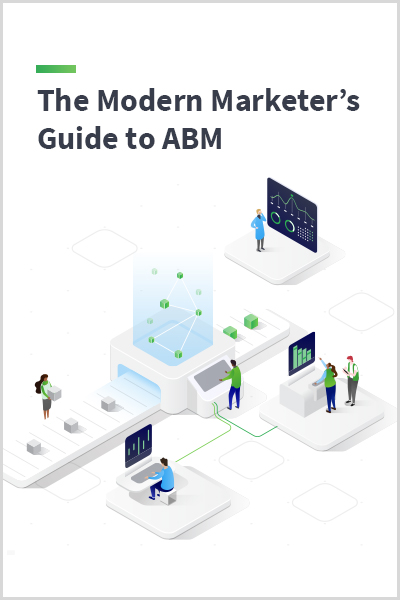
The Modern Marketer’s Guide to ABM
ABM success is within your reach! Follow Triblio's “Ready-Set-Go” framework to choose the optimal level of personalisation, messaging, and channels for each target audience.
24 May 2021 · ABM & Demand Generation

The 5 new rules of post-pandemic marketing Rule #2: Redefining organisational agility
We do love our buzz-words, don’t we? And, “agility” has to be right at the top of a marketer’s list. But, the challenge with a term or phrase being a “buzz” is that it can lose value and importance. When it comes to businesses being able to operate in and coming out of a downturn, “agility” becomes all that more central to success. Strictly defined, agility is an organisation’s ability to renew itself, change quickly, and succeed in a rapidly changing, uncertain, and turbulent environment. Agility is by no means incompatible with stability – in fact, agility requires stability for most companies. And, the flipside is also true: long-term stability requires agility. Let me say that again: long-term stability requires agility. Agility demands two elements. On the one hand, it requires a dynamic capability, the ability to act quickly – speed, responsiveness, nimbleness. On the other hand, agility needs stability, a stable foundation – an infrastructure, if you will – of things that don’t change. It is this stable backbone that represents an organisational springboard, an anchor-point which the company can rely upon when developing and implementing adaptive strategies to not only survive, but thrive in a rapidly changing environment. Many organisations that were already further along in their digital transformation journeys before the pandemic have effectively transitioned to a remote workforce with speed and agility, and continued operations with minimal disruption nearly overnight. Yet, even though the former by and large met the challenges of this crisis moment infrastructure- and digital transformation-wise, we need to recognise a pivotal element that has been fairly overlooked and that redefines agility far beyond the digital transformation – the true linchpin of the ‘organisational tissue’: the human being. As we move towards imagining a post-pandemic era, a management based on old rules - namely, a hierarchy that streamlines for uniformity, bureaucracy and control - will no longer be effective nor efficient. Taking its place is a more flexible and responsive model, built around four interrelated trends: more authentic and meaningful connection, unprecedented automation, lower transaction costs, and demographic shifts. To set up the organisation of the future, CHROs and other leaders should reimagine and strategise the basic tenets of the organisation. Emerging models should be creative, adaptable, and antifragile. As corporate purpose fuels audacious business tactics, “labor” becomes “talent”, hierarchies become decentralised team networks, and competitors become ecosystem collaborators. As a consequence, companies become more human: empathetic, collaborative, accommodating inspiring, and focused on creating an employee experience (EX) that is meaningful, enjoyable, and adaptive to the constantly evolving needs of employees. Research suggests that future-proof companies share 3 characteristics: they execute with purpose (they know who they are, and what they stand for); they operate with a focus on speed and simplicity; and they grow by scaling up on learning, development and innovation. Companies that execute with purpose benefit of greater likelihood to generate significant long-term value, which facilitates a better EX, increased employee engagement, and higher customer trust, which, in turn, lead to stronger long-term organisational performance.
24 May 2021 · Marketing Operations and Technology (MarTech)
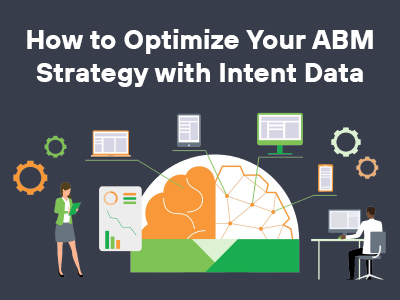
How to Optimize Your ABM Strategy with Intent Data
Learn what intent data is, and how you can use it to reach more high-value target accounts
24 May 2021 · Data and Insights
Implementing marketing operations with Karla Wentworth, Propolis Hive Expert
Martech is great, but a lack of time and resources to use these technologies in the optimum way is a common challenge. So why is marketing operations important in the first place?This week's episode features our very own Propolis Hive Expert in Marketing Operations, Karla Wentworth. Editor for B2B Marketing David Rowlands sat down with Karla to find out why implementing marketing operations is essential in B2B marketing, how to tap into its full potential, and what the first steps are to approaching marketing operations.
21 May 2021 · Content, Creative & Campaigns

Infobip hires Maria Inès Carrelli as VP of global marketing
Cloud communications company, Infobip, has hired Maria Inès Carrelli to the board of directors as VP of global marketing. She joins in hopes of leading the company’s marketing strategy and implementation overseeing over 100 employees. She also aims to launch brand management initiatives and improve customer marketing capabilities across all regions. Her role will be critical in scaling the company’s growth in new and existing markets. With over 10 years of experience, Maria Inès joins from Selligent Marketing Cloud where she was VP of product marketing and analyst relations. Silvio Kutić, CEO at Infobip said: “This year we're adopting an exponential growth mindset with ambitious revenue targets that we plan to achieve through customer centric processes, organic growth, an enhanced partnerships programme and new acquisitions. Maria Inès’s expertise in driving awareness and customer engagement with the brand will be central to achieving this. I'm incredibly happy to have Maria Inès as part of the executive leadership team to help take us to the next big milestone.”
21 May 2021 · People, Teams and Skills

A content marketing plan for sparking business growth
Read this guide to learn what is content marketing, and how to execute content marketing plan.
20 May 2021 · Content, Creative & Campaigns

The evolution of sales enablement and where it’s heading
Kavita Singh spoke with Pontus Noren, CEO of Fearless Labs, and Peter Lundie, strategic advisor at Fearless Labs and managing partner at Agent3, about how sales enablement has developed and increased in importance in the last year, and how it should be utilised in the future. Why has sales enablement accelerated in the past year? The prominence of sales enablement has certainly increased in the past year with Covid-19. Despite the fact it’s been around for years, the steady growth of sales enablement martech tools now means it is increasingly accessible to marketers. In our 2020 Sales Enablement Report, we predicted that not only would sales enablement grow rapidly due to the explosion of technology, but that it would remain a critical function indefinitely. We were also quick to attribute sales enablement growth to the pandemic. Peter says: “I think what’s happened in the last year is that the world changed and sellers had to go much more remote. So there was an increased desire to help them, and sales enablement platforms had to sit back and ask: ‘How do we help salespeople in a more virtual world?’ That’s why social selling had a massive uptake because you’re not connecting with people at events to have that face-to-face touchpoint anymore, so there was a big uplift in people looking at social media and social selling.” It’s become clear that salespeople have had to adapt quickly to an increasingly virtual selling strategy and, while the pandemic has escalated sales enablement’s growth, both Pontus and Peter believe it was heading in that direction regardless. One such reason for this is ABM. Peter says: “Obviously at Agent3, whenever there’s ABM, there’s also sales enablement involved, and it was one-to-one and one-to-few, so you basically saw sales enablement happening, but we’re now seeing what we call responsive ABM.” Responsive ABM, or the usage of demand generation, ABM and sales enablement, uses demand generation tactics to reach the audience and ABM to personalise. As a result, this helps to increase the likelihood of a sale being closed if enabled to. With the trajectory sales enablement is taking, it is on the track to being as much B2B marketing as it is ABM.
19 May 2021 · Marketing Operations and Technology (MarTech)

Why the only process that matters is the buyer’s
It shouldn't be news to any marketer that the most important process in marketing is the buyer's. After all, it's the buyer that holds the keys to your revenue.
17 May 2021 · Strategy and Evolution

How to choose the right inbound marketing software - for the right reasons
We've been singing the praises of inbound marketing for years. But that's only because we think that there's no better way to scale up your marketing efforts. To be truly successful however, you need to make sure you have the right tool in place to support you. And that's where choosing the right inbound marketing software becomes critical. In this article, we look at inbound marketing and what makes it different from other marketing strategies. What specific things do you need to think about? What key things do you need to do? And which marketing campaigns require the use of software? Just read our guide below! 1. Inbound marketing is a long-term strategy Inbound marketing helps attract prospects to your offering by providing them with content that addresses the specific challenges and problems they face. In inbound marketing, your content can, among other things: attract prospects and introduce them to your brand, help prospects form an opinion about certain aspects of your industry convince prospects to do business with you It's a marketing strategy that has a whole lot of advantages when you know how to use it well. And while you can certainly start seeing results quickly, it's also a strategy that really starts to come into its own over the long term. This long-term impact isn't solely due to the nature of inbound marketing itself but has more to do with the different activities that this marketing strategy involves. 1.2 Marketing actions start to have a real impact after 2-3 months Paid marketing campaigns let you immediately see the results of a marketing investment. But just how good are these results if they stop as soon as we turn off the money tap? In almost any other situation, it always takes a bit of time before you start seeing results from your marketing efforts. Growth marketing techniques might well promise that your KPIs will take off, but to really measure the impact of your marketing actions and make this even bigger, you have to start by taking a step back. This is the principle behind the well-known Deming wheel: plan, do, check, and continuously adjust all your actions to take away positive things from these. In practical terms, this means you have to learn as you go along! 1.2 Everything depends on your sales cycle Of course, if you really want to measure the impact of a marketing strategy on your sales figures, you have to wait until you've signed up some customers. And if your sales cycle is 4 months, for example, you'll have to wait until you have your first customers before you can analyse their buyer's journey. Then you can ask yourself: Where have the strategies we have put in place been useful? Which channels were most useful in convincing a prospect to become a customer? Above all, can we use the model we have put in place to win other potential customers? 1.3 Inbound marketing is about increasing your visibility on all platforms: Whether you want to see results quickly with paid advertising, use social networks like LinkedIn, or try and win search engine results pages, you're going to have to learn how algorithms work. Did you know that a web page takes an average of 3 months to reach its full potential on Google? It's no different on social media. It's extremely unlikely that you're going to go viral in one day. But the more you know about algorithms and how to use them to your advantage, the more you can use them to increase your visibility. And that can take a number of months! But it's worth it because once you've done the hard work, it will continue to grow.
17 May 2021 · Content, Creative & Campaigns

Developing a digital-first PR strategy
If you’re struggling to get your pitches picked up by your target titles, or wondering how to prove the value of PR to a sceptical senior team, The Marketing Pod’s guide to Developing a Digital-First PR Strategy is here to help.
17 May 2021 · Content, Creative & Campaigns

Why employee engagement is the critical driver for B2B market growth
Over the past year, the pandemic has had substantial implications for B2B marketing with the absence of in-person events, such as trade shows. Due to this major impediment, businesses were forced to adapt and totally reinvent business networking strategies geared toward the growing online demographic. Today, digital marketing is the number one common denominator in every B2B strategy. But what does that really mean, and what’s next? Let's explore the core components that make up a compelling and engaging B2B digital marketing growth strategy in today’s evolving climate. Brand awareness is critical; let’s not neglect it. First on the list is brand awareness. It’s been the focus of B2C marketing conversations for the past year. How can brands ring authentic and true by showing their target consumer audience that they care about deeper cultural and societal issues, and are willing to put the time and effort toward making a positive impact? 2020 taught us that black boxes were no longer enough; lip service was overrated and it was time for action. But did that conversation happen on the B2B side of the equation? It should be a top concern. Strong brand awareness is usually linked to increased financial performance, higher sales volumes, and profitability. What many B2B businesses fail to realize, though, is that implementation starts from within.
17 May 2021 · People, Teams and Skills
An Honest Guide to B2B Product & Service Launches
50% of product launches fail. So, how do you stand out in this loud and crowded marketplace? Read this guide to find out.
14 May 2021 · Content, Creative & Campaigns

The importance of implementing marketing operations with Propolis Hive Expert Karla Wentworth
Martech is great, but a lack of time and resources to use these technologies in the optimum way is a common challenge, but why is it important to use marketing operations in the first place? Editor for B2B Marketing David Rowlands sat down with Karla Wentworth, Propolis Hive Expert in Marketing Operations, to find out. DR: In our Marketing Operations and Process Hive report, which is only available to members of Propolis, we looked at just why it’s so important to have someone responsible for marketing operations in the company. From a personal point of view, why is marketing operations so important? What challenges can it help solve? KW: Let me start by giving you the football analogy I’ve used for some time. In a football team there are 11 players, all performing very different roles. If your football team was full of strikers you’d be pretty ineffective at one end of the pitch and maximising that effectiveness is the sweet spot that Marketing Operations fits right in to. For your striker to score a goal, you need to have the support of a faultless goalkeeper to keep your own goal line safe, a solid defence to protect every inch of your half and a forward-thinking midfield who can build a strategic charge forward alongside your talented strikers and release them to complete their purpose. Now if you’re a striker in life, the last place you want to be is in goal. And whilst you may have practised the principles and must occasionally put the goalkeeper gloves on, you’ll always want to be making the dashes up front and smashing balls into the back of the net and that’s where your focus will remain. There are two very distinct types of people in the marketing world; the dreamers and the doers. The dreamers are people that are thought of when you say you work in marketing. Creative strategists who have their finger on the pulse of what’s happening out there and know just the right places to take the risks. They are your strikers. And then there are doers. Doers are turned on by process. Often found planning, organising and obsessively analysing data, they see the value in automation, efficiently and technology. They are your goalkeeper and defence. It’s really important to understand that the skill sets are very different but equally important – like scoring or saving goals. DR: Why do you think then that more organisations don’t have a marketing operations person or department? Is it just a case of struggling to justify the expenditure of more people on the payroll? Or is there more to it than that? KW: There are a few reasons, some payroll, headcount and the usual business budget restraints. But mostly it’s about lack of experience, understanding and ultimately the definition of Marketing Operations that is not 100% written just yet. I would say a majority of ‘Marketeers’ think that the Ops work is part of the generic marketing role and in some cases it has to be. Small or start-up business situation does not often afford the ability for you to be a specialist in anything. There are Marketing Operations colleagues out there that don’t even know that’s what they are doing. And there are some CMO’s who are so focussed on sales targets that they front load the Marketing with high performing marketers who then dilute themselves trying to get and analyse their own data, use multiple automation tools, manage suppliers and much more. Every business has its own story, but the job of improving this sits squarely with that CMO or leader. They have the tools and authority to educate the business and the team, to apply budget in smart places and to lobby for the benefits good MOps talent brings.
13 May 2021 · Content, Creative & Campaigns

Has B2B ecommerce finally come of age?
If 2020 was all about being tactical to survive, how can B2B organisations apply these learnings to their 2021–2022 strategy? In this interview, Shane Redding explains why she thinks ecommerce will be a key strategic theme for many. Last year, the cliché went: ‘if you weren’t digitally transitioning before, then you certainly are now.’ Specifically, how did B2B ecommerce evolve last year? Many businesses were forced to rethink their channels last year, especially those relying on stores and face-to-face sales teams. Some smaller, agile businesses were quick to exploit the opportunity of selling on third-party marketplaces, such as eBay and Amazon, not only to serve their existing B2B customers, but to reach new markets for their products. So, plastic sheeting manufacturers, who had large commercial contracts, were suddenly selling to the local hairdressers and restaurants. Personal protective equipment (PPE) was another category to boom – from companies previously specialising in selling to the NHS, to the wider business (and consumer) market. Existing third-party marketplaces have been a quick and convenient way for many smaller B2B companies to access ecommerce, but many larger enterprises were also forced to evaluate if they could use them to dispose of excess stock. There is one B2B ecommerce site that already dominates – Chinese juggernaut Alibaba, which is one of the biggest B2B and B2C ecommerce companies in the world. It sells products in 40 different industries in total. It also serves more than 18 million buyers and sellers in 240 countries and territories. There was much discussion around how Covid-19 accelerated digital strategy and, whilst few organisations set up a fully transactional ecommerce site from scratch in 2020, many did widen their payment methods, accepting credit card payments for larger items, even if it was not via the corporate website. Other agile businesses realised that it was difficult with a dispersed virtual workforce to get the necessary financial sign-off to set up large commercial contracts, so set up new secure DocuSign processes to help their customers. And how will ecommerce continue to evolve in 2021 and beyond? Was 2020 an anomaly, or will these trends continue? I believe there will be a huge focus on efficiency and effectiveness this year, and that ecommerce will be prioritised by many businesses who have previously said it wouldn’t work for them. It will no longer be an anomaly, but become the norm. Why? Put simply, our customers want it, and as soon as your competitors offer it, then it becomes irrelevant to say it’s not necessary. Amazon is investing heavily in promoting its Amazon business offering and, in the UK, we are lucky to have a wealth of expertise, from agencies to consultants, to help you successfully trade. For many, this is a better option than building their own ecommerce platform, as it provides the reach that only huge marketing budgets could otherwise achieve. Ecommerce in B2B may be redefined in the future as much more than the one-click Amazon website model. It may live up to its true definition of ‘commercial transactions conducted electronically on the internet’ as we see the IoT impacting and moving to ‘always on’ ordering/resupply of B2B consumables one machine to another, whether that’s printer cartridges, tyres for your HGV fleet, or concrete for you're just-in time building site.
13 May 2021 · Content, Creative & Campaigns

Purechannels expands into North America
Sales and marketing specialist Purechannels has expanded into North America after record growth and demand for its services. The move comes after Purechannels experienced growth over the span of 12 months, as they had recorded a 50 percent increase in client acquisition and tripled its staff headcount. Purechannel’s US headquarters will be located in North Carolina with channel executive Mike Ammann who will be leading the operations. Mike has worked for vendors such as Fujitsu, Dell, Hitachi and Quantum. Glenn Robertson, CEO, Purechannels said:“We’ve always served clients internationally from our UK offices, working with some of the world’s major IT vendors and channel companies. We provide clients with much-needed creativity and strategic thinking that is aligned to output and results – something we see that is often missing in channel campaigns. “As such, we realised there was a gap in the market for dedicated sales and marketing agency activity for the channel in North America. We believe we are the first agency of our kind to expand from the UK to the US.”
13 May 2021 · People, Teams and Skills
Real world account-based marketing
How to make an ABM strategy deliver for your organisation.
12 May 2021 · ABM & Demand Generation

The rising stars of the US agency marketplace revealed!
Being a great agency isn’t a race. It takes years of building trust, reputation and a portfolio, but it’s also true that exceptionally quick growth should be recognised and applauded. With that in mind, the B2B Marketing US Agencies Benchmarking Report 2021, which you can download here, reveals the rising stars of the US agency marketplace.
12 May 2021 · Content, Creative & Campaigns

The 5 new rules of marketing in a downturn: Rule #1 From pandemic to recession, how marketers can capitalise during tumultuous times
It’s fairly obvious to business leaders that the COVID-19 pandemic has tested, and continues to test, the resolve, creativity and flexibility of marketing leaders and their organisations. Much like the virus itself, myths and conspiracies abound in terms of how marketers are (or should be) mitigating the impact. But one thing is for sure: this isn’t the first and won’t be the last time volatility forces marketers to be agile in the face of uncertainty. That’s why I’m sharing this multi-part blog series, based on my experience from the global recession in 2008 and now COVID-19. In many ways, these rules apply to both set of situations, and likely any tumultuous events in the future. Here is the first of five posts on The New Rules of Marketing in a Downturn. Rule #1: Zig when others zag; Why it’s imperative to maintain marketing spend during downturns As we continue to cope with the aftermath of the COVID-19 outbreak, businesses and individuals alike are actively seeking ways to decrease expenses and stretch funds as far as possible. With many businesses temporarily shutting down, and many people out of a job and striving to make ends meet, whether you’re a multinational, an SMB or a micro enterprise, chances are your marketing budget ranks high in the firing line due to the pandemic. However, as surprising as it may seem, the opposite should be true. Multiple industry and academic studies over the last few decades have demonstrated time and time again that history has favoured those businesses that approach marketing as a profit center, not a cost center, boosting retention and acquisition while their competition 'drift”. Thus, a downturn can actually become a great opportunity to steal market share. In 2009, the Journal of Advertising Research published a review of more than 40 empirical studies on the impact of marketing during and after a downturn. Researchers looked at studies from across the globe that covered every momentous recession since 1920, and concluded that: “Most firms tend to cut back on advertising during a recession. This behaviour reduces noise and increases the effectiveness of advertising of any single firm that advertises. Thus, the firm that increases advertising in this environment can enjoy higher sales and market share.” This suggests that not only should you maintain your marketing budget in a crisis, but it is critical to continue or even amplify your marketing efforts. Here are three reasons why short-term thinking and applying cutbacks to your marketing budget are likely to harm your business, while maintaining or stepping up your marketing game can give you a competitive advantage, in the long-run.
11 May 2021 · Marketing Operations and Technology (MarTech)

For a successful corporate culture, 'Get the brand in their souls!'
These are some of the wisest words I ever heard from one of my all-time favorite clients. ”If you want to have a successful, functioning, engaging corporate culture”, she once told me, “everyone must live the brand. It must be in their souls.” By this, my client meant that truly excellent, thriving corporate cultures don’t just happen. It’s not about framing the new Core Values and putting them on the wall, or issuing a company-wide memo about Mission-change and expecting a surge in up-take. (I once witnessed such an attempt in a large, multinational corporation, which shall go unnamed.) It’s about understanding human nature above all --that “change” and “new” are two great words, so long as they don’t apply to you. And it’s about giving people the opportunity to experience, and embrace, what the brand --whether new and evolved or vigorously refreshed -- now means to them in their daily jobs. They need to feel the “personal stretch” that changes may require; they need to know how the changes affect daily performance expectations; and they need a little time to get over the “shock of the new”. Because change can be a shock to their systems. This defines both the challenge and the opportunity of “getting the brand into their souls.” This is true in a full brand relaunch or even in a corporate reset. Wishing change won’t make it so: If wishes were horses, beggars would ride. 1. This is what must happen Ahead of her time, my client knew that corporate culture change is the equivalent of internal change management, (and the yin to the yang of external corporate marketing and communications.) Following a major brand (Octagon) relaunch of her company, she realized that she needed to take everyone in the company through an engagement journey – an AIDA+, beginning with Awareness, “I know what we stand for”, and moving the company through Interest, Desire and Action, to Advocacy: “I believe in what we do and I recommend our brand.” This would not be easy as she knew in her particular situation, from internal employee surveys, that she faced two cultures, an “old” vs. a “new” culture divided by attitudes and behaviors; and from customer surveys cited in the national press, she knew that her company was seen as slow-moving and bureaucratic in the face of sharper, powerful competition moving in from abroad. The evolved Core Values had to be lived; the radical new Vision had to be undertsood, and employees needed to understand their personal stretch ASAP.
11 May 2021 · Brand

How marketing operations support the middle of the funnel
Marketing operations or MOPS, is increasingly the engine room of large-scale demand generation or account-based marketing (ABM). Once seen as something opaque and hard to identify, MOPS is having something of a purple patch. The increasing reliance on martech and CRM automation alongside the standardisation of ABM means that MOPS is now a crucial role in b2b marketing. Read on to find out more on marketing operations and how it supports the middle of the funnel. Not so hidden anymore It wasn’t so long ago that MOPS didn’t even have a proper name. You could Google it and not find a lot of information at all. Now however, most small to medium b2b businesses have at least a MOPS role, if not a team. So, how has this transformation come about? In essence, its all about data and effectiveness. Where the typical marketing skillset is seen in the creative or digital realm, MOPS is rooted in CRM systems, sales funnel analysis, sales and marketing processes and automation. Hidden? No, quite the opposite. Sometimes the MOPS role is the key interface between sales and marketing below the c-suite. It’s a tough job, but someone has to do it Perhaps once seen as a less attractive role in marketing or even sitting outside the function in an IT department where the database experts typically reside, MOPS is the foundation of a b2b marketing department. According to Gartner, “Marketing operations is the function of overseeing an organisation's marketing programme, campaign planning and annual strategic planning activities. Other responsibilities include technology and performance measurement and reporting and data analytics.” If your business is owned by private equity or your finance function has a significant degree of pull, they are looking for data and numbers to demonstrate ROI. MOPS is the answer. Not only that, but the drive for greater effectiveness needs good data and reporting to find those savings and leakages. As master of the marketing view of CRM, funnel metrics and crucially, attribution, MOPS is a key defence for the CMO as well as a vital lever to better sales and marketing performance.
11 May 2021 · Marketing Operations and Technology (MarTech)

Top sales intelligence tools in B2B marketing
If your sales team is constantly struggling to turn leads into tangible results, then you might want to consider using a sales intelligence tool, but which one? With tonnes of platforms to choose from, Kavita Singh spoke with Satish Sadasivan, chief mentor and advisor at Evolve BPM, to help single out the top ones. Satish says: “Sales intelligence must be one of the most researched topics in the new millennium. With the emergence of the new-age ‘connected’ buyer, close to 65% of buying decisions are made even before they contact a vendor/supplier for the required product or service.” The game-changer for sellers is how to identify a prospect early in their buying cycle and navigate them through the journey, while increasing the chances of selecting your product or service. The era of having calling lists with right party contacts and cold calling them for a possible breakthrough are long gone.” Satish also offers the top benefits to applying a sales intelligence tool to your business: Find the right contacts more quickly. Gain insights on your competitors, the buying habits of prospective clients, and their position in the marketplace. Automate and centralise data on both cold-call and established contacts. Increase general sales volume with increased automation and data accuracy. Improve sales efforts targeted at prospects that are more prepared to buy. LinkedIn Sales Navigator If your sales team is already using LinkedIn to connect with prospects, then LinkedIn Sales Navigator might be the obvious choice to turn to. With the LinkedIn premium version, the all-in-one sales intelligence tool allows you to use its massive network and advanced search features. Sales Navigator also allows extra InMail credits for outreach and even recommends qualified leads for you. SalesIntel For both affordable and accurate sales and marketing data, Satish mentions Salesintel as an ideal platform to utilise. Salesintel guarantees every direct dial number and email both be tested and re-verified every 90 days. With 95% accuracy and integrated insights, you’ll be able to sort data by tech stack, location, industry, intent and position. Satish comments: “Salesintel is a provider of B2B databases which is integrated with both Bambora (online payment software) and HG insights (tech intelligence tool). This gives the sales folks the opportunity to identify customers based on firmographics, technographics and intent. So, in lieu of focusing on 1000 potential companies or contacts, they can narrow down to the most relevant 50 buyers using the tools provided.”
10 May 2021 · Content, Creative & Campaigns
The Principles of B2B Marketing Psychology You’ve Never Heard of
In this whitepaper you'll learn how to connect the dots between your B2B audiences’ learning ambitions, corporate interests and personal desire for advancement in life - with your services and products.
10 May 2021 · Strategy and Evolution

Top 3 tips for selecting and managing your specialist agency
Working with a specialist agency can have massive benefits. You get expert advisory, a pulse on trends and probably some spare time on your hands to accomplish other tasks. But it can go sideways easily if you’re not careful. Kavita Singh spoke with Steve Kemish, Propolis Hive Expert in Executions and Campaigns, about some key tips. 1. Do your due diligence and research beforehand When it comes to selecting your specialist agency, there are a list of questions that need to be addressed, and you’ll need to be a bit strict with asking them. Start with experience. Find out who they have worked with in the past and when you do, proceed with caution. Steve says: “Do you have clients we can talk to? With any supplier, not just an agency, they will put their best reference clients in front of you. You want to talk to the ones that they’ve lost. So ask: ‘Could you tell us about any clients you’ve lost in the past year, and why?’ And those are the ones you’re going to want to talk to.” On the same note of transparency, Steve urges clients to ask who would be doing the actual work. Oftentimes, agencies outsource to some degree, and, while there’s nothing wrong with that, are they being transparent about this from the jump? He continues: “If you find an agency that specifies that they don’t do it themselves completely, but they do have partnerships, that’s really important from an NDA point of view, because the client will think signing NDAs will be passing on to others. Well, how do you know from a protection point of view that they’re bound by those same rules?” Also, make sure you ask about their experience in your industry – specifically, how long they’ve been doing work around your sector. Specialist agencies can be extremely beneficial as experts, and will know upcoming trends ahead of the curb, but you need to make sure they’re well-versed in your industry, so the output will pay dividends. In addition, Steve mentions that it won’t hurt to gauge their understanding of a particular geography either, as different areas of the world have different peculiarities. For instance, Steve was working with a client recently where they needed to have an SEO specialist at a regional level. Not only can that offer a load of insight, but just knowing where your agency is located and what time zone they’re in can establish what kind of meetings you’ll be having. If you all want to jump on a Zoom call, is that easy to schedule? While it doesn’t have to be the be all and end all, it should be considered.
7 May 2021 · Content, Creative & Campaigns
Discussing TMP's most recent investment with Matt Harper, CEO, The Marketing Practice
The Marketing Practice has secured investment from Horizon Capital to build on its strengths in ABM and demand generation and deepen its expertise in technology and data. In this week's episode, Editor for B2B Marketing David Rowlands spoke with Matt Harper, CEO at TMP about what this means for TMP as well as why B2B is attracting so much investment as of late. DR: Can you please tell us a bit more about how this investment came about and just what sort of figures we’re talking? MH: Serendipity! We’d been starting to feel restless about the size of the opportunity in our market, and the limitations of organic growth in moving quickly to develop capability. We started to explore potential funding opportunities that would mean we could accelerate the growth of capabilities our clients want and need, and were introduced to Horizon Capital at the same time. Horizon happened to have already mapped the B2B marketing landscape and identified it as a high-growth area that suffers from a lot of fragmentation in providers. In The Marketing Practice they saw the opportunity to invest in a ‘platform’, and our visions began to align. I can’t share specifically what figures we’ll be investing, partly because it’s not a fixed investment. We’re already finding there’s very strong appetite for joining forces, and the funding won’t be the limiting factor. DR: How do you intend to use this investment? MH: In short it’s all about client value. Our founding principles were all about B2B marketing that sells – i.e. delivers genuine, demonstrable growth for clients. We’ve stuck close to that principle, and so our heritage has been in Account-based Marketing and highly targeted demand gen. We feel there’s a big opportunity to apply those principles to greater effect. For example we’ll be enhancing our digital, media and martech offerings, and looking to invest in global scale to build on our presence in the US, Europe and APAC. What our clients want is to be contributing sales growth to their businesses, and to do that on an international scale. That will be our north star. DR: This isn’t the only major investment in B2B we’re seeing lately. Why do you think B2B is attracting so much investment at present? MH: B2B tech is growing fast, accelerated by the pandemic. And tech is really the primary source of investment in B2B marketing. As those B2B tech businesses have looked to mature their marketing, it’s brought a plethora of service providers (agencies, consultants, tech and more) who have seen the low bar and the high potential in the market. The result is we’re in a growth market (because people are buying more B2B tech and services), but one that’s highly fragmented. It’s this fragmentation that attracts investors, I think. As well as the state of maturity – though our industry has matured a lot (quality, supply, tech) it’s still got a way to go, and that represents opportunity for investors who can create value from that process.
7 May 2021 · Content, Creative & Campaigns


