Case studies, webinars, reports, podcasts and videos from B2B Marketing, in one place.
Best practice briefing
A guide to overcoming the biggest challenges to becoming a commercial marketer.
A guide to overcoming the biggest challenges to becoming a commercial marketer.15,425 results · page 86 of 643

Each year, the B2B Marketing Awards celebrates the best in the business and – just as importantly – is a good excuse to have a drink and a laugh. Mercifully, the 2020 awards show was held virtually, and so everyone was spared any potential drunken embarrassment.
5 March 2021 · ABM & Demand Generation

Ah, 2021. The year we’ve been waiting for. A year of new opportunities and few guarantees. Especially for marketers. Coming out of a year when most marketing budgets faced certain annihilation, a solid strategy may seem elusive. If you find yourself behind in your planning, you’re not alone. But plan we must. And happily, amid all the “pivots” and “resets” of 2020, one compelling theme has undeniably emerged: The need for human connection. Top marketing trends for 2021 put the emphasis on people. And it’s no wonder. Isolation and media immersion have given audiences a desire for true relevance — and a keen eye for BS. In the wake of a year of “raw” being splayed across screens we couldn’t escape, we’ve become connoisseurs of what’s real. And that’s exactly the place to start. As you move toward solidifying your strategy for 2021, consider these three ways to fortify your marketing plan: Meet human needs authentically. The pandemic cast a bright spotlight on human need — and companies that responded well made big competitive strides. When times are tough, brand relevance is key. A Gartner survey showed brand strategy topped the list of “vital strategic initiatives” for CMOs in 2020 — a huge leap from the bottom of that list in 2019. There’s never been a more critical time to invest in what your audience thinks about your brand. In a recent Deloitte study, 82% of respondents said they would do more business with a brand that pivoted quickly to meet their needs – and more than one-fourth of customers walked away from a brand they perceived as acting in their own self-interest. In the same study, 5 out of the top 7 global marketing trends focused squarely on people.
4 March 2021 · Content, Creative & Campaigns

As a B2B marketer, how do you build trust with your prospects and clients when you can no longer see them face-to-face?
4 March 2021 · Content, Creative & Campaigns
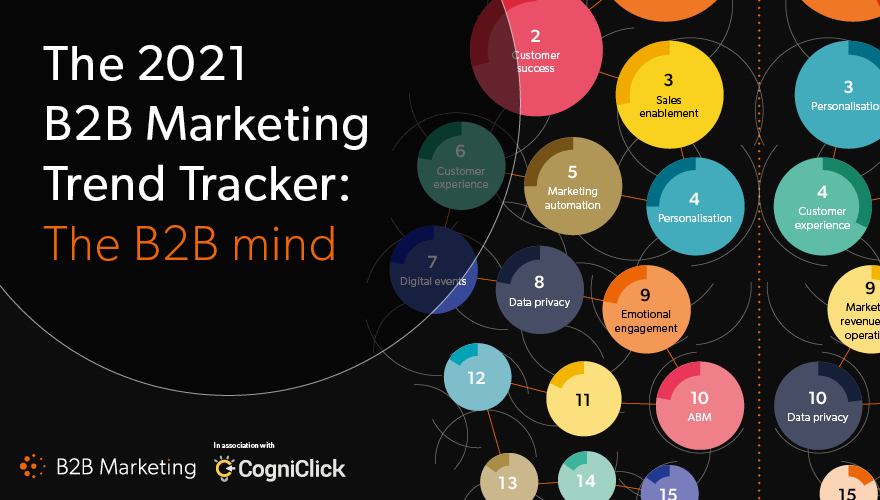
What’s at the front of clients’ and agencies’ minds this year? David Rowlands looks at the trends set to dominate the conversation in 2021 Each year, B2B Marketing conducts a survey to understand what marketers will be focusing on for the year ahead. Conducted with CogniClick, the survey presented 19 topics to participants, and asked them to consider how focused they will be on each one in 2021. For each topic, the participant could select one of the following: very highly focused; highly focused; somewhat focused; slightly focused; or not at all focused. For the purposes of this feature, we will be looking at those that replied ‘very highly focused’ to gauge what’s really got the attention of B2B marketers this year. With more than 300 client and agency-side respondents, we can see which areas are grabbing the limelight, and which are fading into the background. How have the trends changed from last year’s report? Last year, the top four trends were: customer experience (CX); growth marketing; account-based marketing (ABM); and revenue operations. This year, growth marketing has jumped into first place, with 37.5% of our audience saying they are very highly focused on it this year. As many of us will know, the exact definition of growth marketing is not always clear, so, for clarity, we defined growth marketing in our survey as: “strategies and positioning of marketing as the engine-room of business growth.” It appears, therefore, that marketers are continuing to assert themselves as a driver of real business goals, and totally distance themselves from the ‘colouring in department’ of yesteryear. CX, meanwhile, has fallen to fifth place, with 26.6% of our survey participants claiming it’s something they are going to be very highly focused on this year. However, it is interesting to note that customer success – a new entry into the Trend Tracker – has taken second place, with 35.2% very highly focused on it. Ultimately, customer success and CX are closely linked, so, despite CX’s slight decrease in share of attention, the focus on the customer first remains front and centre of marketers’ minds. To add to this point, sales enablement and personalisation – both of which are new entries – came joint third place (28%). Despite having the word ‘sales’ in the terminology, at the heart of sales enablement is a need for marketing to understand what the customer requires, and then provide sales with the tools they need to win their continued business. Personalisation, of course, also necessitates a deep understanding of what the customer is interested in. With this in mind, it’s interesting to see that three of top four trends for 2021 include a much greater focus on the customer than the product, channel or martech.
3 March 2021 · Content, Creative & Campaigns
In this week's episode, Editor in chief for B2B Marketing Joel Harrison discussed how marketing operation leaders can optimise and better their strategy in 2021. Martech has never been more critical to successful B2B marketing. But at the same time, the proliferation of platforms, the speed of channel evolution and ever-rising buyer expectations, means this success has never been harder to orchestrate.
3 March 2021 · Marketing Operations and Technology (MarTech)
Read this guide to learn how to improve pipeline health and increase marketing ROI with expert phone lead qualification.
2 March 2021 · People, Teams and Skills

Each year, the B2B Marketing UK Agencies Benchmarking Report reveals the fastest growers in the UK agency marketplace. This year, however, we’ve added a new category of high performers: the rising stars.
2 March 2021 · Marketing Operations and Technology (MarTech)
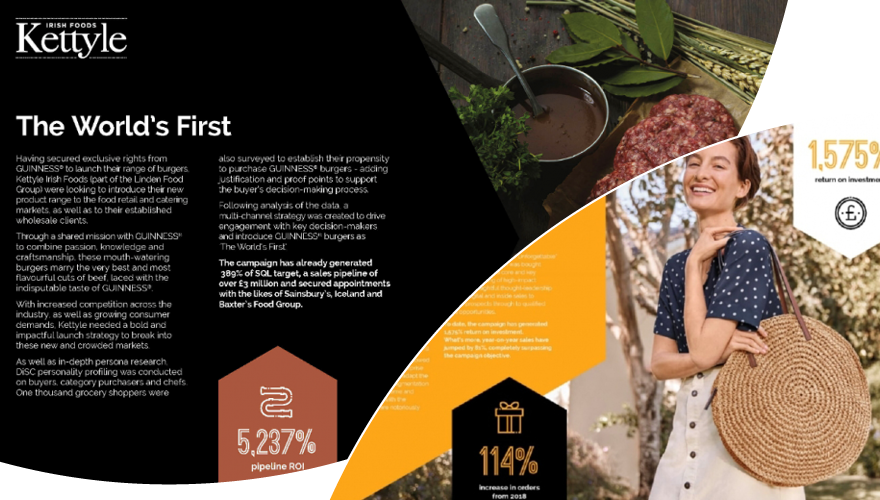
David Rowlands, editor at B2B Marketing, recently sat down with Charlie Nicholson, head of planning at Really B2B, and Kristina Haddrell, group account director for Really B2B. They dive into two of their most successful campaigns for M&S Corporate Gifts and Kettyle Irish Foods (part of the Linden Food Group). DR: Hi Charlie, thanks for joining us today! Do you want to introduce yourself and just say a little bit about yourself? CN: Yeah, of course! I'm Charlie, head of planning at Really B2B, which basically means that we look after the strategy side when we've got new prospects coming in, and work out what we think is the right fit of our product services for what their need is and matching it to that. Then, we continue to work with them, and they become clients of ours. So, we're constantly bringing in all of the new innovations, giving our clients the best service possible. DR: Brilliant, and Kristina, what about you? KH: Thank you, Dave! So I’m the account director at Really B2B. I've been with Really B2B for five years, and my role is really to oversee all the projects that we deliver for the clients we work very closely with, such as the planning, strategy and creative teams in order to deliver on those projects and keep everything running smoothly for everybody. DR: So Charlie, can you give us a little overview of the Kettyle Irish Foods campaign? What were you trying to achieve in the first place and what challenges were you facing? CN: Yeah, sure. So it all started back in 2017. Guinness was trying to grow their share of the food market and agreed a partnership with the Linden Food Group, which is the owner of Kettyle Irish foods the brand. They agreed to the partnership so that they could be the solo licensee of Guinness burgers. So, Linden decided to use their premium brand Kettyle to push that product to market, but, after about two years, they’d had little to no success, and not been able to prioritise it as a project with their account managers because they were very time poor and, frankly, they simply didn't have the evidence to justify a buyer taking on the new product, especially given there was a slightly restricted perceived target of a Guinness drinker. So, they needed to make a decision on whether they were going to continue to invest in this product or cut their losses. And that's when Maurice, the MD of Kettyle, got in touch with us. He knew about us and knew that we prided ourselves on our candour, so he could trust us to give them a frank answer on whether or not they should proceed with this. And so we went away, reviewed their challenge, and the market, and we thought there was an opportunity for them, created our framework to give it one last try, and I guess the rest is history!
2 March 2021 · People, Teams and Skills

Todd Forsyth, Chief Marketing Officer of Veritas Technologies and former SVP of Digital Marketing at Dell, put it best when he said, “To focus on the customer and deliver a personalised experience, you have to harness all aspects of marketing collectively in a unified approach.” While Forsyth wasn’t referring to account-based marketing specifically, his quote is more than applicable for anyone running—or considering running—an ABM campaign. Longer sales cycles and higher value opportunities come with expectations. These customers expect your company, or whichever provider they’re considering, to put in the time and effort. If they’re going to spend their precious dollars on your product or service, they want to be encounter “humanised” experiences. By itself, personalisation is appreciated and noticed by your customer or audience, but when it’s utilised in an omnichannel, holistic manner, it’s a powerful force that can make or break a potential conversion. While most ABM campaigns benefit significantly from personalised experiences, it’s no easy feat to achieve. According to Hubspot, the common challenge faced by B2B marketers running an ABM campaign is “delivering a personalised experience.” Personalisation requires time, manpower, and resources (which, in this day and age, are usually finite). But there are a few simple, straightforward ways you can incorporate personalisation into your customer journey. Here are four personalisation tactics B2B marketing and sales teams can use in an ABM campaign. 1. Content marketing personalisation Content marketing personalisation starts with the basics: You must know whom you’re targeting and what stage of the sales funnel they’re in. Different accounts will require different content. Many account-based marketers use intent data to gain insight into account and funnel position—but personalisation should expand into the exact type of content you’re delivering. Is it an awareness stage blog post or a detailed product comparison? This tactic also applies to current versus new customers. Current accounts won’t need general information on what you currently offer—but they might be interested in a white paper discussing how your company’s newest tool can be weaved into their current strategy or tech stack.
2 March 2021 · ABM & Demand Generation

When creating customer campaigns, B2B marketers know that creativity is key to ensuring that your organisation stands out from the crowd. But when it comes to internal communications, many businesses are still relying on a monthly newsletter, or a ‘Send-to-All’ email round-up of company news. Be honest - when was the last time you opened one of them? Just like your customers, your employees are busy and (probably) have short attention spans, which means you need to make your internal communications just as engaging as your external communications. Simply sending out a newsletter in the same format you’ve used since the company’s inception is therefore unlikely to capture your employees’ attention, which means they could miss key information. Done right, however, internal communications can make your employees feel valued, help them to understand how they are contributing to your wider business objectives and reassure them that their opinions are being heard. When they do, they should be more inclined to provide an excellent customer experience, because they’re happy and motivated in their role. Engaged employees are also much more likely to want to work their way up within your organisation, rather than seek their next role elsewhere, which means you get to hold on to your top talent. If you really nail your internal comms strategy, you could even turn your employees into advocates, who will raise awareness of your company among their own networks simply because they believe in what you do. So it’s worth taking the time to make sure that your employee communications are up to scratch. Here are some top tips to ensure your internal comms are as engaging as possible: Think internal conversations, not internal comms A truly successful internal marketing strategy relies on open communication, both from the top down and the bottom up. Everyone should feel that they can have their say, and that their feedback will be heard. So you need to ensure that you open up the lines of communication within your organisation, and you can start by dropping the corporate speak in favour of being totally honest and transparent with your team. When you’re open with them, they’re much more likely to be open with you. And think about wider conversations around the business, too - how can you encourage conversations across different departments and divisions of your organisation? It may be as simple as starting a Slack conversation. You should also make all of your comms feel like the start of a conversation, rather than announcements that aren’t open to feedback. The best way to do this is simply by simply asking your employees what they want or need to hear from you. This approach worked really well for one of our clients, GEFCO, when they were trying to decide how best to communicate with a workforce that included workers that were still on site, those working from home and furloughed workers. They decided to simply send out a survey to all employees to find out what they wanted to hear from them about and how they would like to receive comms. Their resulting podcast on mental wellbeing (a topic requested by many employees) received 150 downloads in the first week.
2 March 2021 · Content, Creative & Campaigns

Each year, the B2B Marketing UK Agencies Benchmarking Report reveals the fastest growers in the UK agency marketplace.
26 February 2021 · Content, Creative & Campaigns
At B2B Marketing, we are proud to announce the launch of Propolis – a B2B community, built for and by the community.
25 February 2021 · Content, Creative & Campaigns
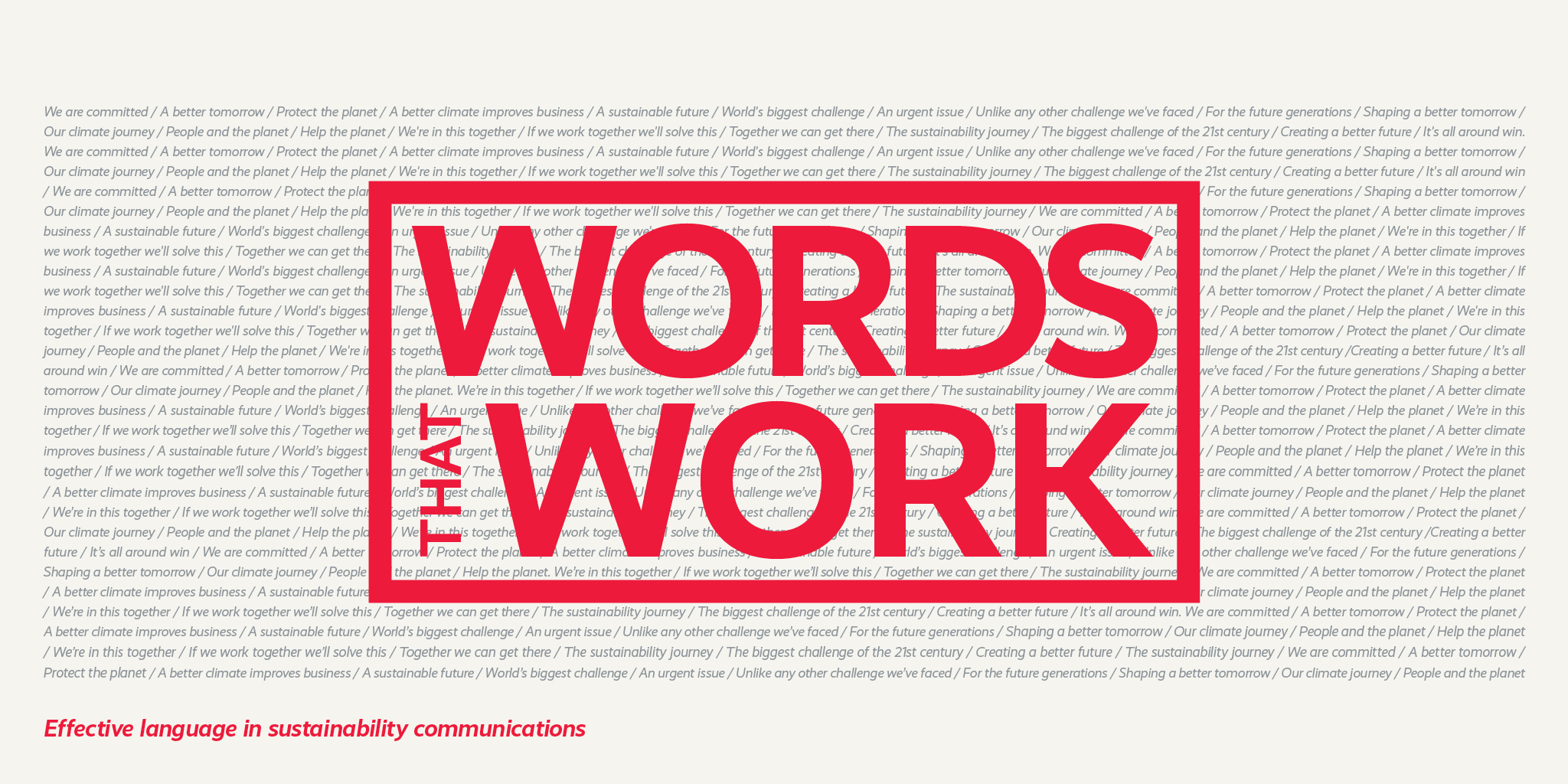
After analysing Forbes 50 Most Valuable Brands’ sustainability webpages with word processing tools, Radley Yeldar has identified 8 clusters of clichés that represent the most common culprits of Stock Sustainability:
25 February 2021 · Content, Creative & Campaigns

In their push for growth in the B2B tech space, MOI Global has made significant new appointments to its leadership team over the past 12 months.
25 February 2021 · Strategy and Evolution
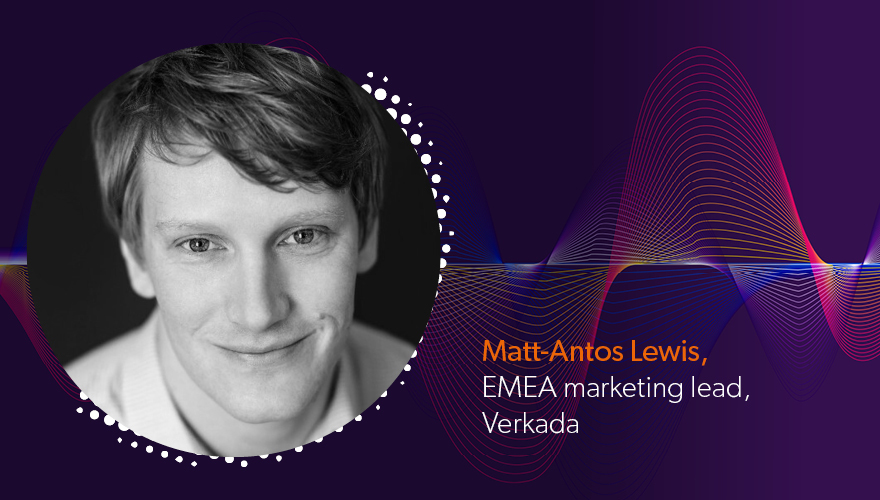
Lead scoring can be utilised to separate the strong prospects from the weak, but it can be tricky to implement a sound process. Kavita Singh spoke with Matt-Antos Lewis, Verkada’s EMEA marketing lead, to learn some top tips when using a lead scoring system. Break down the points based on ICP An ideal customer profile (ICP) defines the demographic and behavioural attributes of accounts expected to become a company's most valuable customers. For lead scoring, this includes fixed factors such as: Title Industry Size of the business Individual’s seniority Location of company. And behavioural factors such as: Email click-through rate Downloading content Attending webinars/events. Matt-Antos Lewis, EMEA marketing lead at Verkada, says: “Your starting point is going to be based on what you believe your company’s ICP is, but a lead scoring matrix should always be your living, breathing document. I think a common mistake some people make is to picture who they want and sort of try to fix their lead scoring to that specific threshold rather than necessarily reflecting reality.” Typically, businesses use a 1-100 scoring system (although some vary), where 50 is the threshold score where sales will reach out. When it comes to assigning points to every action, Matt advises marketers to really focus on those fixed factors. “Engagement is also important, but you could still sell to someone who is the right type of person who perhaps hasn’t engaged with you enough to trigger the lead score threshold. However, you might not sell to someone just because they’ve downloaded all your whitepapers or webinars, so I would say the scores related to who they are more important than what they’re doing.”
23 February 2021 · People, Teams and Skills
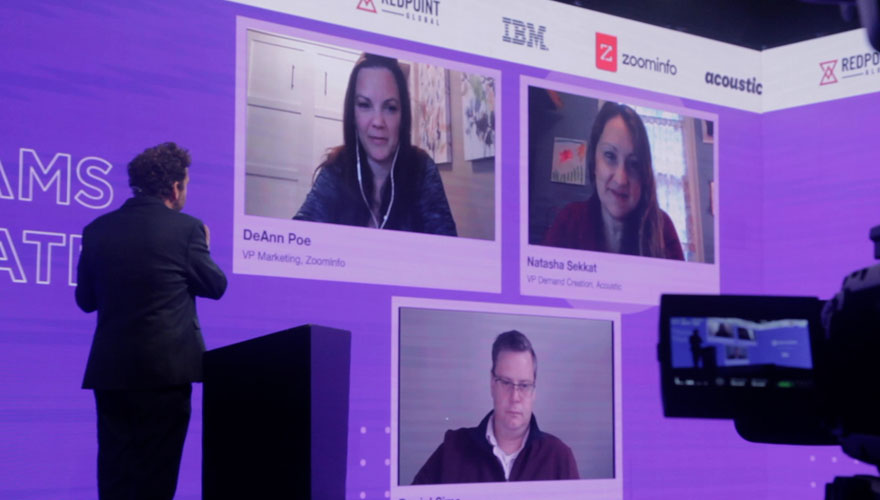
Given the ongoing pause on physical events like trade shows, customer roadshows or exclusive dinner roundtables, B2B virtual events are set to become one of the biggest channels for marketers in 2021. But many people (both marketers and customers) assume virtual events = webinars. But we’re not in 2019 anymore. This article outlines what’s changed. The webinar The trusty webinar is now well known to marketers. It’s quick, easy and gives the impression of activity to the rest of the business. But are webinars the best option for attracting and converting qualified leads? Or could they actually be an outdated, time-consuming and budget-sapping activity? Firstly, with Zoom fatigue a fact of life for the home worker, a webinar is really just a another Zoom call in the diary. And the restrictive one-way presentation format of a webinar doesn’t truly engage attendees, and hampers efforts to build credibility with buyers looking for relevant resources and information. Low attendance ratios versus registrations, added to low levels of interaction, equate to surprisingly low ROI figures, only exacerbated by the amount of time, energy and resources that go into organising them. To say nothing for the all-too-common technical issues. The virtual event grows up Necessity is the mother of invention and the coronavirus has meant a virtual event now covers a dramatically wide spectrum, to fill the void left by physical events. And they have got better and stronger in lieu of competition from their older trade show/exhibition big brother and sister! The hosted event A hosted event is typically managed on your behalf by a third party – usually a specialist events company which can provide all or some of these: its own events platform, event management services, professional speaker/presenter and even post-event sales support. In this regard you could consider a hosted event to be an “Event-as-a-Service,” where the majority of the event’s production is taken care of. Such events tend to have fewer delegates than a webinar, since they are focused on a higher quality of production and a more targeted audience. A virtual roundtable, such as those run by Meet the Boss, is a good example, creating a more focused event with more opportunities to discuss topics that relate to your customers. These debates focus on a single business issue and can be highly interactive, allowing every participant to share insights, ideas and pain points. Such events are similar length to a webinar – usually 90 minutes – but the tighter content focus and higher production values deliver a far better experience for delegates, and significantly higher returns for the sponsor.
23 February 2021 · Content, Creative & Campaigns

Turns out, the homeschooling parents’ nemesis can be good or bad for your content. B2B copywriter David McGuire reveals all. If you’ve had to homeschool any small people lately – or even if you’re just connected to some parents on social media – you’ve likely been confronted by the baffling phrase “fronted adverbial”. You’re far from alone. Even as a professional B2B copywriter – with 15 years’ experience and an Oxford English degree on my CV – I had to admit I’d never heard of such a thing until Michael Gove insisted they were not only real, but terribly important for all eight-year-olds to know. But when I eventually did find out (and don’t worry, I’ll explain it in a minute), I recognised it’s actually a technique that copywriters use all the time. And depending how it’s deployed, a fronted adverbial can either be a very good – or a very bad – thing in your marketing content. Just what is a “fronted adverbial” anyway? Quite simply, it’s a word or self-contained phrase at the start of the sentence, that describes how the action in the rest of the sentence happens. You might think of it as a little introduction which sits before the comma, and sets up the main part. So, in the explanation above, “quite simply” is a fronted adverbial (gold star if you spotted it). If you think back to school, an adverb is a word that describes a verb; it tells you how an action is done. Usually, they end in “-ly”. For example: “David explained it clearly.” But you can also get a phrase which acts like an adverb. It might or might not contain an adverb itself – that doesn’t matter. For example, in “She caught the ball with her eyes closed,” the last section works like an adverb, so it’s an adverbial phrase. Put it at the front – “With her eyes closed, she caught the ball” – and you have fronted your adverbial. Other examples of fronted adverbials might include: “Suddenly, Ali’s daily routine changed.” “Before he became a makeshift teacher, Gary had been a successful B2B marketer.” “Completely exhausted from homeschooling, Jane reached for the gin.” There’s plenty of controversy about what constitutes a fronted adverbial, and whether teaching them makes anybody a better writer, but for homework purposes, that’s good enough. The interesting part is how should (and how you shouldn’t) use this information to make your B2B content better. Turns out, the homeschooling parents’ nemesis can be good or bad for your content. B2B copywriter David McGuire reveals all. If you’ve had to homeschool any small people lately – or even if you’re just connected to some parents on social media – you’ve likely been confronted by the baffling phrase “fronted adverbial”. You’re far from alone. Even as a professional B2B copywriter – with 15 years’ experience and an Oxford English degree on my CV – I had to admit I’d never heard of such a thing until Michael Gove insisted they were not only real, but terribly important for all eight-year-olds to know. But when I eventually did find out (and don’t worry, I’ll explain it in a minute), I recognised it’s actually a technique that copywriters use all the time. And depending how it’s deployed, a fronted adverbial can either be a very good – or a very bad – thing in your marketing content. Just what is a “fronted adverbial” anyway? Quite simply, it’s a word or self-contained phrase at the start of the sentence, that describes how the action in the rest of the sentence happens. You might think of it as a little introduction which sits before the comma, and sets up the main part. So, in the explanation above, “quite simply” is a fronted adverbial (gold star if you spotted it). If you think back to school, an adverb is a word that describes a verb; it tells you how an action is done. Usually, they end in “-ly”. For example: “David explained it clearly.” But you can also get a phrase which acts like an adverb. It might or might not contain an adverb itself – that doesn’t matter. For example, in “She caught the ball with her eyes closed,” the last section works like an adverb, so it’s an adverbial phrase. Put it at the front – “With her eyes closed, she caught the ball” – and you have fronted your adverbial. Other examples of fronted adverbials might include: “Suddenly, Ali’s daily routine changed.” “Before he became a makeshift teacher, Gary had been a successful B2B marketer.” “Completely exhausted from homeschooling, Jane reached for the gin.” There’s plenty of controversy about what constitutes a fronted adverbial, and whether teaching them makes anybody a better writer, but for homework purposes, that’s good enough. The interesting part is how should (and how you shouldn’t) use this information to make your B2B content better.
23 February 2021 · Content, Creative & Campaigns
The Brains co-founder Larry Kotch reveals his expert formula to lead generation, using a combination of marketing automation, Linkedin advertising and B2B psychology to generate leads like never before.
22 February 2021 · Content, Creative & Campaigns
The Octopus Group has been acquired by the Publicis Groupe UK, and we're here to talk about it! In this week's episode, B2B Marketing's editor in chief Joel Harrison spoke with Jon Lonsdale, CEO of the Octopus Group to talk about its most recent news!
21 February 2021 · Content, Creative & Campaigns

Each year, our UK Agencies Benchmarking Report gathers the facts and opinions of the UK’s leading B2B agencies. In this feature, David Rowlands dissects the data, demonstrating how agencies are winning business, how their headcount and gross income have grown (or decreased), and what they predict for the months to come. The full report is available for download now.
19 February 2021 · Content, Creative & Campaigns
Read Webeo's eBook, The Personalisation Gap, to find out how you can blend your inbound and outbound channels to drive business growth.
19 February 2021 · Brand
This guide goes deep on the content creation and distribution side of inbound B2B PR strategy planning.
19 February 2021 · Content, Creative & Campaigns

Here are four personalisation tactics B2B marketing and sales teams can use in an ABM campaign. Todd Forsyth, Chief Marketing Officer of Veritas Technologies and former SVP of Digital Marketing at Dell, put it best when he said, “To focus on the customer and deliver a personalised experience, you have to harness all aspects of marketing collectively in a unified approach.” While Forsyth wasn’t referring to account-based marketing specifically, his quote is more than applicable for anyone running—or considering running—an ABM campaign. Longer sales cycles and higher value opportunities come with expectations. These customers expect your company, or whichever provider they’re considering, to put in the time and effort. If they’re going to spend their precious dollars on your product or service, they want to be encounter “humanised” experiences. By itself, personalisation is appreciated and noticed by your customer or audience, but when it’s utilised in an omnichannel, holistic manner, it’s a powerful force that can make or break a potential conversion. While most ABM campaigns benefit significantly from personalised experiences, it’s no easy feat to achieve. According to Hubspot, the common challenge faced by B2B marketers running an ABM campaign is “delivering a personalised experience.” Personalisation requires time, manpower, and resources (which, in this day and age, are usually finite). But there are a few simple, straightforward ways you can incorporate personalisation into your customer journey. Here are four personalisation tactics B2B marketing and sales teams can use in an ABM campaign. 1. Content Marketing Personalisation Content marketing personalisation starts with the basics: You must know whom you’re targeting and what stage of the sales funnel they’re in. Different accounts will require different content. Many account-based marketers use intent data to gain insight into account and funnel position—but personalisation should expand into the exact type of content you’re delivering. Is it an awareness stage blog post or a detailed product comparison? This tactic also applies to current versus new customers. Current accounts won’t need general information on what you currently offer—but they might be interested in a white paper discussing how your company’s newest tool can be weaved into their current strategy or tech stack. 2. Email List Segmentation Email personalisation is a small but mighty way to make an impression with your target account list. Whether you begin with geographical or industry segmentation or you have it filtered down to organization, segmentation will only increase your chances of success. According to statistics pulled together from Instapage, personalised emails deliver six times higher transaction rates, and 82% of marketers report an increase in open rates when the send is personalised. Customise the subject line, pre-header text, welcome text, or even the CTA.'
18 February 2021 · ABM & Demand Generation

Crowdsourced data community for B2B salespeople Lusha, has raised $40 million in a Series A funding round from PSG, a growth equity firm. The funding will allow Lush to grow its sales community to make accurate data accessible to sales professionals through its technology. Yoni Tserruya, Co-Founder & CEO of Lusha said: “Although we are a bootstrap company, I still think we were able to succeed in terms of revenue and number of employees, and I think over the years, we’ve come to understand the business needs, so at the time, we needed more resources so we decided to get a financial partner to build a bigger vision and bigger brand. Salespeople need alternative ways to reach out with no events going on at the moment, and our data we provide them allows them to do that even when they’re at home.” Lusha’s cloud-based platform enables sales to share accurate contact and company information with one another with insights on the customers they’re targeting. In addition, it also recommends relevant prospects and organisations. Lusha’s community has expanded to over 520,000 sales professionals and 167,000 sales organisations. He further said: “Today, sales professionals only spend a fraction of their time actually selling due to limited access to data and the need for research. Our community approach is changing this reality, equipping salespeople with the information they need to reach the right person and know when to prioritise outreach. Even in a time of great uncertainty, with many working from home due to COVID-19, we are hearing from salespeople who are part of the Lusha community that they are having some of the best sales months of their careers. It is clear Lusha has become a vital part of the salesperson's toolkit.”
18 February 2021 · People, Teams and Skills