



Articles
News, analysis and expert opinion from B2B Marketing — all in one place.
12,867 results · page 66 of 537
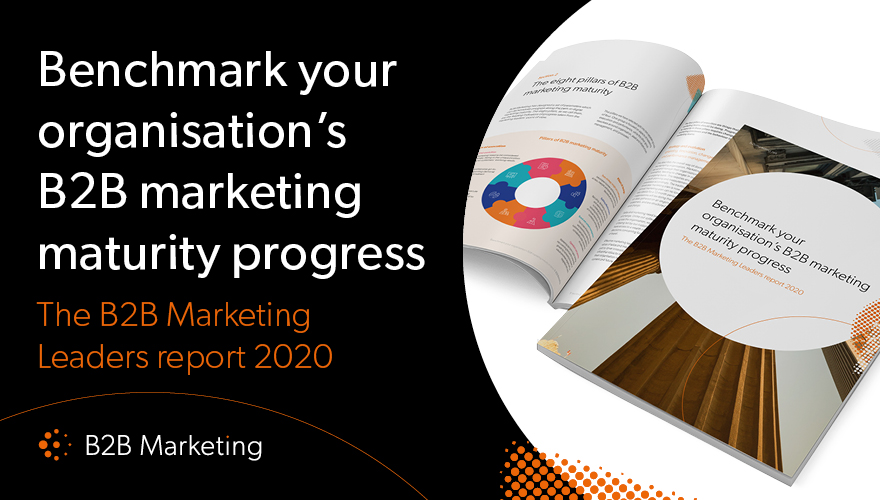
The role of B2B marketing teams is transforming
B2B companies are all facing disruption in their markets. Some are dealing with new digital competitors; others want to drive towards a new solutions orientation, away from products that are no longer differentiated. Peter O'Neill states in our 2020 Leader's Report.Many want to become best-in-class for their industry based upon customer experience. Their chief executives want their organisations to become more digital, data-driven and customer-centric, and expect their marketing leaders to drive this transformation. In addition to this digital transformation pressure, B2B buying itself has also changed. Sophisticated consumer marketing from companies such as Amazon, Netflix and John Lewis has trained consumers to anticipate outreach, interaction and even personalised offers. This expectation has even become embedded in the digital world of business interactions, and so business buyers now expect supplier digital engagement similar to a private consumer experience these days. They also have little tolerance for sales calls, on-site or remote, that do not provide them with immediate value. They can research suppliers and companies themselves and expect a seller to answer questions and advise as opposed to sell. The most critical success factor of an effective B2B marketing organisation is, therefore, the ability to ensure that the right message can be delivered to the right person at the right time in the right place: both as output of their digital marketing communication, and through an effective sales enablement programme. The best marketers now use data for end-to-end measurement and messaging to inform buyers with the information they most need. They build an in-depth understanding of the entire customer journey, and they know how and where to coordinate and focus their engagement efforts.
22 September 2020 · People, Teams and Skills

Improve your B2B marketing with AI
If global lockdown has taught us anything, it’s that people really cherish their connections to the outside world. We’re being reminded of what is important – and connectivity is high on the list.The workplace, meetings, tradeshows, festivals – all of these have had to be conducted online, meaning B2B businesses have an opportunity to really cement their standing with prospects, and existing customers, via empathetic, relevant personalised digital experiences.Because of this, organisations need to be more agile. As lockdowns continue to be turned on and off, they need to respond quicker, with ways to engage that fit the moment. The pandemic has forced marketers to think of new, innovative ways to generate revenue, which has in turn pushed them to evaluate the technologies they are using in order to do so.For organisations that have already baked Artificial Intelligence (AI) into their technology systems, this is easier than for others. And, in a world where shifting sands might be all we have to base strategy on for the foreseeable future, marketing automation will increasingly become a must.The popularity of AI is growing, with the global AI software market expected to reach $23 billion by 2025, according to data from Statista. But with it being such a vast ocean of a topic, where do organisations begin?Here are four key tenets that those in the B2B marketing space should understand before dipping their toes in.
22 September 2020 · Marketing Operations and Technology (MarTech)

Brands, take a stand
As marketers, it is our job to represent the lives of the people we want to have a conversation with. We’re mediators, unifiers, bridge makers. Marketing at its best is not just reflective of culture but a powerful change agent and torchbearer for progress. Think about what campaigns like Unilever’s “The Will”, Dove’s “Real Beauty”, Always' “Like a Girl”, Gillette’s “First Shave” did to shape culture. Look at what brands like P&G, Vodafone, MHFA, Nike are trying to do with “The Choice”, “Change The Face”, “My Whole Self’ and “Just Don’t Do It”.Data suggests progress in ads has stalled, and we’ve all felt the need for a meaningful acceleration of equality. We have a macro role to play beyond our marketing bubble, and we do that best when we recognise people’s demands to be seen, to be heard and to be served.In today’s world, that means purpose driven communications confidently disseminated in a marinade of empathy, authenticity and transparency. People want brands to assume an unambiguous stance in a turbulent global ecosystem. This must come with a dual approach: in external marketing and communications but also in internal organisational structure and culture. The most effective way to promote Diversity, Equity, Inclusion and Belonging (DEIB) is to be it.Here are two components for fostering DEIB across all levels of the brand:Looking inwardWalk the talk by having an overarching strategy to normalise intersectional identities and eliminate damaging stereotypes internally, and not just in your creative.Identify your purpose and values as an organisation and weave them into your decision making. Don’t try to cover all bases; keep it relevant to the brand.Transition DEIB from a niche Human Resources department to report to the CEO. Collective ownership will drive your organisation forward (in reviewing your Equal Opportunities policies regularly; speaking out against laws and reporting incidents that threaten your employees’ rights; communication trainings and ERG’s that acknowledge and celebrate everyone’s individuality).Employ progressive recruitment practices to widen your pool of diverse candidates. Install PitchMe.co, which hides names and photos when sourcing candidates and an AI writing tool such as Textio to scan job descriptions for biased language, to actively nurture an inclusive talent lifecycle and create champions of diversity in-house.
22 September 2020 · Brand

Why B2B marketers need to address the lack of diversity
Inspired Human founder Perrine Farque hosted the diversity panel at our recent Leaders Forum. Kavita Singh shares the insights discussed surrounding the lack of diversity in the marketing sector.Along with Perrine, Cognizant’s Tricia Stinton, AppDynamics’ Ridgy Lemarier, and Omobono’s Jen Hennings all joined for an insightful discussion on diversity. Here were some of the issues raised.Diversity challenges in the workplaceOne issue that was raised right away was the idea of intersectionality. Tricia, who is Cognizant’s head of field marketing, brought up the fact that she is a woman of colour, experiencing different types of challenges related to gender and race. As a mother, she had to start expressing her need for flexibility and couldn’t stay at the office as late as some of her male colleagues.She also addressed microaggressions that she experienced relating to race and recalled a time when her colleague had returned from holiday.She said: “He came up to me and held his arm out and said “oh, I almost caught up with you in skin complexion.” He didn’t mean anything offensive by it, but he hadn’t really thought about the implications of it.”These microaggressions can manifest in different ways and make marketers feel uncomfortable in their own workplace. Omobono’s Jen Hennings mentioned that, from an LGBTQ perspective, Omobono found that, among the 18-24 demographic, over 50% identified as not straight, with about 60% feeling like they need to go back in the closet in the workplace due to the lack of representation and role models. That means 30% of the workforce don’t feel comfortable being themselves – and that’s just one aspect of diversity.
21 September 2020 · Content, Creative & Campaigns

Women in tech report discrimination and harassment at the workplace
Women led-startup, Women Who Tech, has reported that 41% of female founders who were harassed, experienced sexual harassment.Some 38% of white women founders and 44% of women of colour founders were harassed by potential investors. Of the female founders who experienced harassment by an investor, 59% were explicitly propositioned for sex in exchange for investment funding and introductions. The startup anonymously surveyed 1003 tech employees, founders and investors globally on their experiences in their tech industry. Women Who Tech’s aim was to identify what challenges employees might face in the tech industry, and evaluate whether systemic sexism and racism have shifted since its last 2017 survey. The report stated: “The #MeToo movement spurred significant publicity, advocacy campaigns, lawsuits, and investments in diversity, equity, and inclusion (DEI) training and pledges, but the survey results clearly illustrate that barriers for women, especially women of color, are still being upheld at unprecedented levels.”
18 September 2020 · People, Teams and Skills

Once upon a time in B2B: turning the page on storytelling
Storytelling isn’t a difficult thing to sell to B2B marketers – infact, most don’t need any sales pitch at all. They are already bought in to the notion, hook, line and sinker. But acknowledging the potential doesn’t mean you’re an expert overnight. So what does storytelling success look like? This was the focus of our recent B2B Marketing Leaders virtual roundtable
16 September 2020 · Content, Creative & Campaigns

5 principles to future-proof your B2B website
Digital technology is in a constant state of flux, which can make it tricky for businesses to keep up and stay ahead of the curve.But in a world that is prone to rapid change and accelerated transformation (as we’ve certainly witnessed in 2020), brands can take steps to become more proactive, future-proofing their B2B platforms in the process.It’s important to remember that future-proofing isn’t just a matter of supporting the latest developments in tech, but also requires understanding and supporting shifts in your audience’s needs. Having worked on the development on New Fortress’ new website, which recently won Best Website at the ANA Global Ace Awards, I’ve detailed a few learnings on how brands can similarly futureproof below.Balance custom modules and APIs to enhance your websiteOne of the biggest inhibitors to future-proofing a brand’s platform is the legacy system: it’s just too tough to build new applications and interfaces within an infrastructure that’s already pushed to its limits. Thankfully, APIs offer a simple, plug-and-play way to integrate new features and connect data across the brand—though you can also take things a step further in the development process.New Fortress used Greenhouse to attract talent and make the hiring process more efficient. In our new website for the brand, we developed custom modules including one that would pull job postings and applications from Greenhouse and translate them, further streamlining the hiring process for the international brand. As your own brand grows and develops in the future, this method of connecting and adjusting APIs can help you improve digital maturity bit by bit rather than worry about being locked into a single legacy platform.One of my favorite features of the New Fortress website, though, is an interactive map that lets visitors view and explore the business’ operations around the world. While we could have used Google Maps or a similar plugin to plot out these locations, the brand opted for a bespoke, visually unique module that would let them continually update new locations with ease.
15 September 2020 · Content, Creative & Campaigns

Clevertouch Marketing announces Marketo Engage Specialisation
Professional development Martech consulting service Clevertouch Marketing has achieved Marketo Engage Specialisation in the EMEA region as part of the Adobe Solution Partner Programme. The specialisation is awarded to Marketo Engage partners that have at least eight Marketo Certified Experts (MCE), two Marketo Certified Solution Architects (MCSA) and two Marketo Engage: Sales Accreditations, along with numerous positive client feedback submitted directly to Adobe.In the past few months, Clevertouch has significantly invested in employee training, increasing the total number of Marketo Engage certifications to 20. This specialisation further expands the ever-growing list of Adobe achievements and recognitions for Clevertouch and emboldens the company’s reputation as the world’s leading Marketo consulting agency. Clevertouch CEO Adam Sharp said: “Marketo has been a big part of our DNA - from being the first winner of its International Partner of the Year award, to becoming the first partner domiciled in Europe with Platinum Partner status, we are now delighted to be recognised with this specialisation status. It means that customers who choose to work with us know they are being given the best Marketo consulting service levels and best advice available anywhere on the globe.”
15 September 2020 · Marketing Operations and Technology (MarTech)

2020 guide to helping sales and marketing work effectively together
Irrespective of whether your goal is alignment or integration, the key levers that will be used by a successful organisation remain the same.Using some of Kingpin Communication’s recent research into B2B sales and marketing alignment, combined with that from other industry leaders, we have identified some of the key issues that stand in the way of sales and marketing working at maximum efficiency and made suggestions of things that your organisation can do to fix them.The resources and budget available to sales and marketing can also be stretched if sales and marketing are more aware and understanding of each other’s spending and how they can most benefit from both team’s research and work.1. Introduce clear team structuring to improve communication and indicate responsibility, seniority etcTime is often wasted by a lack of communication resulting in both sales and marketing doing the same jobs twice or leaving gaps in their services that require fixing later.Sales and marketing often view each of their respective roles quite differently, so should work together to better define each of their unique roles and responsibilities. Marketing can have a particularly hard time conveying the value of their role and what they do based on their work being less ‘visible’. This is supported by our research which shows that marketing claim to have a better understanding of sales’ role than vice versa.
15 September 2020 · Content, Creative & Campaigns

Demand generation in the far future
Making predictions more than 10 years away is tricky, but as with developments over the previous decade, demand gen will look radically different to how it does now The end of demand generation as we know it In its current high-volume, mass-marketing form, demand generation is simply not sustainable for the next 10 years. The shrinking audience, lack of engagement and tighter privacy restrictions will render it untenable. The rapid rise in the popularity of account-based marketing over the past few years is a direct reaction to this as marketers search for a fresh alternative that will allow them to steal a march on their competitors. While the excitement and hype around ABM will undoubtedly die down, the method itself is here to stay. A characteristic of successful account-based marketing is a full commitment to the strategy, and for organizations with limited marketing resources this might mean dialing back on demand gen activity. This is what happened at Fujistu when the company went all-in on ABM a few years ago. As head of ABM, Andrea Clatworthy told the B2B Marketing ABM Conference in 2017: “We had to stop doing some stuff to give people the space to do ABM. So we stopped demand gen, we stopped lead gen – the business didn’t notice for a year.” Most companies won’t have the luxury of just switching demand gen off; it’s likely companies will operate some form of hybrid model with a combination of one-to-one/ one-to-few ABM, and one-to-many (or programmatic) ABM replacing the demand gen of today.Programmatic ABM is powered by technology, its popularity is also likely to grow as the martech behind it becomes more powerful. Advanced artificial intelligence and machine learning will support smarter prospecting, better lead qualification, and much stronger personalisation through content, products and support.No silver bullet, but multi-touch attribution will get easier Attribution modelling in the complex customer journey remains a headache, and unfortunately there is no foreseeable silver bullet to deliver a 100% accurate map of how marketing has influenced a sale. It should at least get easier. Collating data from a variety of systems that aren’t integrated can be a slow and laborious process. Consolidation among martech vendors, such as Adobe’s acquisition of Marketo (which owns Bizible) should mean systems can trade data with each other more easily, giving a more complete picture of the customer journey. Other technology improvements will support the collection of touchpoint data. One reason brands currently invest in airport ads, is that they’re worried what might happen if they don’t. Soon they will have clear metrics for why. “It won’t be long before a brand can link up the fact that I’ve walked through Heathrow, seen their adverts, and become a customer,” says Peter Morgan. “Even if we’re getting a bit more data about why an organisation is increasing its spending, that’ll put us in a much better place than we are now.”
14 September 2020 · ABM & Demand Generation

10 things to avoid getting wrong in account-based marketing
Today’s blog is essentially a distillation of the 10 key take outs from my ABM Essentials course for B2B Marketing, although on the advice of David McGuire, one of my faculty colleagues, I’ve opted to call it the ‘10 things to avoid getting wrong’ because apparently we all prefer reading about how to avoid getting things wrong rather than about recommendations on how get things right. Curious but true.Get the following right and not much will go wrong as you launch or refine your ABM programmes.A clear definition of ABM in your organisation.Don’t start your ABM programme without having a clear definition of what ABM actually is within your organisation. Make sure you have developed it with all your key stakeholders and that everyone has signed it off. There are too many interpretations of ABM for this to be left to chance.Executive sponsorship is vitalMake sure that you have support for your ABM programme from the top down. At the very least the regional heads of sales and marketing, ideally the CMO and CRO, and potentially even the CEO. Your ABM activities will go much more smoothly if ABM thinking is cascading down and through the organization. And when the going gets tough (as it probably will at times), you will have the support you to need to drive on through.Sales & Marketing alignment is not an optional extraIf you want a successful ABM programme it is essential that sales & marketing are both signed up and 100% committed. ABM is not a service that marketing performs for sales, it is a joint effort and requires sustained focus and commitment from both teams for it to work effectively.
14 September 2020 · ABM & Demand Generation
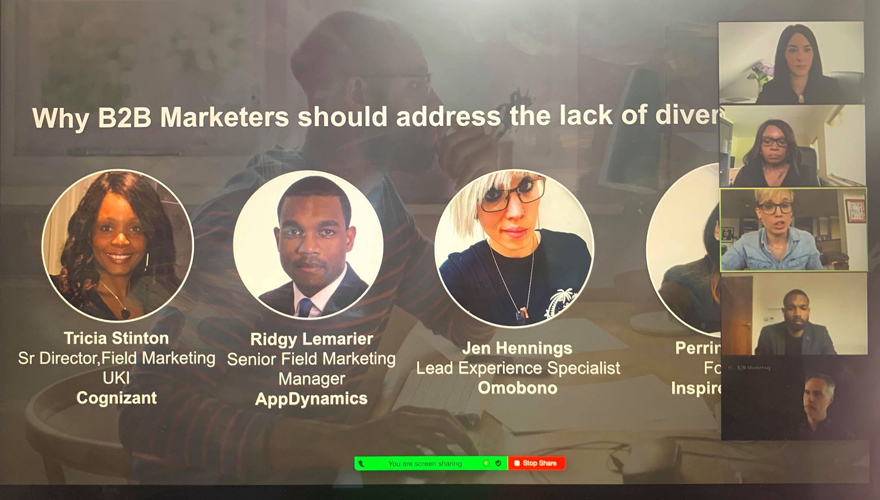
Inside B2B Marketing’s virtual Leaders Forum 2020
B2B Marketing hosted its virtual Leaders Forum last Thursday on Zoom, as B2B Leaders gathered for exclusive insights from world-class speakers, and were treated to enlightening roundtable discussions throughout the day. The event kicked off with a warm welcome from B2B Marketing’s editor-in-chief Joel Harrison, followed by Peter O'Neill's breakdown of B2B Marketing’s Leaders Report, which you can download now. One point that stood out was the fact that marketers are more equipped for strategy over the actual execution. This idea carried over to the panel discussion: ‘What B2B marketers can do to improve for a more successful future.’Deloitte’s Claire Wood said this could mean that marketers need to be more diligent in the handover process between marketing and sales. Consulting CMO and marketing strategist at Handpicked Society Maria Cameron also added that, during the recruitment process, marketers often look for people with strategic mindsets, rather than finding people that are going to give innovative solutions to their business.Maria said: “The devil is always in the detail. Strategy isn’t easy either. So, when we actually start executing and driving towards the organisation, the collaboration, the alignment, those handoffs that we need – that’s when it gets to be like walking in treacle for many people.”Another point raised from the Leaders Report was that there has been a surge in customer experience (CX) among B2B marketers. Claire said this actually wasn’t surprising, especially when considering the impact of Covid-19. Marketing leaders are making CX a priority more so than ever before simply because they’ve had to adapt it so quickly during the pandemic.
14 September 2020 · People, Teams and Skills

Sherpa welcomes two hires, kickstarts expansion plans in US
Sherpa has hired Biana Bulat as its marketing automation specialist and Chloe Thompson as a senior account manager. Sherpa welcomes these women to its rapidly growing team as it continues to fast-track recovery from the challenges of lockdown and expand to the US.Bianca Bulat brings more than 13 years of marketing experience with an understanding of campaign planning practice, management and execution, acquisitions and integrations. She previously worked at Accenture, IBM and Hewlett-Packard. Chloe brings marketing marketing expertise and experience from previous agency roles at Cambridge based agency, Omobono and Kiss Communications. She also previously ran Accenture’s TechVision. Sherpa CEO, Tom Perry, says “To be hiring two new members of staff of such high calibre further cements our foothold as the leading B2B channel specialist agency. We’re excited to be accelerating out of lockdown with a very strong team and with an expansion into the US on the horizon, we’re looking forward to an exciting new chapter!’
11 September 2020 · Content, Creative & Campaigns

Marketing in the service of sales 2020
While most of us are experiencing a new normal when it comes to our day-to-day business lives, it’s worth remembering that there are still fundamental truths that apply when developing a successful B2B growth strategy. ‘Marketing in the service of sales’ is one.
10 September 2020 · Content, Creative & Campaigns

Episerver acquires Optimizely
Content management platform Episerver has acquired delivery and experimentation vendor Optimizely. Details of the acquisition were not disclosed. The transaction is expected to close in Q4, as companies will continue to operate independently until then. The companies hope to create digital leaders to realise the potential of both platforms in service of our customers. According to Episerver’s press release, they see the three immediate benefits of the acquisition to be: customer centricity, democratised experimentation, and differentiated experiences. For more details on these details, click here.This will be Episerver’s third major acquisition since being bought by Insights Partners in 2018. Last year, Epierver acquired personalisation vendor Idio and commerce vendor Insite Software.Jay Larson, CEO of Optimizely said: “Winning in today’s digital world requires delivering the best and most personalised digital experiences. Together, we will enable our customers to do more testing, in more places, with greater ease than ever before. We believe this combination will make experimentation a mainstream business best practice and an essential part of competing and winning customers in an online world.”
9 September 2020 · Content, Creative & Campaigns

Do B2B brands need purpose anyway?
The word ‘purpose’ has roared onto the marketing scene in recent years. And now it seems every marketing director and brand manager worth their salt is eagerly embracing higher goals that demonstrate the noble impact their business has on the world. But is it truly necessary for brands to have a purpose beyond solving customer needs?It may help to first agree on what we mean by brand purpose. The generally accepted definition is that a brand’s purpose is its “reason for being beyond making money.” This beautifully altruistic notion would have felt very out of place just a few decades ago when businesses could unashamedly exist to generate as much money as possible for their shareholders. Today, however, the tide of public opinion has turned and not all business is seen as good business. With heightened awareness of the environmental cost of consumption and of the economic disparities around the world, the idea of making profit at almost any cost is no longer universally tolerated. Journalists and social media platforms now routinely draw negative attention towards companies that fail to uphold the highest ethical and moral standards. The result is that many businesses in the public eye are now judged on their overall impact on the world, not simply on their capacity to make money.The response of the marketing profession has been to place greater emphasis on communicating the broader benefits that the company and its brands bring to society. From the early days of wallpapering over the cracks with wafer-thin CSR (Corporate Social Responsibility) initiatives, statements of brand purpose—and direct actions to support this—have emerged as a more credible response to demands from belief-driven customers for businesses to do the right thing. But does every business need a purpose beyond making money? And how do you identify what your purpose should be?
7 September 2020 · Content, Creative & Campaigns

Q&A with Nicolas Vandenberghe, CEO and co-founder of Chili Piper
David Rowlands recently caught up with Nicolas Vandenberghe, CEO and co-founder of Chili Piper, to discuss ‘Instant Inbound’ and the future of how people connect with their customers.
7 September 2020 · Content, Creative & Campaigns

how to attract, convert and retain your customers in four steps due to inbound marketing.
As the internet has developed, people’s behaviour has also changed, bit by bit. Marketing techniques that were working a short time ago have now become obsolete and people don’t buy in the same way that they did even a few years ago.Inbound marketing is a marketing strategy that responds to these new ways of consuming and informs the customer. By providing information to help educate the consumer when they ask about a product or a service and to offer content that answers their questions. Inbound marketing can convert visitors to your website into customers.To assure the success of this process, visitors need to be supported throughout their journey. Taken as a while, it is possible to see four stages within this sales journey - attracting visitors, visitor conversion; from prospect to client and then to make the client loyal.Do you want to know more? Here is our step by step guide.1. Attract visitors to your websiteThe first step in this journey is to bring traffic to your website that is interested in your software or services, what is known as “qualified traffic”.To attract these visitors you need to make useful and relevant content. Inbound marketing works when you have a clear vision of your target audience. Once these questions and needs have been identified, you may want to use a persona kit to help you out - you can position yourself as an expert with your target market, and distribute content that is useful to them.The key is there: rather than trying to sell your product at any cost, you will offer your customers content that is useful to them. Rather than 'Look at our great product and everything we can do with it!', You will focus on the needs, pains and common interests of your target audience in order to bring them to your site.
7 September 2020 · Content, Creative & Campaigns
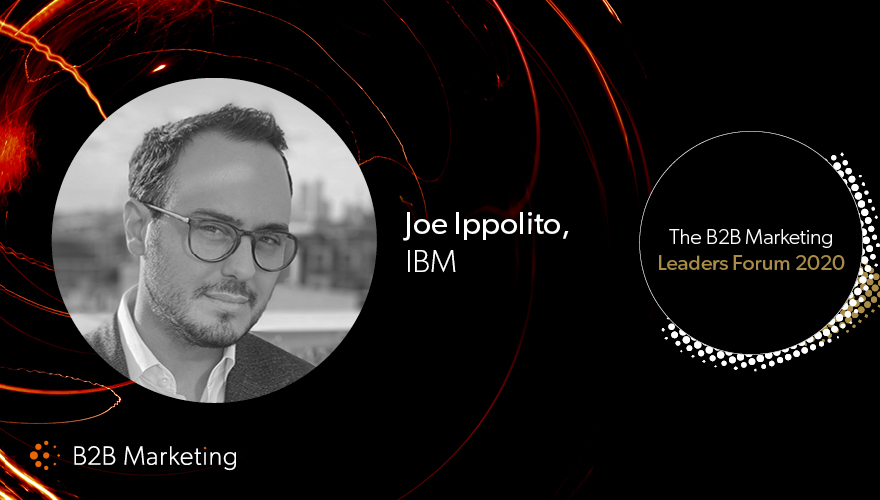
Q&A with Leaders Forum keynote speaker, Joe Ippolito, IBM
With the B2B Marketing Leaders Forum fast approaching, David Rowlands caught up with keynote speaker Joe Ippolito to discuss his presentation, Covid-19 and his tips for marketing leaders over the coming months.Joe is head of transformation analytics, data & performance marketing at IBM, and will be delivering his presentation ‘You are not a marketer’ at 3:20-4:00 p.m. BST on 10 September. For the full Leaders Forum agenda, click here.
7 September 2020 · ABM & Demand Generation

Is it time to extend horizons past the fog of CV19?
B2B marketing planning has never been an exact science, but it’s never been more problematic than it is in late 2020, with the future never more difficult to foretell. So how are marketers doing it? And what does success look like? That was what we discussed in our latest B2B Marketing Leaders virtual roundtable – run in association with cloud data platform Snowflake
6 September 2020 · People, Teams and Skills
B2B Marketing Awards 2020 shortlist announced! Who’s made the cut this year?
Now in its 15th year, the B2B Marketing Awards celebrates the best in the business, guaranteeing to boost a brand’s profile, showcase its skills, and help companies and agencies gain vital recognition. Today, we are pleased to announce that the shortlist of potential winners has been officially released.
4 September 2020 · Content, Creative & Campaigns

Q&A with Mark Larwood, head of ABM and advocacy marketing, O2
David Rowlands recently caught up with Mark Larwood, head of ABM and advocacy marketing at O2, to discuss the challenges we have all faced in 2020, what will set leaders apart from the rest in the coming months, and the importance of account-based marketing.
3 September 2020 · ABM & Demand Generation
5 agencies combine to create Merkle B2B group
Dentsu Aegis Network has brought together five of its B2B specialist agencies together to form Merkle B2B. The five B2B agencies include: B2B International, Digital Pi, Merkle | DWA, gyro and Merkle's B2B employees. Michael McLaren will lead the group as Global Chief Executive Officer, reporting to Craig Dempster, Global CEO of Merkle. Dentsu Aegis Network and Merkle aim to create a strategic integration to deliver B2B brand creation on a global scale and make it easier for marketers to enable end-to-end business marketing services.Altogether, Merkle B2B brings together world-class data, technology and creativity like no other B2B partner can at a time when rising expectations on service quality and behavioral changes has put new emphasis on the importance of not just maintaining, but truly providing superior service at every stage of the customer experience.Teresa Allan, Partner, The Magnus Club: “Dentsu clearly recognises the B2B opportunity that other groups have not quite managed to grasp. The combined force of data analytics, martech, creative and research is incredibly compelling and should change their B2B marketing capability measurable.”
3 September 2020 · Content, Creative & Campaigns

How Deloitte is using innovation and collaboration to get through lockdown
Kavita Singh spoke with Laoise Flanagan, CMO for Deloitte Private, North South Europe, about how Covid-19 has affected business. 1. How much of your planned marketing activity did you have to re-evaluate or completely redesign?With the vast majority of our clients working remotely, we evaluated the best ways to use online channels to continue supporting our clients in their response to Covid-19.Within Deloitte Private, we brought our clients together in smaller forums as well as larger webinars, exploring how leaders were navigating their response to the crisis and sharing perspectives on the impact that this was having with peers. Creating an environment for clients to share and learn from each other worked well.
2 September 2020 · Content, Creative & Campaigns


