



Articles
News, analysis and expert opinion from B2B Marketing — all in one place.
12,867 results · page 67 of 537

Sitecore names Steve Tzikakis as CEO
Software company Sitecore has named Steve Tzikakis as chief executive officer.The current CEO, Mark Frost will continue to serve as an advisor to Sitecore. Frost worked closely with the Sitecore Board of Directors during the past several months on the transition plan.Steve will help Sitecore make human connections through digital experiences to increase customer engagement. Tzikakis has spent the last five years as President of SAP’s South Europe, Middle East, and Africa region, spanning more than 43,000 customers, 19,000 partners, 4,700 employees, and 85 nationalities.
2 September 2020 · People, Teams and Skills

Starling Bank takes small business owners on an ‘epic adventure’
Kavita Singh spoke with the head of brand at Starling Bank Rachel Kerrone to talk about its video campaign, which took small businesses to new heights.Back in February, Starling Bank launched a campaign ‘Helping businesses fly’ which highlighted the heroism of small business owners. In a collaboration with Wonderhood Studios, it was created by Ads DeChaud and Phil Le Brun, and directed by Elliott Dear through Blinkink.The video campaign illustrated a small business owner who sets off on an adventure by taking off in her shed, which happens to double as her home office. She parts ways with her family and salutes them before taking off. Her shed soars through the skies as she is joined by other successful small businesses.Starling Bank’s aim was to create a brand awareness for its company, but they also wanted the video to be ‘grown up, cinematic and uplifting’. Starling Bank itself was started by a female entrepreneur and former Allied Irish Banks COO, Anne Boden, so it was also important to illustrate a strong female in the video as well.
1 September 2020 · Content, Creative & Campaigns

Chili Piper raises $18 million to connect remote sales teams to customers instantly
Chili Piper, a leader in inbound revenue acceleration, has announced that it has raised $18 million in Series A funding led by Base10 Partners, with participation from Gradient Ventures, Google’s AI-focused venture fund.According to the statement, TJ Nagahian, general partner at Base10, will join the company’s board of directors. With this new capital, Chili Piper claims that it is planning to invest in product capabilities to enable remote sales teams to work more effectively and respond to buyer behaviour instantly. In addition to this, the company is also planning to expand its sales and marketing efforts to address the $100 billion+ CRM market and serve customers worldwide.
1 September 2020 · People, Teams and Skills

The business case for diversity (or, why I am now talking to white marketers about race)
In her book, Reni Eddo-Lodge exhorted white people to, “talk to other white people about race”. The latest stats from Marketing Week (under the heading of, “Marketing’s diversity problem,”) suggest that 88% of those working in marketing are white. That is a missed opportunity for our industry – at best. So, let’s have that conversation.The Marketing Week salary survey revealed that only 2% of those in our industry identified as black, with a further 4% identifying as mixed race and 5% as Asian. In an industry like ours which likes to think of itself as inclusive, this prompted a lot of hand-wringing. But, to be honest, I’d be surprised if our stats were any different from those for any other profession. Speaking bluntly, the marketing industry is simply no better/just as bad as any other when it comes to diversity and inclusion.The question is, do we want to do anything about it?Working at a previous agency, the marketing director put out a call for blog ideas: I put forward a precis very similar to the blog you are reading. The MD approached me a few days later and said, ‘Look around you’ – meaning, look at the sea of white faces in the office. The point of view was simply, ‘Why raise the problem if we are not the exception but the rule.’ I never got to write that blog.
1 September 2020 · Content, Creative & Campaigns

The three biggest mistakes in marketing planning
Marketing consultant and trainer for our marketing planning workshop, Luan Wise, shares three common mistakes B2B marketers make in the marketing planning process.#1 “If you fail to plan, you are planning to fail”The first mistake is, of course, failing to even have a marketing plan!A marketing plan is one of the most important business tools to guide your business growth.The time taken to understand and analyse your market place, your customer’s needs and wants, knowing who your competitors are, and what they are doing is time well-spent as this information gathering becomes the important link between the strategic direction of the business and the delivery of results.In the current Covid-19 world, any marketing plans you had prepared need to be reviewed as it’s highly unlikely they included a scenario for a global pandemic and world in lockdown.The impending economic recession is forcing many businesses to revisit their strategic plans, ‘pivot’ their product and service offerings, and in turn marketing plans need to be updated to re-align with the new direction. Consumer behaviours have also changed significantly during lockdown from where they work to how they shop, and the products/services they buy.A marketing plan provides focus and enables you to manage resources effectively – another important factor in the Covid-19 world when marketing budgets are being cut by their highest levels in more than 20 years, according to the latest IPA Bellweather report.
1 September 2020 · Content, Creative & Campaigns

How to webinar – a guide by fledgling webinar-ers: Part 2
As with all great sequels, in Part 2 of How to webinar, we’ve saved plenty of great content on how to jump in and give your first webinar a darn good go. In Part 1, we covered content planning and how to promote your webinar, and now we move onto the juicy subjects of landing pages, data collection and measuring success.
1 September 2020 · Content, Creative & Campaigns

Marketing to the rescue! How sales enablement is redefining B2B marketing and sales relationships
B2B buyers have always been hard to reach, but CV19 has just made them a whole lot harder, and that creates a big problem for salespeople. Fortunately, marketers have the solution, and its called sales enablement. Here’s what the attendees of our recent B2B Marketing Leaders virtual roundtable about their approaches to sales enablement to help sales hit their targets
28 August 2020 · Content, Creative & Campaigns

Improve your martech stack through a strategic approach
Here is a reminder of the damning insights we’ve gleaned in this report: Only 13% of respondents consider their martech stack to be good enough.The number one issue with martech is the lack of staff and skills to fully-use the software. Most stack elements are siloed and not integrated within marketing, let alone to the rest of the company. How did we get here?The cause of this is a combination of various factors: A rapid adoption of martech without due consideration of necessary process changes and resource planning (trained staff). A stack approach, collecting shiny new objects to fill out a highly schematic and theoretical architecture without first considering specific business objectives and having a plan. Rogue and individual SaaS subscripting to a plethora of discrete marketing apps Allowing vendors to diagnose problems and blindly believing their solution prescriptions. If anything, this scenario has been exacerbated by a renowned and often celebrated churn in marketing executive positions, leading to a wind of martech change every time a new CMO or marketing director is installed and they promote their favourite software partners.
27 August 2020 · Marketing Operations and Technology (MarTech)
Only 3 out of 10 organisations say sales and marketing are completely aligned
According to research from digital marketing agency Kingpin Communications, only three out of 10 organisations say their sales and marketing teams are aligned. Kingpin’s research reveals where marketing and sales professionals fail to see eye to eye and provides insights businesses can apply to improve alignment. Some 55% of sales professionals rely on insights provided by marketing to prioritise leads, but only 2 in 5 professionals are satisfied with the quality of those insights. Interestingly enough, 53% of marketing professionals believe they’re fully aligned with sales, compared to just 35% of sales. Kingpin’s research reveals that despite alignment being a core requirement for successful account-based marketing, sales and marketing teams struggle to cooperate effectively.This tension suggests that businesses must focus on integrating the two functions for maximum success.
27 August 2020 · Content, Creative & Campaigns
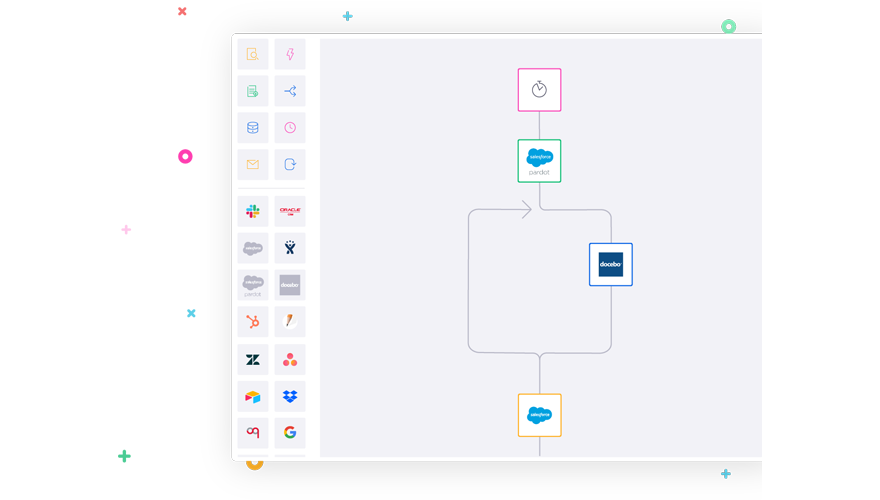
Demandbase automates campaign experiences with Tray.io
Marketing technology Demandbase has automated campaign experiences with Tray.io to qualify and nurture customers.Tray.io enables automators in any business role to build enterprise-class integrations and automation themselves in a low code environment. The Tray Platform’s flexibility and ease-of-use help Demandbase encourage marketers to complete its series of industry-leading online ABM certification courses. Demandbase has already observed that customers that complete its training have 2.6x higher customer lifetime value and are 12% more likely to renew. Using the Tray Platform to automatically track and engage with customers across their journey has resulted in a 38% increase in certification completions.
26 August 2020 · Content, Creative & Campaigns

4 things businesses need to do to create a more inclusive workplace
With more discussion on diversity than ever before, it is important that companies take an active role in driving change forward. Kavita Singh outlines the steps that need to be taken towards an inclusive culture.Race can be a difficult topic to discuss. Fortunately, the Black Lives Matter movement has brought racial inequality to the fore of the public’s conscience, and the marketing sector is no exception. It has made companies take greater strides to promote inclusivity, and also made companies take a look at their blueprint to see if they’re actively promoting an inclusive culture both internally and externally.The steps toward progress are possible regardless of where your company stands. If you’re not sure where to start, it begins with the business making these changes.1. Start with the leadershipAmanda Fone, founder of the BAME2020 diversity programme, says: “The leadership of organisations needs to understand that if it’s got a white board, or a white owner or a white venture capital company behind it, the first point is to know that you will have unconscious bias. And there is no point in arguing about it, all of us have unconscious bias and there is white privilege just by being white.”Unconscious biases are re-learned stereotypes that are unintentional, deeply ingrained and universal. These can include factors such as gender, race, religion and age – all factors that impact equal opportunity and advancement in the workplace. Studies have shown that women of colour are most impacted by these systemic biases.If a business is serious about change, it starts with the leadership. It is important to realise that it’s not up to the BAME (Black, Asian, minority ethnic) community within your organisation to incite these actions. It needs to start with the leadership within the company. If your senior management is turning to only the BAME community for solutions, they are only adding to the problem at hand.While it is certainly okay to get a second opinion, if senior marketers are not making active efforts to educate themselves, this will not only be simply putting a band-aid onto the issue, but it will also most likely cause frustrations internally. Don’t place accountability on others.Amanda says: “It’s not the responsibility of the BAME community. It’s actually the responsibility of the leadership to become better educators and become more aware of what racism actually looks like and to recognise that they are part of a white privilege themselves.”So if these diversity initiatives are not being brought up at meetings, make an active effort to continue the conversation and encourage leaders to unite.
25 August 2020 · Content, Creative & Campaigns

How to webinar – a guide by fledgling webinar-ers
We’ve recently jumped on the webinar bandwagon. Why? Well, with event spaces well and truly locked up for the foreseeable future, we had plenty of content ready to be rolled out, including a couple of keynote presentations for expos that had since been postponed. So why wait? We decided to jump in headfirst.We’d never done a webinar before so we were a little dubious and actually downright scared. And we were right to be as, according to Medium, only around a third of sign-ups will actually attend your webinar. With this statistic in mind, not only was it important to reach as many people as possible, but also we were keen to beat that statistic and encourage more bums on virtual seats. As with any new marketing venture, we had plenty of learnings after the event, so we’ve split them into two parts. Part 1 of this blog focuses on the planning stages and promotion of the webinar, while Part 2 covers data collection and the all-important follow up.
25 August 2020 · Content, Creative & Campaigns
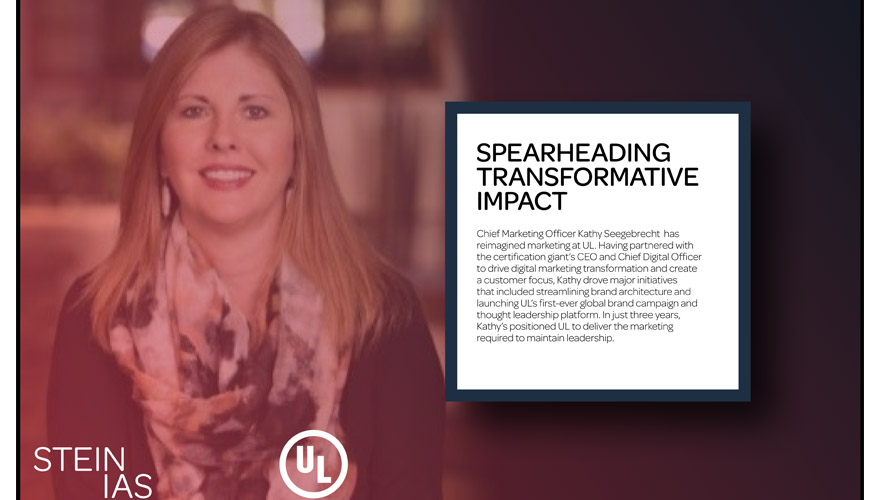
An interview with ‘Marketer of the year’ Kathy Seegebrecht
Kavita Singh spoke with Kathy Seegebrecht, CMO at UL, about her ‘Marketer of the year’ win at our Elevation 2020 awards.Q: What was your reaction to winning the award?Kathy: We’re so appreciative about it because B2B marketing is so different from B2C, and B2B has made strides over the past few years, especially at UL. We have really improved our capabilities and talent over the last five years and I just felt like “Wow, this is a wonderful recognition.” There’s so much more to do and we have to continue to evolve along with the market as a trend. I was extremely proud and excited.Q: What did UL look like when you first joined?Kathy: I started UL five years ago as the president of corporate marketing. They didn’t have a CMO, and we had about 12 people in corporate marketing. We were working with an agency in New York at the time who was not doing us favours and taking a lot of our money. They managed our website and it was so poorly done. Businesses didn’t enjoy working with this agency and they ended up building their own websites, so it completely proliferated our digital landscape and the same for social media. Our service offerings were, I’m not exaggerating, 248 websites and 80 social channels, and you just can't have impact with that and we didn’t have inhouse capabilities and did not have a demand generation function. We did not have a marketing automation platform or CRM either.
24 August 2020 · Content, Creative & Campaigns

B2B copywriting: Is “human” the best we can do?
David McGuire of B2B tech writers Radix Communications says it’s time B2B content aimed higher.Here’s a fun game. Open up your brand’s tone of voice or writing style guidelines, and I’ll guess what they say.“Conversational”, possibly. Perhaps “confident”. Likely “concise”, and almost certainly “clear”. And here’s a strange one: “human”.I don’t know what’s weirder. The fact that almost every B2B brand writing guide stipulates humanity, or that nobody in the industry seems to notice what a bizarre indictment that is.It’s weird that “human” needs sayingBecause what exactly is the alternative? I find it hard to believe that any company makes the conscious decision to sound like a robot, an alien, or – worst of all – a management consultant.Plenty of B2B brands do sound that way, of course. But not usually on purpose.
24 August 2020 · Content, Creative & Campaigns

4 ways to use data to identify the most valuable leads, while reducing costs
Kate Cox talks about how lead generation can be achieved more efficiently by tracking the source of leads and focusing on the channels that are delivering the most, rather than by simply throwing money at the problem.Lead generation has always been a key focus for us at Moneypenny as we handle inbound marketing activity and customer enquiries for business of all shapes and sizes – from sole traders right up to multinational corporations. We ensure all phone calls and live chats are captured for our clients 24/7, either acting as a fully outsourced support, or as overflow to a client’s in-house team and if it’s a new business enquiry we can integrate these into their customers own CRM systems as a key route to growth.In terms of our own marketing, we operate across most digital channels as well as non digital ones such as DM, events and advertising in radio and newspapers, with multiple campaigns driving leads to our website, who then typically engage with the sales team via phone, live chat or web form, converting them offline.1. Knowledge is power – ensure visibility in your sales leads through to conversionWe had a reporting challenge for our marketing team, who lost visibility once a lead was handed to the sales team. We knew we were missing data on a large number of leads via paid search, particularly for those that came in via the phone. While we could cross reference leads in CRM, there was no way of accurately tracking the leads from phone calls or live chat back to a traffic source. This black hole in our reporting made it impossible to discern what separates a great lead from the crowd.We came across Ruler Analytics whose software made it possible for us to track not only calls, but leads from live chat and web forms too. It meant we can accurately track all visitors to our website and match lead data back to the original source. This enriched data is then pushed to Google Analytics and AdWords where our team can see leads, qualified leads and clients won, attributed to specific campaigns and keywords, which has removed time consuming tasks from our digital team’s to-do list.
24 August 2020 · Data and Insights

Is the tide turning for channel marketing?
Channel marketing can a technical and complex discipline, and that can be off-putting for brands and marketers alike when there are more simple and sexy routes to market. But as we found out in our latest B2B Marketing Leaders virtual roundtable, in the wake of Covid19, channel marketing might be seeing something of a renaissance
21 August 2020 · Content, Creative & Campaigns

B2B Marketing Leaders Round Table: Has your marketing budget suffered a blow?
Last week I was delighted to be invited to join B2B Marketing’s Leaders Roundtable event as a guest speaker. The topic of conversation was undeniably a hugely relevant one – protection strategies for marketing budgets. And it was such a useful discussion, I thought it worth passing on some of the key insights… It’s given me lots of food for thought!A mixed budgetary bagSome marketing leaders have seen straight cuts of up to 50%, almost halting the majority of their half-two spend. Others have seen more modest reductions of around 10%, but have struggled to execute their plans with some, or all, of their staff being furloughed. And then there are others for whom the situation has been entirely different. They have found themselves offered more budget because their business has seen an increase in demand during lockdown. And the problem they have faced has been how to increase output when they have no additional people on the ground to do the work. It’s been quite a heady mix.However, despite all this disparity, one particular theme has come to the fore very strongly for all. The challenge of managing stakeholders during these tumultuous times is now stretching time management to its limit.
21 August 2020 · People, Teams and Skills

Confirmit appoints Tobi Andersson as chief product officer
Market research and customer experience SaaS vendor Confirmit has appointed Tobi Andersson in a new role as chief product officer. The announcement follows the recent acquisition of Confirmit by Verdance, its merger with Dapresy, and the appointment of Kyle Ferguson as CEO. Andersson has over 20 years of experience in the global market research industry, most recently as the former co-founder and CEO of Dapresy.Andersson will now be responsible for the integration of the Confirmit and Dapresy’s platforms, working with customers, partners and product development teams globally to create a single platform.
20 August 2020 · Content, Creative & Campaigns

How has COVID-19 changed the way B2B businesses sell?
COVID-19 has accelerated the evolution of the B2B sales process, and in turn redefined multiple job functions across the entire sales and marketing ecosystem.With buyers moving away from the traditional in-person engagements with their sales reps to buying online through self-serve digital channels, business leaders must ask themselves: how do I equip my sales teams with the tools and insight to deliver value as they engage customers? Do I have the ability to easily engage customers and prospects digitally how and when they want? And through what channels? Do I have the ability to offer channel fluidity to customers in a manner that creates a seamless compelling experience that meets their expectations?It is clear that digital-savvy B2B buyers are not turning back to offline engagements. They are blazing ahead and driving the engagement with sellers to yield the offers they want and need. Sellers need to adapt to this buyer empowerment. Truly innovative sellers will have already made investments they can further expand to keep pace with how buyers want to buy.
18 August 2020 · Content, Creative & Campaigns

3 things every B2B copywriter should know when they're writing for digital
As copywriters, many of us are used to adapting our copy for different channels and formats - but when it comes to digital content, the list of copy considerations can seem overwhelming. From SEO to meta-tags, it can feel as though writing for digital is more of a science than an art - but by keeping these top tips in mind, you should be able to create copy that’s a beautiful blend of the two.It’s likely that your audience is spending more time online right now than ever before, with internet hits surging by 50%-70% since the coronavirus pandemic hit, as people strive to stay connected and stay safe. This means there’s a great opportunity for your business to connect with its customers through digital marketing campaigns - but as many of your competitors rush to seize this opportunity too, you’ll only reach your audience if your copy is optimised for a digital audience.Just how do you do that? Well, when you’re writing for digital, here are three things you need to know:1. Your audience is skim-readingA recent review of the differences between print and digital reading experiences found that when reading online, people tend to browse and scan, look for keywords (more on that later) and read in a less linear, more selective way. Multiple studies have found that reading from a screen makes us far more likely to skim the words we’re reading, and even when we’re skimming, we’re not reading linearly - instead our gaze tends to jump around the page, and we’re often distracted by elements like pull-out quotes or images.This means that copywriters need to write ‘skimmable’ copy, to ensure that the key messages and calls to action are picked up by online readers that are just scanning the page rather than reading every single word. There are a range of ways you can do this, but perhaps the most important is to keep your copy concise. Every sentence you write online should be valuable and add something to what you’re saying - there’s no room for waffle, as it’s likely that your key messages will simply get lost with the ‘fluff’.Breaking up your copy into smaller paragraphs and using subheaders to make the subject of each section of your copy clear can also help you to ensure your messages get across online, as this should enable readers to simply skip to the section they’re most interested in and get what they want out of your content.
18 August 2020 · Content, Creative & Campaigns

Brands struggle to respond to Black Lives Matter and Covid-19 with empathy
Research reveals that marketers have struggled to empathise with social change and global issues affecting their customers.Some 81% of brand representatives surveyed in July said they adapted their marketing strategy due to Covid-19 but 60% found it difficult to display appropriate empathy when doing so. The top three empathy focuses identified in the research for brands right now are: Covid-19, Black Lives Matter and mental health.The two most common barriers stopping brands from responding faster and more effectively to change are; the inability to measure and analyse sentiment; and a lack of knowledge around how to use data to predict the success of future campaigns.To help solve these issues and others, 97% of brands want to adopt technologies such as AI, to help them use data more effectively for predictive analysis and automated decision making.The research among 250 senior marketing decision makers in the UK, was conducted by Sapio on behalf of marketing AI company datasine.
18 August 2020 · Content, Creative & Campaigns

Exploiting data to deliver customer value
This is the age of the customer. Customers have more power than ever before and are now in control of their relationship with the business. With just a 5% increase in customer retention potentially increasing a business' profitability by 75%, it’s clear why improving customer experience is one of the key areas of focus for marketing departments.Customer experience has lately been brought into the epicenter of marketing operations, as the coronavirus pandemic affects critical KPIs in the business. Many organisations are redirecting their strategy to focus more on customer experience, from both a proactive standpoint and a reactive one. Two key ingredients in this process have been:data-driven marketing that enhances customer experiencedigital channels that are being used to deliver customer value through personalised messagesFor most industry sectors, email marketing is key to customer experience and loyalty. Doing it effectively can have a direct, positive impact not only on sales, but also customer engagement and loyalty. But how can an organisation improve its emailing practice during challenging times?
17 August 2020 · Data and Insights

5 changes to your business during the post-Covid-19 era
As we ease into a new stage of Covid-19, it’s time to consider what will happen when businesses start opening up. Kavita Singh reports.Working from home will become the new normalFor the past few months, businesses have transitioned from the offices to the comfort of everyone’s homes. While for some, it was an easy transition, others struggled.As we begin to gradually ease out of the pandemic, it is now clear that businesses can be run from home. This means people can be more flexible with commuting and travelling to the office (depending on where you are). Perhaps it makes sense to loosen WFH restrictions for your company. Others might want to stay at home for the time-being for safety reasons, so make sure you’re respecting everyone’s needs, as well as those eager to head back to the office.Tom Castley, VP of sales at Outreach UK, said: “It should come as no surprise that more than half of office workers will continue to work from home for the rest of the summer. The lockdown has shown that while offices are nice to have, they are not fundamental for the running of many companies. Business leaders should remember post-Covid-19 that talent is accessible anywhere, and that includes remote workers. Not all talent is based behind the big city office walls.”
17 August 2020 · Content, Creative & Campaigns

An interview with Rossa Shanks
We recently caught up with Rossa Shanks, CMO at Dow Jones, to discuss his current role and marketing challenge, his new book dedicated to ABM, and his advice for anyone undertaking ABM programmes in this new post-Covid world.Tell us a bit about you, and your background. How do you think this prepares you for your current role?My career so far has been eclectic but thematically consistent because I love creating stuff. I started my career at creative ad agencies, AMV BBDO and Grey London, working across many different brands, from Mercedes Benz and BT to The Economist and PepsiCo. It was a lot of fun creating TV ads and integrated ad campaigns.At Grey London, we pitched and won the News UK account. Six months later, the CMO of News UK poached me and I switched gears to B2C client-side marketing. Advertising is such a small slice of the marketing pie, so it was a great opportunity to take on a new learning curve. However, at the time, I had an entrepreneurial itch. So, it wasn’t long before I left to start my own business with a friend from the advertising industry. It was called Great Little Place — a user-generated little black book of the most charming places to go. I was CEO but, in reality, I spent a lot of my time as the de facto CMO because we were a small team.I believe start-up marketing is a discipline in and of itself. Building a company from the ground up requires imagination, grit and tenacity. So, I educated myself and read about viral loops and growth hacking and turned my hand to that. As a result, we grew our community to over 1.5 million fans on social media and managed to attract 110,000 founding members’ email addresses before debuting on the app store and being featured as Apple’s No. 1 app of the week.Working in the start-up world is a great adventure but, in the end, my corporate roots came calling again. The former CMO of News UK, who had previously hired me, had moved on to become president of Dow Jones in New York. So, when the call came to become CMO of Dow Jones across the pond four years ago, I couldn’t say no. It’s at that point that I had to learn B2B marketing from scratch whilst building out a whole new team.
17 August 2020 · ABM & Demand Generation


