The number one go-to-resource for B2B marketers across the globe


Case studies, webinars, reports, podcasts and videos from B2B Marketing, in one place.
Best practice briefing
A guide to overcoming the biggest challenges to becoming a commercial marketer.
A guide to overcoming the biggest challenges to becoming a commercial marketer.15,425 results · page 190 of 643

SugarCRM has appointed Martina Knappe as director of marketing for Europe, the Middle East and Africa. She will be responsible for implementing high-impact marketing strategies to increase awareness of the company’s customer relationship management (CRM) technology across the region.
5 June 2017 · People, Teams and Skills

How do you find the right employee branding strategy for your business? Attracting and retaining the right talent is an important part of any business, especially those that are expanding quickly. Yet, as the fight to entice and retain talent gets tougher, maintaining a strong talent pipeline has never been so necessary. The route to attracting and retaining talent lies in creating a successful employer brand – appealing to potential employees who are considering working for your organisation.
5 June 2017 · Brand

We’ve spoken to those in the know to find out how to stand out from the competition at business awards – and what to avoid at all costs
2 June 2017 · ABM & Demand Generation

Decision-makers feel like they do not gain valuable insights from the thought leadership content they consume 56% of the time, according to a survey.
2 June 2017 · Data and Insights

The six biggest marketing automation (MA) technologies account for 57% of total market share, according to a report by SimilarTech and Bold Digital Architects.
1 June 2017 · Content, Creative & Campaigns

More than a quarter of B2B CMOs set aside up to half their marketing budget for brand experience, according to a survey.
1 June 2017 · Brand

1 June 2017 · Marketing Operations and Technology (MarTech)

The biggest challenge that B2B brands face when marketing on Facebook can work out to be their biggest strength. While a lot of B2C brands enjoy the luxury of having a wide audience that cuts across different demographic and interest categories, B2B brands have a smaller, far more concentrated audience.
1 June 2017 · Brand

More and more, enterprise-level organizations are looking toward account-based marketing as a way to increase pipeline velocity and close bigger deals with target accounts. In this article, Jonathan Gray explains why B2B companies are moving to ABM and discusses the new technologies emerging with it. Customers want to be engaged and feel like a product is tailor-made for them. Businesses are no different, which is why a shift toward an account-based marketing approach should sound appealing. At its core, ABM is a strategic method of B2B marketing that targets companies and concentrates marketing and sales efforts on a prioritized set of accounts. The idea is a more personalized strategy marketed toward the accounts’ key stakeholders. In other words, ABM is a way to apply one-to-one marketing techniques to an individual company. Each strategy’s success depends on an ability to stay hyperfocused, to gain a deep understanding of your target, and to build a relationship with it over time. Moreover, successful ABM marketers know an audience isn’t simply one key decision maker within an organization; rather, it’s a team of people, each with unique pain points and motivations. ABM, however, isn’t a quick fix if sales are lagging or you’re just looking for ways to spend the remainder of your marketing budget by year’s end. It’s a long-term strategy that can be hard to pull off, but a successful ABM effort can also land you your biggest clients. That's why B2B companies incorporating ABM tactics into their larger growth strategies is becoming more popular than lead-based and other more traditional types of marketing.
1 June 2017 · ABM & Demand Generation

Some 34% of marketing and advertising businesses are aware of new European data protection legislation which comes into force in less than a year.
30 May 2017 · Data and Insights

What’s the secret to mind-blowing storytelling, a creative thinking process that leads to fresh ideas, and a marketing culture that can embrace transformational change? B2B Marketing Ignite speakers Doug Kessler of Velocity, Carla Johnson, co-author of Experiences: The 7th Era of Marketing and Emma Roffey of Cisco provide some top tips
30 May 2017 · Content, Creative & Campaigns

With 600 million active monthly users, Instagram is the definitive platform for sharing mesmerising images. Here we showcase the B2B brands killing it on the platform and the images that grabbed our attentionAnyone that has an Instagram account will know the race for likes and eventual self-gratification can be intense – not to mention addictive! But while this might be the goal of a selfie-obsessed teen, the aim for B2B brands is a little different. Instagram is a golden opportunity for brands to show-off creative branding and interactive videos. Here’s a selection of our favourites.1. AdobeAdobe’s Instagram account is overflowing with images that fire the imagination, often because of their abstract and surreal quality. Upon first glance, there’s nothing in the images to indicate this is a corporate account. Its focus on colourful photography makes the user feel as though they’re connecting with an individual.
30 May 2017 · Brand
Facebook CEO Mark Zuckerberg’s dog Beast has more than 2.5 million likes on the social network. But what’s the name of your CEO’s dog? Does he or she even have a dog? Or are they more of a cat person? These might appear trivial questions – and they are – but whether you can answer them should shine a light on your relationship with your boss.For many senior marketers, this relationship isn’t as good as it could be. Recent research from technology and strategy firm Squiz found that just 27% said their marketing team works closely with the CEO, which may explain why more than half also believe board-level management doesn’t understand marketing.Here's how CMOs can help their CEOs to sleep easy.
26 May 2017 · People, Teams and Skills

Using emojis in email subject lines could increase read rates and the chances of messages reaching your target’s inbox, according to Return Path.
26 May 2017 · Content, Creative & Campaigns

In the second of a two-part series, client-side marketers offer us their two cents on how agencies can add real value to their pitches and ultimately build a stronger working relationship.This feature has been written exclusively for our b2bmarketing.net members. Membership is free and only takes five minutes to complete, giving you access to the following:Bad brief honestyBalancing your strengths and weaknessesClient research tipsCreative showcase tipsAligning targets to client goals.
26 May 2017 · Content, Creative & Campaigns
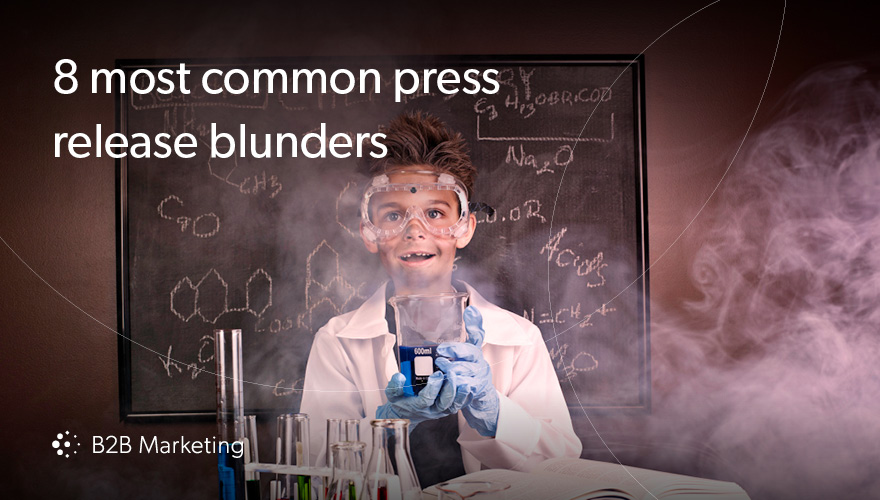
At B2B Marketing, we receive our fair share of questionable press releases. And so we know better than most that for marketers who dabble in PR, the pitfalls are multifarious. Michael King outlines what not to do when reaching out to an audience of time-poor journalists For journalists, the ideal press release strikes the perfect balance between informative and engaging. But what sometimes happens is quite the opposite: some PRs miss out the key facts while others send over press releases that are completely irrelevant. Hopefully, the following list will remind you what not to do when drawing attention to your news story.1. Subject lines written in upper caseThe subject line is the first thing journalists see when your email reaches their inbox. Shouting at them with upper case lettering might get their attention but you might ruffle some feathers in the process.2. Impersonal emailsSo you’ve just received a press release, and the subject line looks intriguing. But you open the email to learn the writer hasn’t even bothered to find out your name. All that’s included as the opening linen is ‘Dear editor’ or ‘Good morning’. Come on marketers, no one likes to be a face without a name.3. Self-promotion in quotesJournalists love an insightful quote. But what they can’t stand are quotes that are overtly self-promotional. By all means provide a few sentences about your company if you feel it’s appropriate, but keep it minimal. If we wanted to read about the intricacies of your product offering, we’d check out your website.
26 May 2017 · Content, Creative & Campaigns
Too many B2B brands still treat content marketing like a form of advertising, and it's a huge turn-off for potential buyers
26 May 2017 · Content, Creative & Campaigns
Too many B2B brands still treat content marketing like a form of advertising, and it's a huge turn-off for potential buyers
26 May 2017 · Content, Creative & Campaigns

Connecting in business is about being present, being available and being unselfish. While it’s a term open to various definitions, I see it as that person who develops relationships that bring value to others in one’s network. And yes, sometimes it brings value to the connector directly – maybe it’s a piece of new business or a favor repaid. But that is incidental; those who connect solely for personal gain are merely takers, not givers.
26 May 2017 · People, Teams and Skills

Marketers feel less confident they will be ready to meet the requirements of the General Data Protection Regulation (GDPR) than they were three months ago.
25 May 2017 · Content, Creative & Campaigns

’Where do you see yourself in five years?’ is a question dreaded by many, and not just marketers. But our research clearly shows that marketers who have a career plan in place are often more successful. Here’s how to create one:Map the path you’ve already taken, and think about why you’ve ended up where you are now. Are you satisfied with the jobs you’ve done in the past, and what would you have done differently? Reflecting on this can help you make a more effective plan in future.Identify your options – do you aspire to become a CMO of a big-name brand, or perhaps start your own agency one day? Spend some time thinking about what you really want from your career – also make sure you take into account personal priorities, such as a good work/life balance or having children.Set SMART goals (specific, measurable, attainable, relevant and time-bound). If you set short-term goals (within a year) and long-term goals (within five years) you’ll be able to take concrete steps to further your dream career.
24 May 2017 · People, Teams and Skills

What the devil is digital asset management (DAM) and how can it make your life easier? We explain what DAM is, how it can benefit your brand, its limitations, and how to choose the right DAM platform
24 May 2017 · Content, Creative & Campaigns
With technology rendering us always contactable, Jess Pike speaks to five marketers to find out how they strike the right balance between professional and personal. We only have one life, and it’s important that you’re happy and fulfilled in both areas of your life. If you’re happy at work, but unhappy at home – or vice versa – you won’t be in balance. A few years ago, I was pretty unhappy at home, and loving my job – so was working long hours because work was where I felt happiest. Now, as a mum with two young children, I’d love to spend more time at home with them. But it’s all about balance.I think it’s important, as leaders, to show your human side at work. Celebrate what people are doing in their lives at home – we have a Monday morning ‘quickie’ meeting, and I always try to be as human as possible. If I’m leaving an hour early on Wednesday, I’ll tell the team that I’m going to my kid’ sports day. If a colleague is off on Friday, we’ll share the fact that after months of training he’s finally off to do the Iron Man. Give people to permission to be human; we’re not machines, after all, and having an EQ and sense of empathy is hugely important. In today's always-on society, you have to learn to compartmentalise...... because you can’t think about everything all the time. It’s about operating in different modes depending on what you’re doing. I tend to get home at 6.30, and have an hour and a half with my kids; during the evening I resist the urge to check emails – which is a constant battle. But sometimes, on a Saturday afternoon when I’ve been playing with the kids all day, checking my email actually gives me a bit of breather. It’s my brain switching over from one mode to the other. But if I look at them and end up regretting it, I’ve only really got myself to blame!Personally, I believe that it you can’t switch off in the evenings or at the weekends, then there’s something fundamentally wrong with your organisation. A few years ago, lots of people would be doing a one and a half hour commute without wifi – and they managed. Nothing went catastrophically wrong!And when it comes to other people switching off – well, it’s all about respecting their choice and their approach. Some people choose to leave the office at 4pm, but are then back on emails at 8pm. Others email late at night or early in the morning. As long as there’s an understanding that you may well not get a reply until 9am, then it’s fine.When it comes to flexibility, there's definitely a tipping point...When only a small percentage is taking advantage of flexible working, feelings of guilt and resentment can creep in. But once you get past that point, your organisation will become more self-healing, and people will be more likely to help each other out rather than resent each other for not being in the office.It’s also worth saying that flexibility allows for diversity because as an organization you can meet a whole host of different needs: family needs, religious leads, personal needs. You can also attract people from different backgrounds. Some people think that the stereotypes around agency life is true – that it’s all work hard, play hard, lots of drinking – but that just isn’t the case. You need to be good at what you do and you need to collaborate, but it really doesn’t matter whether you leave at 5pm or don’t drink booze or come in at 10 because you have a morning spin class.
24 May 2017 · People, Teams and Skills
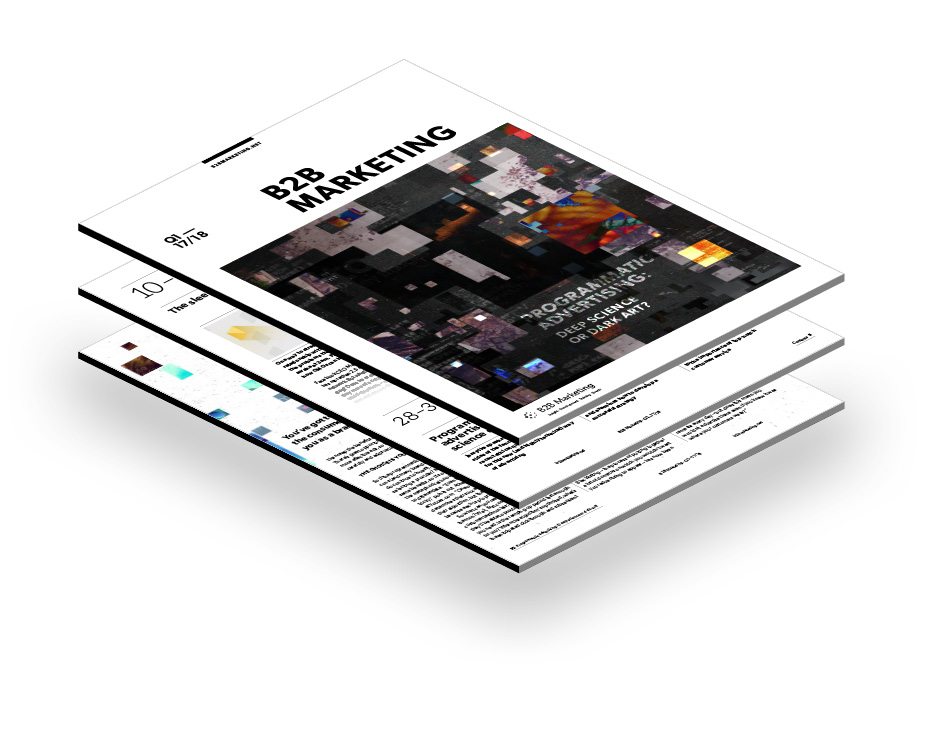
This quarter's edition lifts the lid on this summer's epic B2B Marketing Ignite event, explores the deep science of programmatic, and determines which department structure is most conducive to seamless sales and marketing alignment
23 May 2017 · Strategy and Evolution