The number one go-to-resource for B2B marketers across the globe


Case studies, webinars, reports, podcasts and videos from B2B Marketing, in one place.
Best practice briefing
A guide to overcoming the biggest challenges to becoming a commercial marketer.
A guide to overcoming the biggest challenges to becoming a commercial marketer.15,425 results · page 83 of 643

B2B copywriter David McGuire shares some tips to make your content stand out to busy decision makers. It’s a boom time for B2B content. With face-to-face channels out of the window, marketers have diverted budgets into writing, creative, videography and design – making all sorts of new assets to carry their messages to market. But that deluge means your content needs to work harder than ever. Content fatigue is a real issue, as B2B stakeholders have so much more to wade through. It’s no wonder that the introductory roundtable for the Propolis Brand and Content Hive included “How do you make content compelling?” among the leading challenges facing its members. There’s a lot of noise, so it’s difficult to be heard. If you’re wondering how to differentiate your content, here are three simple suggestions. They’re not foolproof, but in most B2B markets they’ll go a long way towards setting you apart from the crowd. 1. Make it more targeted Your reader is most likely to engage with content when they know it’s speaking just to them. So you can make your content stand out among a set of similar pieces by being that little bit clearer about who you’re writing for. The trick is to zoom in one or two steps further than your competition. So if they’re writing about how a technology or approach is used in a vertical market, you can focus on the benefits for a certain job role within that sector. Or for the person doing that job within a certain size of company. Or for the person doing that job, in a certain size of company, facing a specific challenge. (Heck, you can even target by psychography. I once wrote an eBook targeted at people in a particular job role, at the early stages of making a certain decision, and feeling a certain way about that situation. It went on to become the company’s top-performing piece of content.) It’s an extension of the principle that makes ABM so effective; by being more selective and targeted, you can speak more powerfully to your reader’s real concerns, challenges, pain points and state of mind. And your audience knows it’s more relevant too. It’s the reason you’re reading this blog post on B2B Marketing, and not browsing a general site about all-purpose content.
21 April 2021 · Content, Creative & Campaigns
When it comes to aligning your stakeholders and technology, it’s not the technology that has limitations, it’s usually the people. Shelby Torrence, head of marketing for Deliverect, gave some top tips to creating this alignment at her Get Stacked 2021 session. Kavita Singh reports. Visualise what success looks like When creating a shared vision, Shelby says people often make the mistake of using a competitor or using a former employer as a model. However, this can create some ill will when compared to your competitors. A more successful alternative is using a partner or customer to create a shared vision. Shelby explains: “If you do it based on a partner and the customer, even if their business is not exactly the same, it helps people get behind you a little bit more because it's someone you have a good relationship with. The other piece I found that's really good is that partners and customers will share a little bit more insight with you.” A couple years ago, Shelby did this when her company had to launch a new website. There was a lot of back and forth on the mass and the requirements of building it correctly. They had a partner with an excellent website and when she spoke with them, she was able to use them as a model of success. They had shared their website, the agency they worked with, and the mistakes they made along the way. Another key to visualising success is to echo the shared vision constantly. Throughout the process, don’t just use it in the beginning. When creating documents for meetings, you don’t have to spend a lot of time on it, just be sure to reiterate what the end goal is. She says: “A lot of times it’s for stakeholders, it's more sort of the visual or a quick note of saying ‘hey, remember, we agreed that we were going to take a certain approach.’ So this kind of keeps things top of mind, it helps to keep people on the same page.”
21 April 2021 · People, Teams and Skills

We’ve all been guilty of it: random acts of content. Sometimes it happens because content marketers are up to their ears with content. Other times, they simply don’t have a clear pulse on their audience’s needs. Propolis Hive Ambassador for Brand and Content Strategy, Scott Stockwell, spoke with Kavita Singh about ways in which content marketers can start creating a more aligned content plan. 1. Get in the right content mindset A Hubspot study showed that 70% of marketers are actively investing in content marketing. However, content marketers usually make the mistake of getting into the wrong mindset, which leads to the wrong type of content, and which can then be detrimental to your company. As they are often more ‘doers’ than strategists, it’s important for content marketers to take a know the purpose of the content. Scott says marketers often make the mistake of forgetting their content’s purpose,when, in actuality, they should be asking these questions before writing anything. Who is reading it? What is the purpose of it? How is it relevant to what we do? One way to answer these questions is to create a content brief before actually writing something. Scott says: “Content should have a brief so marketers can answer ‘what’s the content?’, ‘what’s its purpose’ and ‘what are we measuring here?’ You should write the brief before you write the content. It’s a little like post-purchase rationalisation, where you buy a fashionable pair of shoes and you rationalise that, saying: ‘yes, they make my feet bleed, but they look fantastic.’ Think about the purpose before you go shopping.” From the brief, you can start to devise the content type. Another common pitfall is assuming that one size fits all when it comes to your customer. You might love infographics, but if someone lives on Instagram and TikTok, then maybe that’s not the right avenue to explore. Once your content is actually out there, you need to think about KPIs. Scott stresses the importance of content hygiene, which requires marketers to review and tweak low performing content. If it’s not going to work, be sure to figure out how to get rid of it. He says: “How will you know what is working? What to change? What to keep? It’s what I call the Whitney Houston moment: How will I know? Think Whitney!”
21 April 2021 · Content, Creative & Campaigns
The move away from third-party cookies is said to help ensure ads are relevant and minimize the data shared with websites — but the specifics are still a little up in the air. As the 2022 deadline fast approaches, there are still a lot of unanswered questions.
20 April 2021 · Marketing Operations and Technology (MarTech)
The US Agencies Benchmarking Report lists the top B2B agencies in the US.
20 April 2021 · Content, Creative & Campaigns

Here are my personal highlights from the extraordinary line-up of B2B marketers who are speaking at B2B Marketing Ignite USA 2021, taking place in June this year
20 April 2021 · ABM & Demand Generation
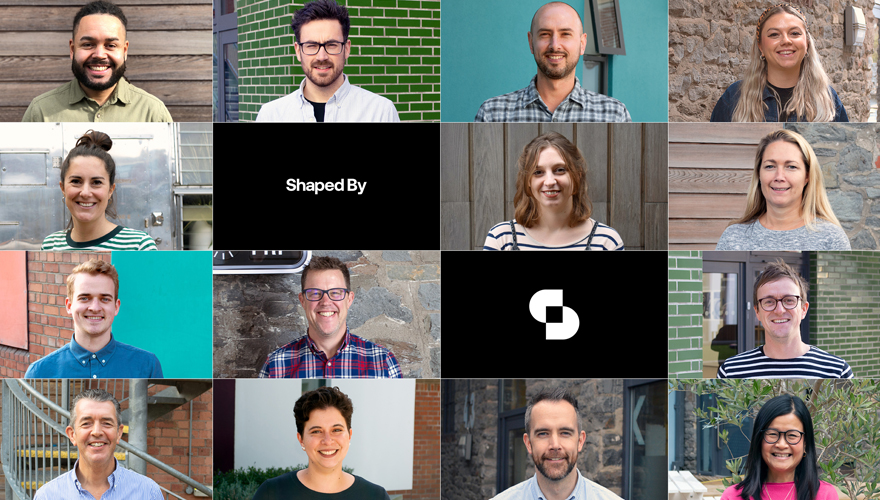
Creative agency Workbrands has relaunched as Shaped By, a creative studio for global technology brands. Shaped By is based on the idea that there is a direct link between the level of creativity invested in marketing. Shaped By’s brand launch is marked by a new website and social channels. Workbrands was founded by Nick Farrar and Steve Goss in 2005 with software firms such as Autodesk, Rubrik, and Nutanix. With its new name, Shaped By will continue to deliver brand identity and creative marketing that helps brands communicate their technology to their audiences more effectively. Nick said about the relaunch: “The marketing landscape has changed dramatically over the years. Now, the need for effective communication through great design has never been more important. As an agency we’re continually evolving to meet this challenge and felt it was the right time to recognise this with an ambitious and playful new brand.” “The Shaped By brand name and core concept reflects the fact that, as humans we are all shaped by our life experiences, our environment and the people around us: we are a constant work in progress. Similarly in a work context, the Shaped By team shapes the outcome of a project through our collaboration with clients.”
15 April 2021 · People, Teams and Skills

When you think about it, you spend more time at work (even virtually) than anywhere else during the day. So, imagine how uncomfortable it would be to not feel like your workplace is a safe environment for your ideas, work ethic and mental health. I’ve been doing a series of diversity and inclusion articles for B2B Marketing and one phrase I see being tossed around is teams being ‘psychologically safe’ in the workplace. Psychological safety is the idea that your team feels they can be themselves at work, that they can make mistakes and they don’t feel threatened. Harvard business professor Amy Edmonson cited psychological safety as a key attribute in high-performing teams. Amy did some research studying medical teams to see which type of teams perform the best. She was shocked to learn that the ones who made more mistakes along the way were the ones who outperformed the teams that were more cautious. To put that into perspective, imagine one employee who tip-toes around everyone and constantly has to walk on eggshells versus another employee who feels absolutely comfortable sharing their ideas, regardless of what others might think. This is why it’s so important for teams to feel psychologically safe. Employees need to feel like they can bring their whole selves to work so they can bring their most creative, innovative ideas, feel comfortable speaking at meetings and much more. Amy identified the following six traits of psychological safety: 1. Being true to their unique self Allow all employees to be themselves on both a personal and professional level because, if they’re not, it can hold them back in their work. According to a Deloitte DEI 2021 Report, about 61% of the workforce feel like they need to cover up aspects of their life in front of their colleagues. Be sure to check in and see how your employees are coping. If you’re being vulnerable and authentic to your employees, they’ll feel the freedom to be able to do the same. That also sets up a positive trajectory for good communication in the future. 2. Asking for help frequently In today’s virtual day and age, over communicating is never a bad thing, especially if it means your employees asking a simple question just to clarify something they’re unsure of. You want your employees to feel comfortable and confident coming to you. So when they do go to you with a question, always make sure you’re giving them the freedom to ask whatever they like – no matter how silly the question may sound. If you make them feel uncomfortable, the likelihood of them returning to you again is much slimmer.
13 April 2021 · People, Teams and Skills

2020 was a difficult year, and 2021 will by no means be easy, but that doesn't mean success is impossible. David Rowlands, editor, spoke to Dan Gliatta, founder and chief growth officer at US agency Cargo, to talk about the state of the market, and hopes and expectations for the months ahead.
13 April 2021 · Content, Creative & Campaigns

Read this guide to learn what the Role of UI/UX web design has in ecommerce and how web design can impact a shoppers behavior
13 April 2021 · Content, Creative & Campaigns

What does your corporate audit reveal? In March’s blog, we wrote of the likely effects of COVID-19 on corporate cultures, big and small, the world over. We suggested a formal audit to determine what impacts COVID-mandated changes, such as working in isolation, juggling job and family demands, and ubiquitous Zoom meetings, would have on corporate cultures. But we also raised the question: What if the corporate audit uncovers more fundamental issues? What if it reveals, for example, that these unprecedented times and conditions have shifted the very underpinnings of your business? Painful results may include: Your Vision doesn’t just need clarifying, staff no longer see it as relevant to your markets’ evolving needs. Your Mission, far from having a place in your employees’ daily jobs, is actually felt to be irrelevant, obstructive, contentious. Your Core Values provide no guidance or inspiration for employees in diaspora-mode. Your clients are deemed unconnected and disengaged because your strategy is suddenly off-trend and uncompetitive. Is it time to re-think and re-evaluate your business? Should your audit reveal similar, bitter truths, something you must admit with eyes-wide-open is possible, it is not yet the moment for a corporate refresh. It is rather a time prior: A time to press the reset button on your brand and your business. To re-think and re-evaluate everything about your business: your market, your clients and customers, your competitors, your supply chain, your marketing, your offering – everything. This means a deep-dive into your business situation. 5 critical exercises to chart your course forward We gather here five key exercises we routinely employ with companies going through major change. Because make no mistake, this is about change management. We also offer a framework in the Brand Octagon to capture your evolving business and brand: notably, your Vision, Mission, Core Values, Target Audiences, Positioning, Promises, Total Offering and Brand Personality. Some of these elements you may very well keep, some you are likely to shed, others you will surely need to evolve. This is fine, this is what a strategic plan is all about. First, however, you have to fully articulate each brand element. This is not easy. The exercises are designed for you and your Management Team to jointly conduct your business’s deep-dive, to be optimally ready, together, for pressing the reset and relaunching your business, in order to pro-actively manage what lies ahead.
13 April 2021 · Brand
In this guide, you’ll discove how the role of the CMO is evolving
13 April 2021 · Strategy and Evolution

With growth marketing being the #1 trend on this year’s 2021 Trend Tracker, this week’s episode features Scott Vaughan, chief growth officer at Integrate. Editor for B2B Marketing, David Rowlands, sat down with Scott to talk about what growth marketing is, what a chief growth officer does and how marketers can make growth central to what they do. DR: You may or may not have seen our 2021 Trend Tracker. Essentially, this was a survey we conducted with hundreds of B2B marketers to see what core topics they’re focused on this year. Growth marketing, which was a completely new entry in this year’s Trend Tracker, was the number one focus area amongst both agency-side and client-side B2B marketers. However, there seems to be a huge amount of debate around what growth marketing even is! As chief growth officer at Integrate, what is growth marketing to you, and why do you think it’s such a core focus area for marketers this year? SV: I don’t think there is a business-to-business focused organisation on the planet who is not focused on growth in one fashion or another. Growth is a company-wide mission, requirement and responsibility. Ideally, all employees have this mindset. Marketing has taken more of a central role because of a change in the buying and selling process. In B2B, Gartner states that sales are only involved 7-9% of the initial purchase process. Buyers have also taken control of their purchase process and have gone digital first not engaging with companies until late in the process. This is where marketing has the opportunity to step in and step up. The move to apply 'growth' in marketing is a clear mission to up level the thinking from marketing-driven demand, which can often equal generating leads or sales pipeline, to a more holistic view of driving revenue growth and company growth. For example, a growth executive thinks about: Which markets are the best to compete in? What are the right solutions required to compete? What is the optimal go to market strategy? Not just leads and pipeline. In my role at Integrate, the opportunity for a growth executive was recognition by the CEO that we are driving a new category in a dynamic technology market. We needed to think about driving growth in new ways and faster to capitalise on market opportunity. For us, thinking beyond traditional 'demand generation' capabilities in marketing and sales are essential. Growth executives work across functions – marketing, sales, finance, product, customer success and alliances - to identify the right growth market segments, align products and solutions with markets you serve, to properly position your company and solutions to the right audiences and accounts, and to exploit market shifts and differentiation. With this in place, your organisation has a greater likelihood of sustained growth success and Marketing can more effectively and efficiently create demand for the company’s solutions.
12 April 2021 · Go-To-Market

A job often seen as a beacon for creative brains, new research suggesting that 75% of senior marketers feel restricted in their creative efforts by other c-level leaders (Bright, 2021) might feel like a surprising statistic. Whether this is a reflection of more automated tech processes entering marketing departments, or the rapid changes to the landscape of the workplace triggered by Covid-19, it suggests that marketers are feeling held back from stretching their creative wings and taking bold risks.
9 April 2021 · Content, Creative & Campaigns
The panel webinar includes speakers from world-leading brands including Webeo, Integrate, LogMeIn, and Web Insights.
9 April 2021 · People, Teams and Skills

When it comes to your employees, better engagement means better performance. But how do you actually improve engagement throughout your organisation? Kavita Singh spoke with Teams, Resourcing and D&I Hive expert Maria Cameron. First things, first: what is employee engagement? Employee engagement is a workplace approach to give employee members the motivation to do their best everyday. This can be achieved through shared goals and values, an enhanced sense of belonging and through team bonding activities in the workplace. Here we share three tips on improving engagement. 1) Take on the role as a coach position Many businesses will have annual surveys asking about employee satisfaction. Managers and leaders then use those forms to evaluate how they’re running their business. Maria says that while some good quality surveys might be helpful, a lot of them don’t address the behavioural elements that the leaders in the business are exhibiting. Change always starts from the top, especially in employee engagement. Maria says: “For me, one of the most powerful ways to drive employee engagement is to take a leader coach position. We sometimes have this superhero complex where we think as leaders, need to provide all the answers when, in actuality, we need people to get more engaged.” That means asking them the questions and allowing them the space and opportunity to come up with solutions themselves. As a leader, you should be assimilating all that information and simply setting the direction. She continues: “One of the things I struggle with is that I’m a high energy person and always want to talk too much, rather than posing a question at a team meeting and letting others start the conversation and being comfortable with the silence. There needs to be that piece about drawing in that engagement and giving people permission to openly share their truth. Sometimes as a leader, we haven’t given people permission to share with us some kind of unsavoury ideas. Sometimes, they’ll just mirror what we want to hear, so you need to challenge them.” This type of self-awareness will allow you to act as a coach rather than a director. You’ll need to ask people for opinions, get feedback consistently and develop a sense of self awareness of your own leadership style. Maria recalls one of her old bosses who would come into the office with his coffee and go straight into his office. He would often tell people he was always too busy and under pressure to speak with them. She says: “What he didn’t realise is that he was giving off that vibe. He was creating a ripple for people in the room. That’s what I mean about self-awareness.”
8 April 2021 · Content, Creative & Campaigns

Read this guide to learn the simple 5-step checklist that can set you up for product launch success
8 April 2021 · Strategy and Evolution

Kate Cox, CMO at Moneypenny discusses how Moneypenny relaunched the brand with an extensive marketing campaign. Moneypenny has just spent the last year working on a brand exercise which cumulated in redesigning and rebuilding both our UK and US websites in 2021 and launching new advertising activity on radio in both markets. We are now at a stage to understand the impact of the process and reflect on the importance of branding in B2B marketing. We work with businesses of all shapes and sizes from micro-businesses, so your local plumber, to multinationals and large financial organisations. We were founded by brother and sister, Ed Reeves and Rachel Clacher back in 2000 and have grown to become the leading provider in the UK and a challenger entrant to the US market. Our marketing has focused on growing the market for our products and services as we’re in a low awareness B2B category – we want other businesses to consider us a potential solution for their needs. There were a number of drivers for us to revisit the Moneypenny brand in 2020 although it would be fair to say that ‘brand’ thinking has always been part of the Moneypenny DNA: Moneypenny has been built on the idea of a dedicated PA for your business – someone you know and trust to look after your calls just in another office – perfect for smaller businesses who wanted to look bigger without the costs. However we had onboarded a large number of businesses and launched new products such as managed live chat. We needed to make sure we’d aligned both our brand vision and our product propositions to the overall goals of the business and our future source of growth. Our co-founders set up Moneypenny to deliver the best service in the market for a price premium. Did that proposition still resonate with our core target customers? Did it resonate across all target segments including larger businesses? Did it still help drive clear water between us and our competitors ? And was the number of businesses who cared about brilliant service a big enough market to fuel our growth? Since its inception in 2020 Moneypenny has grown quickly and to maintain this growth our marketing team needed some clear guidelines on both copy and design to start scaling output at pace to keep up with all the product innovations being launched so revisiting brand and re-cementing an updated brand playbook was a practical step to achieve speed. We had bought established companies both in the UK and the US to help us grow and the US ones during the pandemic lockdown. We had never written down our brand beliefs and we needed this to onboard and integrate these new teams and cultures quickly and efficiently. We worked with the brand agency, BrandCap on our solution and we included as many stakeholders as we could from employees, current , ex and future customers , investors and partners so we had a rounded view of the business. Through a series of collaborative workshops we developed our brand idea ‘Your businesses second home’ and then tested that in the market. We loved the idea because it perfectly summed up the unique culture at Moneypenny; our PAs and receptionists feel like part of their customers business and not just an outsourcing provider. Many had built up 20 year relationships with their clients and knew birthdays and partners birthdays. It also helped us think through which customers would NOT like the proposition so we could actively not target these groups. We felt that businesses looking for the lowest cost provider without a focus on exceptional service would be actively dissuaded from the brand idea and that this would drive efficiencies for the sales team.
8 April 2021 · Brand

Community is not a new thing. In fact, there’s a community (whether online or in person) for pretty much everything. But, until January 2021, there was not a community for B2B marketers. That’s right – a sector worth billions did not have a dedicated 24/7 365 space for its people to gather, share ideas, overcome challenges and help their organisations and careers grow.
7 April 2021 · Content, Creative & Campaigns

The Marketing Practice, independent B2B agency, has secured significant investment from private equity investor in technology and businesses, Horizon Capital. The investment will be used to build on The Marketing Practice’s strengths in account-based marketing and demand generation to deepen its expertise in both technology and data. With clients such as ServiceNow, Salesforce and the O2 Business, The Marketing Practice employs 180 people in offices in Oxford, Seattle, Munich and Sydney and hopes to expand as a part of its future growth plan. In our latest B2B Marketing UK Agencies Benchmarking Report, The Marketing Practice was ranked 15th in ‘Top 95 UK B2B marcomms agencies’, 10th in our ‘Top 15 international B2B marcomms agencies and networks’ and eighth in ‘Top 15 fastest growers’. Matt Harper, CEO of The Marketing Practice said: “Now is the time for our brand of B2B marketing that creates growth today and in the long term. Horizon Capital’s investment is a huge vote of confidence in the relationships we have with our clients and the ability of our team. Our vision is to strengthen these foundations and harness developments in data and technology to deliver even better outcomes for our clients.”
7 April 2021 · ABM & Demand Generation

Data, data, data. That’s right, there’s literally tonnes of it. In fact, we have probably all become used to hearing things like “90% of the world’s data was created in the last two years” and that “2.5 quintillion bytes are created every day”. By the way, that’s equivalent to 2.5 million terabytes. If you have a 1 terabyte hard drive, then that’s pretty huge. Today, we look at data, strategy and 6 key performance indicators to help navigate the complexities faced by the modern B2B marketer. Data, what’s the big deal? Well, if you are not using data or not using it in the right way, you are potentially leaving opportunities on the table. For example, the C-Suite may want to know how their marketing investments are paying off. Also, customers want personalisation and efficient interactions, not to mention simply keeping track of what you are achieving. A great place to start your C-Suite conversation is with data. Of all departments, marketing has the most potential to generate terabytes of data. In that data, with the right analytics, strategy and KPIs, there is opportunity to upsell, cross-sell, attract and retain customers. Strategy, we have one already A data strategy makes sense when you think about it. From your CRM to your website analytics and other martech, there is ample room for data to build up in silos. Within the ‘noise’ generated by so much data, you have to find the value within it and that requires a single view of the truth. So, where do you start? Ideally, your data strategy should support your marketing strategy and what you are going to measure to know if it’s successful or not. Taking the pool of ‘big data’ and making sense of it across multi-discipline teams takes the work of a Marketing Operations expert or team. The overwhelming amount of data from different sources and systems means that there often isn’t a single view of the truth for many b2b marketers. The simple fact is that the expenditure to bring all the disparate systems together doesn’t generate return on investment today. This leaves the CMO with a headache of how to be both creative, customer-centric inspirer coupled with technical, data-oriented provider of insight. In fact, this challenge is now so acute that there is a school of thought that marketing has become too heavily reliant on data and technology to be managed by one CMO. Ultimately, the breadth and depth of the role now means that there is scope for a CMO and CMIO (or equivalent) in some large organisations.
6 April 2021 · Content, Creative & Campaigns
1 April 2021 · Content, Creative & Campaigns

Jason Rose, CMO, Pure Storage, joined the enterprise IT company during the pandemic. So, what advice does he have for other marketers in their virtual job hunt, and what does his plan for Pure Storage look like? David Rowlands, editor, spoke with Jason to find out more.
1 April 2021 · Content, Creative & Campaigns
In this week’s episode, editor in chief Joel Harrison spoke with Maria Jennings about PwC’s recent win for ‘Marketing team of the year’. They talked about her criminal psychology background, how to communicate effectively with your team during the pandemic, and the reason they bagged the coveted award. JH: So, let's start with you. Start telling us a bit about yourself. Have you always been a B2B marketer and have you always been a marketer? MJ: Yeah, good question. I am the example of the marketer that has been in 20 plus years of business development and marketing in professional services only. And, in fact, I have a little fact about myself and I've worked at numerous different professional services firms, including EY, Norton Rose, and now PwC, and most of my career has been spent in ‘More London’ in that little area by Tower Bridge. I’ve spent most of my career there. BD before pure marketing at Norton Rose, account management at EY. I’ve led account teams, so I’ve looked after clients in a key client role. JH: So you know this sector really well. Did you train as a marketer? MJ: Well, interestingly, much to my Dad's despair, when I went to university, I studied criminal psychology and he said, “Why would you want to do that? What are you going to do with that when you graduate?” But I was fascinated. I did Law A level and psychology, I was just fascinated by the topic, and I then graduated and started off my career as most people do as a bit of an admin role in a US law firm. It kind of went from there. I fell into marketing, and I studied and did some of my CIM many moons ago, and I guess you could say I’m self-taught. I’ve learned along the way and been working for some great leaders and over that time who I've learned a lot from. JH: Okay, your story sounds like it echoes a lot of marketers along the way, who've, maybe not come in on a kind of purist route but have got some great experience, which contributes to them being a great marketer in their roles. I have to ask you about criminal psychology. Can you use any of that in what you’re doing now? Is there any of that topic that aligns in your marketing? MJ: I mean, thankfully I don't work with any criminals so that's a good thing, and the psychology aspect is always fascinating. I think it definitely has helped how I analyse situations, how I talk to people and manage stakeholders. Some of my friends would say though that perhaps it didn’t do me any favours when I overthink things. JH: Well, I'm not going to be complaining about people doing that. I'm definitely in that camp as well. So tell us, what is it about marketing now and your career, that it really engages you about it as a profession? MJ: I'm really passionate about marketing, and I came from a BD background, which is a mix of business development and marketing. I have spent my time at PwC for nearly eight years now in a pure marketing role, but really, my passion is storytelling. And I think that at the heart of great marketing is great storytelling. Even if that’s in a lead generation campaign, your story still needs to be there, versus if you are positioning under a big brand advertising campaign for example. But yeah it's something I'm really passionate about. I was head of content and thought leadership at PwC for a number of years when I came to PwC. And even now, it's the bit that I love to kind of roll my sleeves up with and get my hands dirty. I enjoy looking at our messaging, narrative and how we position ourselves around language in the market. I love to write so I've got a personal little hobby in the background where I write in a blog. And I use that as a bit of an outlet really. I get my free therapy as I like to call it.
1 April 2021 · People, Teams and Skills