



Resources
Case studies, webinars, reports, podcasts and videos from B2B Marketing, in one place.
Featured
Best practice briefing
A guide to overcoming the biggest challenges to becoming a commercial marketer.
A guide to overcoming the biggest challenges to becoming a commercial marketer.15,425 results · page 85 of 643
The future of B2B agencies in 2021 with Chairman at Stein IAS & MSQ Tom Stein
In this week's episode, Editor-in-chief for B2B Marketing Joel Harrison spoke with chairperson and chair client officer at Stein IAS and chairman for MSQ, Tom Stein.
23 March 2021 · Strategy and Evolution
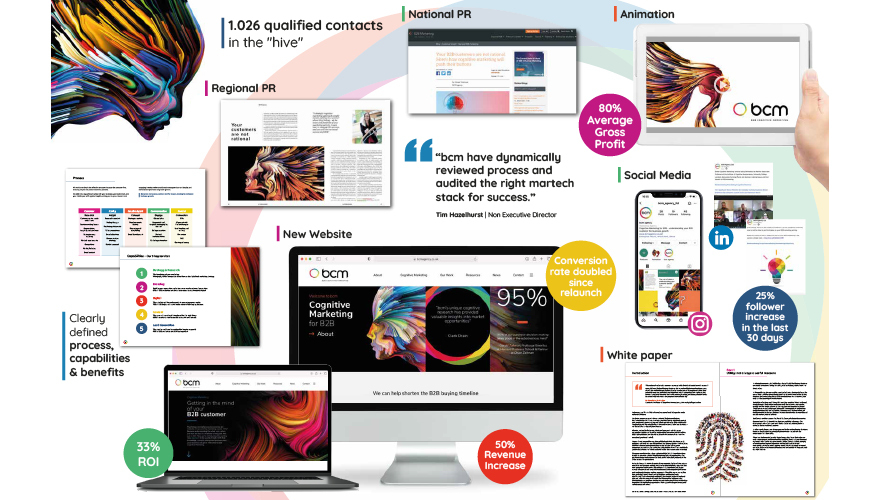
Learn how the bcm agency won the award for ‘Martech transformation/acceleration project of the year’
Learn how the bcm agency invested in its martech stack and established a dialogue with suspects and prospects cognitively. About the client company bcm was set up in 2017 to become the marketers’ agency of choice for B2B marketing support. As a B2B cognitive marketing agency, bcm is customer-centric and follow a clear 5 step process to help simplify the complicated. Our capabilities encompass strategy, branding, digital, lead generation and content, and they work with a range of clients, both in the UK and internationally, across a multitude of sectors, including engineering, manufacturing, building materials and construction. Specific issues or challenges to be addressed Modern day marketing has seen an acceleration in the volume of data available, but quantity is often pitched higher than quality. At bcm, they are all about putting the person back into persona, and they wanted to generate high quality data that could help our clients really understand their individual customers and for bcm to target suspects and prospects too. With the average DMU now having 7 people, all of whom need to be communicated with in a timely, relevant, and above all engaging way, and 95% of buyer’s decisions made in the subconscious mind, they repositioned bcm in 2020 to focus on a cognitive approach. To enable us to do this correctly and effectively, our biggest challenge was how to accelerate our granular understanding of individual decision makers and create a seamless sequence of dialogue, which is paramount to building trust and overall marketing success. The solution – they needed to invest in our martech stack and for bcm to establish a dialogue with suspects and prospects cognitively.
22 March 2021 · Marketing Operations and Technology (MarTech)
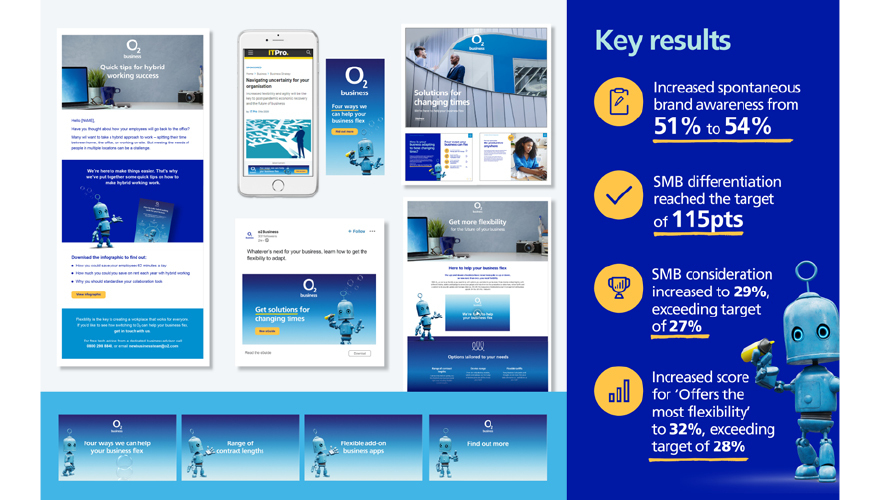
Find out how twogether won the Gold for our new category, ‘Best use of martech for brand building’
Learn how twogether's campaign for O2 won big for our new category in 'Best use of martech for brand building'. Summary This campaign used a new approach to martech integration to help O2 build a stronger brand presence in the SMB sector. As a brand, O2 is famous for its mobile proposition. The challenge was to build awareness of its wider range of services among an elusive and price-sensitive audience. By bringing new channels into O2's existing martech stack, and integrating them to create single-view dashboards, they were able to reach a wider customer audience and optimise performance in real time. The result was an increase in spontaneous awareness from 52% to 54%. The campaign also reached its target of 115 points for O2's SMB differentiation score. About the client company O2 are a leading UK mobile network provider. Specific issues or challenges to be addressed Meeting new SMB-acquisition targets (1-499 employee size) had become a challenge forO2.Armed with a revised proposition and new brand narrative of “We’re here to help your business flex”, O2 were geared-up to shift their brand-power back towards its previous status and ambitiously driven acquisition within the SMB market. The campaign launched in September2020.O2's targets were shaped around driving new acquisitions and consideration in the SMB market by the end of the year: Increase spontaneous awareness. Increase SMB differentiation. Grow aggregated SMB consideration when it came to flexible tariffs and digital working solutions. Increase score for ‘Offers the most flexibility’ within the Kantar brand-tracking study.
22 March 2021 · Marketing Operations and Technology (MarTech)

Find out how Accountinsight nabbed the award for ‘Emerging vendor of the year’
Find out how Accountinsight released its 2020 first version of a full account-based advertising platform ( ie a B2B DSP) built for media and B2B agencies and won the Gold for 'Emerging martech vendor of the year'. About the vendor Accountinsight was founded in 2018 to offer programmatic Account Based Advertising (ABA) to media buying agencies,initially (due to existing relationships) those within WPP PLC’s GroupM network. During the first year, its technology was offered as a managed service but it soon became clear that customers wanted to be closer to execution as programmatic media buying in general is becoming a more common skill in the marketplace. Since the end of 2019, Accountinsight developed its software with the vision to create a SAAS tool aimed at a far wider audience – general B2B marketing agencies and B2B teams who wish to run their own programmatic account-based advertising campaigns. Accountinsight believes that this would create a new software category, rather as did Eloqua, Hubspot and Marketo with marketing automation several years ago. The next step in B2B communication is programmatic advertising and it will need an efficient B2B DSP for use by non-specialists, linked to algorithms which optimise campaigns to reach and accuracy and automatically boost performance by exploiting high engagement ratios. Accountinsight is a global technology solution that has customers from both large media companies ( like GroupM’s Mediacom, WaveMaker...) and advanced B2B agencies like BBN Network. As opposed to traditional Account Based Marketing ( ABM ) platforms, it is born within media and focus 100% on being a media activation partner. The programmatic space has a myriad of DSPs that have basically B2C focus. Accountinsight’s USP is to have built a B2B DSP by and for professional media buyers.The company is fully controlled by its founders, with some equity released to early ‘angel’ investors and in the process of closing a first round of VC investors. About its solutions Accountinsight is a media activation platform. As such Accountinsight's vision is that a B2B DSP solution can target the right B2B companies and identify the right media consumption signals from its employees to ensure Accountinsight displays banner advertising with 100% relevance and accuracy. It gives customers the ability to target companies individually, with full control over the choice of media, frequency of impressions per account-site and context of placement. The development road-map includes a) the offering of Programmatic B2B in China (technical integrations already in place as Q1/2021), b) the increase of integrations with global/local ad-exchanges ( over 50 to date), c) the increase of research on IP targeting identification and d) increasing the self-service options so it transfers from Managed Service to SaaS model.
22 March 2021 · Marketing Operations and Technology (MarTech)
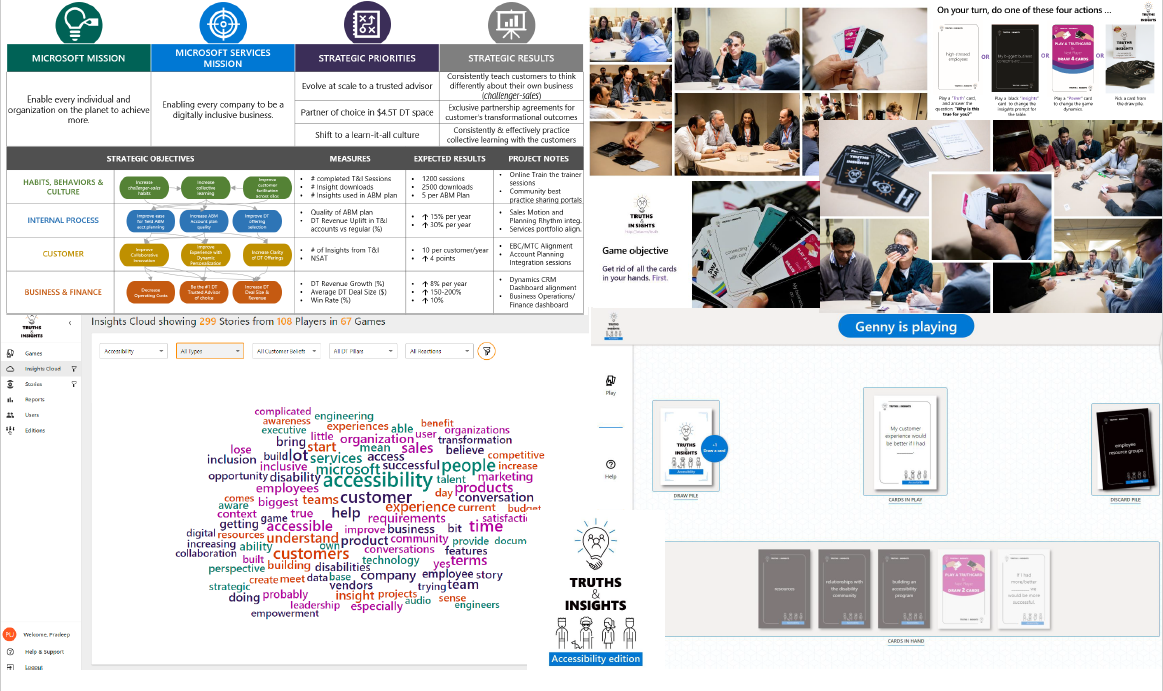
Microsoft wins gold for 'Most innovative use of martech'
Truths & Insights is a nascent martech tool at Microsoft that makes it possible for the company's sales professionals to truly embrace their mission 'To empower every person and every organisation on the planet to achieve more.'
22 March 2021 · Marketing Operations and Technology (MarTech)
Find out how Cognism won the award for 'UK-founded martech vendor of the year'
Find out how Cognism raised $12 million via AXA Venture Partners and helped over 1000 customers in 30 countries with compliant prospect data. Read about their other 2020 achievements and why they won the coveted award for 'UK- founded martech vendor of the year'. Summary 2020 brought increased demand from B2B companies for compliant, real-time prospect data to find and deliver new revenue streams. In a world where physical meetings, expos, and face-to-face networking was largely cancelled, and against a backdrop of increasingly harsh penalties for those who fall foul of complex data compliance regulations – there was a need for abundant, compliant, and accurate prospect data. In 2020 London-based Cognism addressed these needs for its customers – helping organisations find prospects, generate revenue, and crucially, delivering data that’s entirely compliant in each of the countries in which it operates. It’s a challenge that Cognism has met head on for customers and the reason it believes it is worthy of winning Martech Vendor of the Year. It’s been a meteoric rise for the company. The innovative globally compliant go-to-market B2B intelligence company was founded in 2015 and in FY2020 grew 58% year-on-year increasing revenue from £5.4 to £8.5 million. Its patented AI technology makes finding the right prospect faster, more accurate, and completely compliant for customers and has allowed them to thrive in 2020. It operates in 30 countries, has 1000 customers, and delivers significant value by providing better data for sales and marketing teams to use. About Cognism Cognism was founded by James Isilay in 2015. His background in investment banking and algorithmic trading saw him develop intelligent solutions for optimal trading and helped him identify an opportunity to create a solution using machine learning to provide businesses with effective leads. Today it is a world leading all-in-one globally compliant prospecting solution and one of the fastest growing SaaS companies in the UK. Powered by patented AI technology, it provides organisations with compliant B2B data and a suite of sales and marketing acceleration tools to help action it. 2020 highlights: Raising $12 million via AXA Venture Partners (March) and the acquisition of signature marketing platform Mailtastic (May). Grew ARR by 58%. Cognism helped over 1000 customers in 30 countries with compliant prospect data. Its workforce grew by 35% in the last six months of 2020 – taking the team to 200 (In January 2017 there were just five). Global team - based in seven countries including the USA, Canada, South Africa, and Germany. Global customers include Checkout, Seismic, Amazon Logistics, and South China Morning Post. Differentiator: Compliance with the EU’s GDPR legislation. Most of Cognism’s competitors are US-based and, after the introduction of GDPR, chose to exit the European market rather than implement the new law into their workflows. This has given Cognism a highly competitive advantage in the European marketplace and positions it as a clear frontrunner in the race to become Europe’s premier B2B data company. Future vision: To become a premium brand in the B2B sector.
22 March 2021 · Marketing Operations and Technology (MarTech)

Marketing operations is not martech and what is martech anyway?!
As I write this (well ok, not literally as I write, my multi-tasking skills aren’t quite that honed!) I’m preparing my Get Stacked talk where I’ll be presenting highlights from B2B Marketing’s latest report, Moving forwards with a marketing operations function. In addition to this privilege I’ve also enjoyed being part of the research behind the report and the opportunity to learn more about marketing operations in practice has been illuminating. As I say in my introduction to the report, MOPs is much more than just marketing technology, although it’s certainly a central aspect of its remit. You’ll need to wait for the report itself as well as my session for the detailed research - I know, I’m a terrible tease – so sign-up now, registration is free! Accepting the importance of marketing technology to Marketing Operations though raises another question, which is what exactly is martech? On the face of it this would seem to be entirely obvious, comprising the tools we use in marketing to manage audiences, execute campaigns, capture response, analyse results and more. Where, though, do tools like work management (Asana, Monday.com, Teamwork), collaboration (Slack, Teams) or even marketing resource management (Allocadia) fit in? Well fair enough, while the latter is an obvious fit the others have applications beyond Marketing, yet what modern marketer wouldn’t consider them a core part of their tool kit? Hearteningly a number of comments that were included with responses to the survey that informs the report mentioned such tools, so clearly there is growing adoption already. There is a risk though in throwing the net a little too wide and as well as including technologies like work management that clearly have applications outside Marketing, also including generic applications up to and including Microsoft Office! This intuitively can’t be right and so I think we can draw the line a little further back, perhaps at tools that only marketers use to do their jobs? Still, there’s no reason that work management tools should not appear in the marketing stack schematic, but I don't think that means they’re martech as such. The entire discussion may of course be approaching pinhead-dancing territory! In a similar vein, martech’s little brother salestech is also starting to make its presence felt. While tools exclusively used by Sales are of course nothing new, there seems to be an increasing prevalence and focus on them as a category. This particularly includes Sales enablement and engagement technologies, which also came out in the survey responses. This leads to the question of who should be in charge of all this stuff – Marketing Ops or Sales Ops? Or is it finally time for the fabled and much heralded Revenue Ops to take their place and provide the holistic, end-to-end management that would seem to be required? One of the other things that struck me from the research – albeit somewhat anecdotally – is the number of people saying they’re using or adopting CRM and marketing automation platform HubSpot. Simultaneously competing as well as playing nicely with de facto industry standard Salesforce.com, HubSpot seems to be making headway with a number of businesses I’ve spoken to recently. A little bit of diversity certainly can’t be a bad thing. Well, perhaps some of these points and no doubt many more will come up in the discussion with my fellow B2B Marketing Propolis Hive experts Shane Redding and Steve Kemish together with B2B Marketing Editor-in-Chief Joel Harrison when we discuss the research after my talk. I know they will all bring a unique perspective from a strategic and digital execution standpoint and so I commend you to join us if you can!
22 March 2021 · Marketing Operations and Technology (MarTech)
How to adapt to changing buyer journeys
This report examines the new ways of working in B2B marketing, and explains how you can work effectively in this new environment, with five key recommendations.
19 March 2021 · People, Teams and Skills

Why is it important?
Email hygiene might seem like an easy task for marketers to manage, but it can get complicated if they don’t know how to maintain healthy practices. Kavita Singh spoke with B2B Marketing’s Propolis Hive expert for execution and campaigns, Steve Kemish, about what email hygiene is and why it’s important to keep up with it. What is email hygiene? Simply put, email hygiene is keeping an up-to-date clean and best quality email list. That normally means removing records that are no longer working or out of date. To do this, marketers need to understand the difference between a hard and soft bounce in email. A hard bounce is when an email address technically doesn’t work anymore, due to someone leaving the business. In the case for soft bounces, the email still works but the system sends back some sort of ‘out of office’ or ‘your email is not recognised’. Steve says: “So you would, therefore, not really worry about soft bounces. It’s only those hard bounces you’ll need to worry about because they’re dead and not a valid route to an organisation. You’re going to need to get rid of those because you’re normally paying in email terms per thousand sends. Alieving those hard records and bounces in your email list will prevent you ending up on some sort of spam system.” Some signs you need to address poor email quality include: Ending up in the spam filter Large number of bounces Low open rates and click-through rates Why is it important right now? It’s always essential to keep good hygiene, so why should you care now in 2021? With lockdown, it’s harder to sell to new customers for multiple reasons. For sales, they can’t use their office phones for outbound telemarketing or talk to someone they’re nurturing. Steve says: “Chuck in the fact that Covid-19 was a financial stress for many organisations, so they might’ve attained the mindset: ‘It’s too hard to go and try to sell to new people in a difficult time.’ That’s meant that retention has gotten more important now than ever.” Good email practices have always meant sending out to people you know or expect to hear back from. That means nurturing your existing customers, including those soft bounces you might still have. Lockdown has meant a wider focus on retention than acquisition, so your email database instantly becomes more valuable.
19 March 2021 · Content, Creative & Campaigns
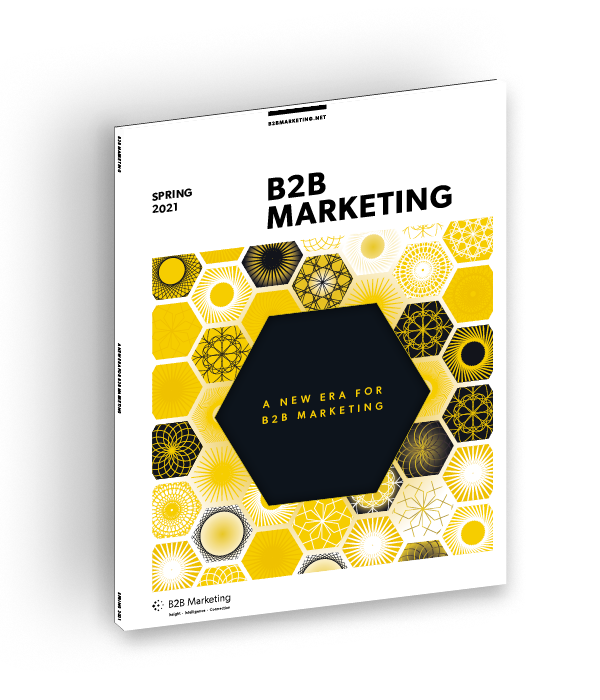
B2B Marketing magazine, Spring 2021
This final issue celebrates the success of the magazine, but, more importantly, introduces you to all that Propolis has to offer.
18 March 2021 · Content, Creative & Campaigns

Steps to a CX audit
Often, companies rely on opinions and guesswork to identify customer pain points. This subjective data can be misleading, outdated, or anecdotal. Businesses should gather data from different sources to determine their CX. The collection of this data should be formalised in a CX audit. In this feature, Barabara Stewart, Propolis Hive expert for CX, outlines the steps you should take.
18 March 2021 · Customer Experience

Here are 3 reasons brand building will be essential in 2021
Brand building has never been B2B marketers’ forte. Kavita Singh spoke with Kate Roe, Hive expert in brand and content, about how marketers can improve their brand building along with why now is the time to do it. 1. During Covid-19 and remote work, it’s more doable With Covid-19, there was a sense of panic at first. Kate says: “I have noticed a lot more interest in brand building since the start of the whole Covid-19 episode and I think, in a way, people fall back on trying to find a solution to their problems. There you are, year after year with your marketing and content programmes. You’re busy working out your martech stack, talking about sales and marketing alignment – all those aspects. But for years, there hasn’t been any strategy.” Kate acknowledges that many marketers are more focused on their tactics rather than the actual long-term strategy. She continues: “It’s no surprise that, when Covid-19 happened, suddenly, your plans went out the window. Secondly, so has your audience. They’re all scrambling around, everyone is in the same boat, they’ve stopped being engaged. They’ve stopped going to events. You can’t get a hold of them and everyone is in a panic. So there goes your plan and you can’t even replace it with something else because no one is listening.” Those that didn’t have a plan had to re-shift their focus, but because there wasn’t a long-term strategy and brand purpose established, marketers might’ve felt a bit lost. For those whose brand strategy revolved around tactics, such as content, they might have felt brand building would be the solution to their problems. And Kate agrees that now is the time to focus on brand building because, once everyone is back to normal, it’ll simply be more difficult to do with limited time. She says: “Now is probably the best time for marketers to go through the brand building exercise as everyone is forced to push the reset button. This is the optimum time to also sit down with your best customers (those that are profitable and already aligned with your brand) and really work with them to understand what makes the relationship – and how else you can work together. They'll thank you for it and you'll have a lot of the answers to the strategy questions.” The fact that you’re even getting feedback from them in the first place will be a differentiating factor from your competitors as well.
17 March 2021 · Brand

Why content agility matters for B2B marketers
The ongoing disruption and lockdown caused by the pandemic means that more and more of us are relying on digital to manage our lives. B2B marketers are therefore laser focused on the use of online to build and maintain relationships with potential customers, and it’s no surprise that this was the only channel that saw growth in the recent IPA Bellwether Report. In fact, our recent ‘Experiences Customers Want’ report found that 74% of businesses have accelerated their investment in online experiences as a result of the pandemic, with 76% claiming their online offerings saved their business. We expect these trends to continue in 2021. High on the priority list when it comes to online is adaptable content that can be structured and organised to create customised and personalised experiences. In a world where marketers are constantly pivoting their strategies due to the ever-changing COVID-19 situation, they need to be able to surface new products and get to market quickly with relevant offers and having an agile content strategy in place is imperative to achieving this. Defining ‘content agility’ The term content agility describes a brand or organisation’s capability to optimise the end-to-end process of delivering customer experiences at scale. To become more agile, brands must remove the technical bottlenecks often associated with delivering content at speed. This will mean getting several things right – from having the right tools and technologies in place to building a great author experience, so that content authors and agencies can deliver and update online experiences fast. Focus on the author experience The author experience refers to the processes and tools in place for authors to make content management simple, scalable and speedy. The pandemic has raised the expectation for brands, meaning they’re now expected to deliver a personal, seamless and consistent experience across channels and devices. And B2B brands are no exception to this. This means that the authoring workload is higher than ever before – and marketing teams are expected to push out more content, more swiftly and respond ever faster to data that can help to improve and personalise that experience.
16 March 2021 · Content, Creative & Campaigns

Marketing myopia too close for comfort?
With hindsight, many would accuse the human race of being short-sighted in its destruction and invasion of the natural world. Coronavirus has wreaked havoc on economies, travel, people and business. At a macroeconomic level, this is affecting most countries to some extent. Some performed well, some not so well. Some businesses have thrived while others collapsed. Read on to discover why marketing myopia is so important. Myopic or disorganised? When Levitt unveiled his radical theory in the 1960s, his hypothesis was that growth comes to a halt because of a failure of management. At the microeconomic level, he suggested that poor financial results, low growth or contraction were due to poor management rather than market saturation. Controversial? Yes. True? Very possibly. He proposed that there are no growth industries, only businesses capitalising on growth opportunities. Entrepreneurs, new ventures or new products and services to seize upon growth opportunities. How many times do we see businesses and investors pile into products and markets where there seems to be a ‘buzz’ and opportunity? Failure of management Nobody is suggesting that the crisis is due to bad management. Far from it. However, the degree to which people have responded varies dramatically. Think back to stories of distilleries repurposed to make hand sanitiser at the start of the crisis. Look back at how insignificant Zoom was at the beginning of 2020. Consider how finance houses have leased much equipment to the NHS to help them scale up fast. None of these responses happened by chance. In the same way that sea travel and the railways gave way to cheap flights, bricks and mortar shops and monolithic headquarters now appear largesse. A simple shock to traditional shopping patterns and social distancing pushed many stores into administration and offices up for sale. Those who took a bold move to arrest decline had already switched away from physical stores to online. Businesses who were open to technology, flexible and remote working found themselves prepared.
16 March 2021 · Content, Creative & Campaigns
Diving into M&S Corporate Gifts' 'unforgettable' campaign with Kristina Haddrell
In this week's episode, we sat down with another award-winning campaign by Really B2B.
13 March 2021 · Content, Creative & Campaigns

3 reasons why data communities are thriving
With data platforms getting all the buzz recently, Kavita Singh spoke with the CEO's of Cognism and Lusha about their most recent news, as well as why data communities like theirs have experienced immense growth in 2021. To say data is becoming hot on investments would be an understatement. Just last month, the crowdsourced data community for B2B salespeople, Lusha, had raised $40 million in a Series A funding round from PSG, a growth equity firm. In addition, Cognism hit a record revenue of £8.5 million. In 2020, Cognism raised $12 million via AXA Venture Partners and acquired marketing platform Mailtastic. There is also another round of funding expected in this quarter of a similar magnitude. So, why is data becoming a hot topic right now? Kavita Singh spoke with the CEO of Cognism, James Isilay, and the CEO of Lusha, Yoni Tserruya, to find out firsthand. 1) Sales need it more than ever in remote work Not to sound like a broken record, but physical events aren’t possible right now and, for sales, that became a major issue in terms of getting quality leads. Lots of companies used events and face-to-face meetings to connect and gain instant leads, but without that availability, marketing and sales need to get accurate data as an alternative, so they’re getting their hands on the right customers. Yoni explains: “If you think about sales and marketing, sales use CRM, marketing uses marketing automation, and those tools are great, but, without data, those tools are just empty. You need company data to know who to connect with, how to create relationships with potential customers, and how to maintain existing customers, and I think the industry of sales and marketing is transforming more around getting the most relevant customers.” The more companies start to utilise data, the more they can optimise their own processes. That’s why James points out that the adoption of CRM is also a contributing factor to data. James says: “A lot of people have switched jobs in the past year. People need to know where people are working currently, what job titles they might have and how to contact them. It can be difficult to contact them. These days, direct lines don’t work anymore, so mobile numbers are so important to have access to, as we don’t have office numbers.” While email and LinkedIn are still useful, it can be quite oversaturated and difficult to get a hold of people, so there is a need for a more sophisticated tool to make sure you’re getting the right data.
11 March 2021 · Data and Insights

Why customer success will be vital in 2021
In our 2021 Trend Tracker, customer success – a new entry – came second place overall, just after growth marketing. Barbara Stewart, CX Hive expert, and Katherine Bentley, B2B Marketing’s customer success manager, spoke to Kavita Singh about the reasons why customer success was such a hit. There is a natural curiosity surrounding customer success In the most basic sense of the word, customer success is a business method that ensures customers are achieving their goals while using your product or services. Katherine explains: “It’s definitely understanding the customer, which I know seems very basic and very obvious, but it’s really understanding their values and goals and actually aligning the value proposition with those goals. “A key part of customer success is highlighting the first 30 days. If you haven’t gotten their interest within 30 days, it’s not impossible to get it back, but it’s more difficult and there are bigger hurdles post-30 days.” In addition to Katherine’s expertise, Barbara has been training numerous marketers around what customer success is in B2B and she says it makes complete sense why customer success has overtaken customer experience. She says on top of marketer’s natural curiosity around the role, it’s still a relatively new position for people to get their heads around. Often, people are curious about where customer success sits. Is it an extension of ABM? Customer service? Marketing? Organisations are trying to wrap their heads around how to bring customer success to the real world. Barbara says: “Customer success is absolutely a part of CX. It’s a true, genuine proof point that CX is finally being taken seriously as customer success has come about. It’s a good way to see if a business is taking their retention strategy seriously.” If a business looks at their pirate metrics using the AARRR model (AARRR- Acquisition, Activation, Retention, Referral, Revenue), sales and marketing both primarily focus on acquisition, activation and revenue in hopes that the other Rs will be an output, rather than a strategic target. When this happens, the retention and referral are often overlooked. Customer success, however, can be the solution to both retention and referral. Barbara explains: “It’s a gamechanger and we’re finally being more customer oriented.Your customer is going to be there and listen not when things go wrong, but to listen to people about how they want to use your products and services.”
11 March 2021 · Customer Experience

Intent data is the future of B2B marketing
Targeting the right audience is key to success in a competitive market. Having the right data is central to gaining insight into who you should be targeting and when, but relying only on customer data is no longer enough to be successful. Using intent data to gain a better understanding of your audience is fast becoming the future of B2B marketing. One of the main barriers when it comes to utilising intent data is that it’s hard to define its true value. Intent data provides a deeper understanding of the buyer journey and how customers make purchase decisions. This article covers what intent data is and outlines how you can use this information to implement better lead generation strategies. What is intent data? Intent data provides businesses with insight into the process users go through when looking to buy their product or solution. It does this by tracking intent search terms through a combination of IP addresses and cookies and is collated using a range of digital sources. Intent data notifies businesses that their customers are in an active buying journey, allowing them to focus their marketing strategy on those prepared to purchase and boost conversions. Types of intent data Intent data can be either first-party or third-party. Third-party data comes from sources and websites other than your own; there are several third-party data providers that collect data from thousands of high-value analyst sites like Gartner, as well as publications like Forbes, and bucket this data into relevant audiences. Other third-party tools, such as Google Trends, SEMRush, Answer the Public, and even social platforms can be used to gain insight on search intent. First-party intent data has been around for over a decade and as a result most marketers already use it. Often referred to as engagement data, first-party intent data comes from tracking user behaviour on your own website to gain insight on the customer journey.
10 March 2021 · Data and Insights

How’s your corporate culture going? Is it maybe time for an audit?
“It was the best of times, it was the worst of times…” In the best of times, achieving and maintaining a highly functioning corporate culture –- where teams perform, values drive behaviour, output is mission-driven, customers know the difference -- is a fine balancing act. As with children, it means offering « part roots, part wings, » but always under a watchful eye. This is true, no matter the size of the company, the category, the markets or geographies the company operates in. But these are NOT the best of times. The pandemic has not only disrupted output and supply chains the globe over; it has also put enormous strain on companies themselves, internally and across their workforces, to continue to produce their goods and services through uneven, totally uncharted circumstances. We venture to say, there is not one company in the world that has not, in one way or another, positively or negatively, been affected by the global pandemic: so many walloped as corporate cultures may not have been so throttled and thwarted since events like world wars. We also venture to say, with employees often on their own and self-reliant for great parts of the workday, that clarity of the company’s vision; embrace of the company’s mission and values; and surety about their contribution to the company’s overall success, have never been more important. And perhaps never more in question, or in peril. Take a moment: After nearly a year of lockdowns, Zoom meetings, isolation, temporary returns to the office, required returns to working from home (charmingly called “tele-travailler” in French) -- how do you personally evaluate your corporate culture today? How are things going? What do you hear? What do you yourself see and feel? Do you foresee fixes or changes to your culture in the near future to accommodate, e.g., hybrid work situations? If you do anticipate change, how will you know what to change in the first place? Importantly, isn’t it time to find out? Isn’t it perhaps the moment to conduct a corporate culture audit?
10 March 2021 · Content, Creative & Campaigns

The Definitive Guide to Marketing Automation
Every business has one thing in common: the desire to achieve higher revenue and faster growth. But many companies struggle to align their people, processes, and technology to achieve these goals. Download this guide to find out more.
9 March 2021 · Content, Creative & Campaigns
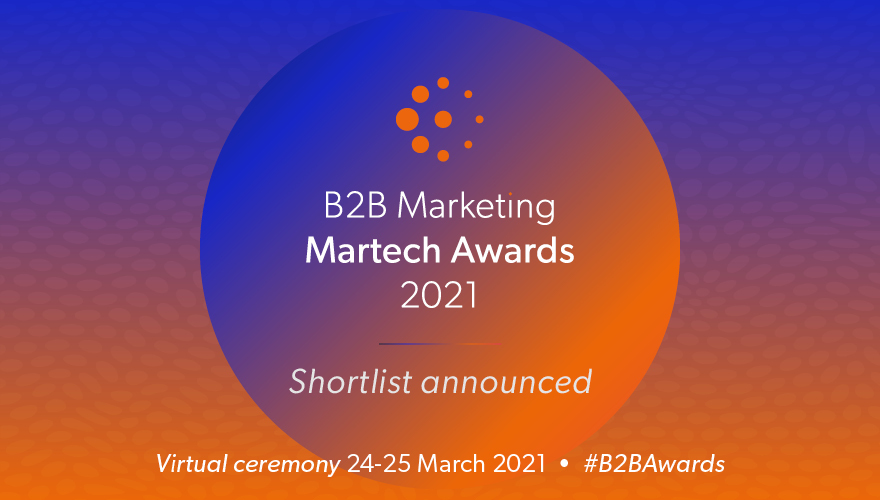
B2B Marketing 2021 Martech Awards shortlist announced! Who’s made the cut this year?
In just a little over two weeks, B2B Marketing will be announcing the winners of our Martech Awards. Now in its third year, the Martech Awards celebrate all those transforming the B2B marketing landscape through marketing technology. With a total of 12 different categories, these categories range from ‘Best UK-founded martech vendor’ to ‘Best digital content programme’ to ‘Best use of marketing automation’. This year, we’ve also included three new exciting categories including ‘Best digital content programme’, ‘Most innovative use of martech’, and ‘Best use of martech for brand building’. Leading the shortlist is Lead Forensics with a total of three nominations including ‘Martech vendor of the year’, ‘UK-founded martech vendor of the year’ and ‘Best use of martech for demand generation’. With two nominations under their belt are twogether, WebInsights, CRMT Digital, Cogniclick, JTF Marketing, MarCloud Consulting and Webeo respectively. The 2021 Martech Awards winners will be announced at Get Stacked the B2B Marketing Martech conference on 24 and 25 March at 2:40 pm on both days.
8 March 2021 · Marketing Operations and Technology (MarTech)

4 changes I want to see for women in the workplace
When I was in university, I was the editor-in-chief for my local newspaper and was given my own separate desk from the other writers I worked with. I can’t tell you how many times an interviewee or employee would walk in and ask one of my male colleagues if they were the one in charge. As a female woman of colour, I always felt little frustrations like this on a daily basis, but never knew how to vocalise it. So, I just never spoke up for myself. This was back in 2016. The Women’s March had just taken place following Trump’s election as president. There was a LOT of work to do. Now in 2021, we are making headway, but there’s still so much work to be done. And as I've gotten older, I’ve been able to find the words to express my frustrations because of the work that other powerful women have set as an example. And as we celebrate International Women’s Day (yes, it’s today), I want to share four changes I’d like to see. 1) More men being allies in the workplace: Global agency LEWIS created a report in support of the UN’s HeForShe movement titled Women: Progressing Gender Equality. The report found that only four in 10 men are ready to tackle gender equality, despite the fact that 98% of women want men to be more involved. It’s not just up to women to support women – men should be advocating for their female colleagues regularly. The report also found that 18% of women who witnessed gender-based discrimination did not report it in fear of possible retaliation, which is why it’s so important for men to step it up when they see any discriminatory behaviours or exclusion in the workplace. Male employees were more than twice as likely as female colleagues to say that gender inequality is no longer an issue facing women. Being an ally means educating yourself as much as you can about the issue at hand. Blatantly saying it’s not an issue anymore without any evidence is shortsighted, and, if someone is making comments like that, they are harmful regardless of the intention. Chris Lewis, CEO of LEWIS, said: “You don’t need to personally be a victim of discrimination to understand why we need to fight it. It’s clear that men can – and should – do more to help. Our hope is that this research will help shine a light on the challenges women face to make all of us stronger allies in the fight against inequality.”
8 March 2021 · People, Teams and Skills
Grow faster with reverse IP tracking
In this eBook, you’ll be guided through how reverse IP tracking helps deliver more revenue and instantly generates hot leads.
8 March 2021 · Data and Insights

What’s the secret of successful B2B tech marketing in 2021?
What’s made a difference for your tech marketing in 2020? And where are you placing your marketing bets for 2021? These were two questions we were seeking to ask in our latest B2B Marketing Leaders virtual roundtable, run in association with Kingpin Communications. The session was busy and the discussion was lively – so what did we learn?
6 March 2021 · Content, Creative & Campaigns


