



Resources
Case studies, webinars, reports, podcasts and videos from B2B Marketing, in one place.
Featured
Best practice briefing
A guide to overcoming the biggest challenges to becoming a commercial marketer.
A guide to overcoming the biggest challenges to becoming a commercial marketer.15,425 results · page 88 of 643
Strategic tips on how to thrive in B2B marketing in 2021
In their latest report, Spiceworks Ziff Davis outline the key findings from their webinar series to guide marketers on adapting their mindset and strategies to thrive in 2021 and beyond.
8 February 2021 · Strategy and Evolution

Helping customers during challenging times and achieving better business results
As the pandemic hit, businesses across the country found themselves needing to reorient their strategy to quickly face the new reality, and it was no different for marketing teams. In our field, leaders were suddenly asked to evaluate if their strategy and messages were still appropriate for their customers, and if they were supporting their needs in the best possible way.
5 February 2021 · Customer Experience

The post-pandemic pivot to digital means more influence marketing is going in-house
Though it may be more valuable than ever, digital marketing hasn’t completely avoided the COVID-induced economic hangover. With significant restrictions on travel, entertainment and events, IAB UK data showed a 5% drop in digital ad spending during H1 2020. This marks the end of a decade of year-on-year growth. For obvious reasons, 2020 is expected to go down as the first year of decline for the previously booming digital advertising market. However, thanks in part to the rapid acceleration of e-commerce, we can expect a bounce back in 2021. According to industry estimates, 58% of consumers expect to do more online shopping after the pandemic than they did previously. In these turbulent times, what should marketers be focusing on? One reality worth considering is the movement to ‘in-house’ some of the traditionally-held responsibilities of external agencies. While in-housing is not entirely new, it has been accelerated by the pandemic. According to the World Federation of Advertisers (WFA) and The Observatory International, 74% of in-house agencies were founded in just the last five years, with cost efficiencies (30%), better integration (64%) and better brand knowledge (59%) being the key drivers towards in-housing. Many companies are setting up their own teams to buy and traffic performance media such as paid search given the direct access to their owned properties. The wider rationale for in-housing does contain some discussion of cost and control, led by the likes of P&G. But for many looking to build capacity within their organisations the better formula is: in-house + external partners. Each plays a role, best suited to their strengths. This new in-housing reality means more to certain marketing channels than others. And influence marketing (IM) – the capability to enable key influencers to market on your behalf – can thrive under this hybrid formula at a time when up to 9 in 10 marketers say that IM is delivering ROI that is comparable to, or better than, other channels. And its value will continue to grow in an ecommerce world. The ability of organisations to bring more IM in-house has been aided by the growing maturity of the technology ecosystem surrounding it. An unknown segment only ten years ago, IM technology now powers enterprises across the Global 2000. Sophisticated IM toolsets, such as Traackr, CreatorIQ and AspireIQ, centralise the logistics of influencer selection and management and provide unified reporting as the ‘single source of truth’.
4 February 2021 · Content, Creative & Campaigns

When a cold call ‘is’ a good call
In this guide, The Telemarketing Company share their cold calling best practice recommendations
3 February 2021 · People, Teams and Skills

How to create a buzzworthy campaign with Paul Anderson
The Profit Hunter was all the buzz in 2019 and 2020. It walked away with numerous awards including the B2B Marketing Award for 'Best use of digital techniques or technologies'. Kavita Singh spoke with Gravity’s Global Creative Director, Paul Anderson, Global Creative Director, about how they accomplished extraordinary results. Embraer is the world’s 3rd largest manufacturer of aircraft, although most people did not know that. This was the challenge Gravity Global accepted to transform Embraer and its perception as a regional aircraft manufacturer known in the US and Latin American markets to a global manufacturer of 'the most efficient aircraft in the world'. Using Gravity Global’s methodology of Fame, Admiration and Belief their goal was to dominate through creativity on a global scale and create a disproportionate share of attention for Embraer. Gravity Global developed an integrated campaign that utilised airshow events, viral video, print, social casts and social media. The key to the overall success of the campaign was aligning audience personas with the aircraft by renaming the E2-190 and E2- E195 jets as the ‘Profit Hunter’. For most airlines the ‘Profit Hunters’ could fill an important role in their fleets opening up new markets and catering to the new scale of passenger numbers. The Gravity Global creative answer was to paint the aircraft as the ‘Profit Hunters’ to create disruptive stand-out in the sea-of-sameness of civil aviation. This tactic created real distance between Embraer and other manufacturers firmly rooting the concept of profit making in the minds of audiences as a concept and idea that Embraer own. Check out the full campaign here! 1. Can you tell me how you were able to come up with a concept for the campaign? Every client problem is unique and this was certainly true in the case of Embraer. Their issue was that they were making a series of exceptional and absolutely brilliant jet aircraft but limited people new about it. So, the question was, how can you stand out from competitors who have deeper pockets and more established brands on the global stage? At Gravity Global, we have a proprietary methodology that has been developed over many years. It guides us and provides us with insights to marketing and brand challenges. It’s called Fame, Admiration and Belief – FAB for short. So, whether we’re approaching a creative challenge or strategic challenge, we always apply our lens of Fame, Admiration and Belief. Studies have been undertaken to find out what makes brands successful and they have shown that Fame, Admiration and Belief in equal measures were the commonalities of successful growth brands. At Gravity we use these levers to deliver creative work that delivers a disproportionate share of attention. We see ROI as a return on imagination. ‘Fame’ is top of line awareness and that includes: Have I heard of this brand? Do I know them or have I seen them around? Do I understand what they do? In the case of Embraer, their fame was absolutely limited. Not many people knew about the E-jets even though they were the third largest airframe manufacturer in the world. In terms of ‘Admiration’, which is about how people feel emotionally predisposed for a brand, people that knew the product or experienced the product absolutely loved it. Current customers would wax lyrical about Embraer so we could see that we would need to harness the power and potency of this audience passion. Moving to ‘Belief’ which is based on how people engage with the brand and do they recommend it and become advocates for it? In the case of Embraer, belief and advocacy were really strong. So, it became obvious that we would need to focus on the ‘Fame’ for Embraer. Once armed with that directional pointer we could start to develop the creative brief with a very single minded outcome at its heart – Fame.
2 February 2021 · Content, Creative & Campaigns
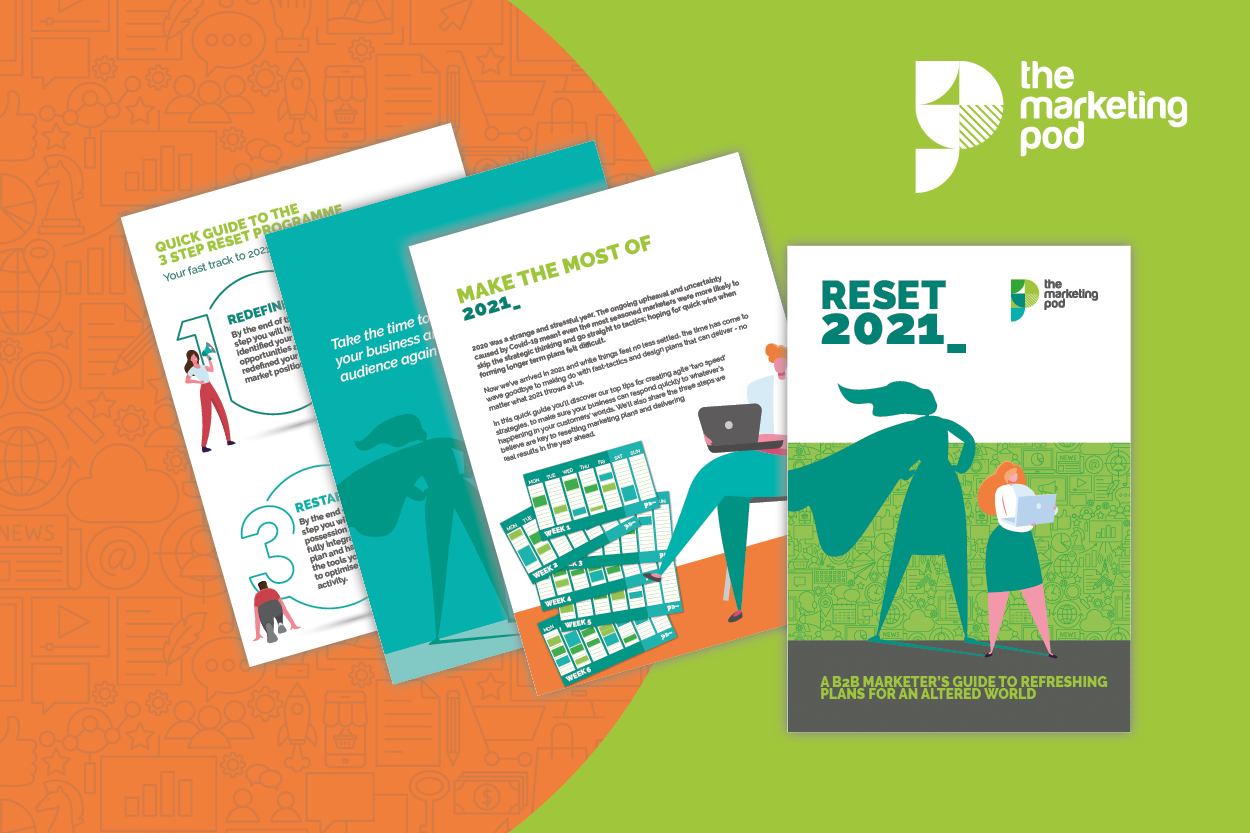
A B2B marketer’s guide to refreshing plans for an altered world
In this quick guide, you’ll discover our top tips for creating effective two-speed strategies, to make sure your business is ready to respond to whatever happens in the year ahead.
2 February 2021 · Content, Creative & Campaigns

How to make the recruitment process more inclusive
Kavita Singh spoke with Avery Hennings, co-founder of the diversity and inclusion initiative at Omobono about making the recruitment process more inclusive in the marketing sector. Collect data and benchmarks At Omobono, the Diversity and Inclusion team formed back in August 2019 based on their desire to go beyond the efforts to include diversity training. At the time, the board felt like they could be doing more, so one of the first steps to approaching diversity was to start with a survey. Starting with an initial survey can be the first step to addressing any existing issues or concerns. At Omobono, the team surveyed employees on how the business wanted to learn more about as well as what formats they wanted to learn in. As expected, the business expressed a desire for much more than the once a year formal training approach. In addition to finding out what employees are looking for, you have an opportunity to capture a baseline of your business’s current levels of diversity, including gender, race, social identity, gender identity, age and background. Avery says: “The results we found were in keeping with the marketing industry as a whole, predominantly white, young and middle class. That’s a big part of why this initiative is so important, so that we change the face of marketing so that it is more inclusive and we’re not just hiring the same people time and time again.” Refine the application process As a first step, Omobono reached out to its recruitment partners to speak to them about CVs. Omobono uses Greenhouse, an application tracking system, which aims to mitigate bias, evaluate candidates fairly, and measure inclusion progress. The last update with the technology allows applicant names on application to be automatically changed. They wanted names, pronouns or any sort of gender marker to be removed from all applications, so that the person reviewing would be basing their opinions on merit rather than appearances or their own unconscious bias. To make sure language was also filtered, Omobono also recruited their internal teams to get them involved in the process as well. Avery says: “We have a strong representation from content strategists and copywriters in the business. We apply a filter to remove any gendered language or problematic language as well. There are also some tools available that allow you to do that automatically.”
2 February 2021 · People, Teams and Skills

Make the most out of 2021 with the latest marketing trends
Go on, admit it. The crisis has dragged on much longer than we all thought. What we all initially assumed was a brief interlude from the frenetic pace of commuting and office work has continued. Some of us delayed planning until 2020 was laid to rest and others spent much of 2020 planning for a better year. Now that everyone is back in the groove, albeit at home for the most part, we help you to make the most out of 2021 with the latest trends. What’s new for 2021? Well, it isn’t a blank sheet of paper so that’s the good news. Looking back to June 2020, The CMO Survey found that B2B marketers were the most optimistic about the next 12 months and would choose to invest in a few targeted areas. These are: Account Based Marketing Digital experiences Influencer marketing Partnerships As B2B marketers are well aware, the benefits of ABM in terms of deal size, conversion rate and wallet share are great. The efficacy of the approach lends itself well to the ongoing pandemic. Digital experiences go without saying. With challenges in meeting clients face to face and fewer resources available to service customers due to furlough, digital comes first in many instances. As a result, it is critical that your digital experiences stand up to scrutiny and to competitors. Influencer marketing is less popular in the B2B world but is set to ramp up as more people take a ‘digital first’ approach and stay at home more often. B2B service companies are set to expand partnerships, which has long-term benefits. After all, it may be easier to sell through a partner than summon the marketing funds to ‘pull’ people in.
2 February 2021 · Content, Creative & Campaigns

Persona-based marketing makes ABM more ‘human’
Account-based marketing (ABM) isn’t for the half-hearted marketer. It requires a deep commitment to understanding the companies you’re targeting before marketing to them. You need to know your target’s initiatives, industry trends, and even their recent press mentions. But don’t forget that you’re still marketing to people in your target accounts. Your demand generation efforts won’t reach their full potential and the campaign may fall on deaf ears if personas aren’t considered as part of your ABM strategy. To avoid your ABM campaigns falling flat, here are four tips to optimise your persona marketing strategy.
1 February 2021 · ABM & Demand Generation
Navigating an ABM Journey with Kate Owen of Capita
Welcome back to another podcast and we're continuing the conversation around ABM!
1 February 2021 · ABM & Demand Generation

Merkle B2B Announces collaboration with LinkedIn and Madison Logic
Customer experience management company Merkle B2B has announced its enhanced collaboration with LinkedIn Marketing Solutions and Madison Logic. The collaboration will give marketers better access to LinkedIn Marketing Solutions and Madison Logic’s capabilities, marketing activation and audience engagement and insights. LinkedIn Marketing Solutions’s B2B product suite aligns with Merkle B2B’s areas of focus: 1) marketing and media 2) data insights and analytics 3) technology 4) research 5) CRM 6) creative The cooperation will provide marketers with joint innovation and planning, custom data and insights, access to product alphas and betas, and certified teams and custom training opportunities. Account based marketing platform Madison Logic allows Merkle B2B to inform and drive client strategy with insights from Madison Logic’s proprietary ML.Data Cloud. The combined intelligence from Merkle’s own identity services and the ML.Data Cloud identify and prioritise clients’ most active buyers. Madison Logic CEO Tom O’Regan said: “The only way to reach today’s overloaded B2B buyer is through multi-channel digital account-based marketing and by enabling sellers with information about buyer intent. We’re delighted to partner with Merkle B2B to help our mutual clients make informed decisions about how best to reach buyers at every stage. We’re also giving Merkle B2B account teams our advanced ABM certification programme, so they know how to execute full-funnel, always-on digital campaigns.”
29 January 2021 · Marketing Operations and Technology (MarTech)

Don’t forget about your mental health: 5 tips to reducing stress this year
With a reliance on digital communication, a strong wifi connection and endless emails to sort through, you might become prone to stress and anxiety. Here, I discuss some top tips to overcoming stress thanks to Miriam-Robin Linnemann’s tips. I don’t know about anyone else, but my first month back to work was wildly hectic. Just like the first day back at school, you expect to ease back in slowly with your first day outfit, new folders and the expectation that you’re just dipping your toes back in. But reality hit, and now you’re dealing with a wave of emails, meetings to reconvene on, and the workload you told yourself was ‘a task for your future self.’ The aspect that needs to change, the thing that will make 2021 infinitely more successful than 2020 is your mindset. I attended a LinkedIn Live session with The Female Lead on how to reduce stress, and it was enlightening just how all-consuming we can all be during work – to the point where our mental health takes a toll. Edwina Dunn, founder of The Female Lead, spoke with Miriam-Robin Linnemann about how to cope with stress coming into 2021. Miriam is a mental health advocate, founder of The Honest Talks, and former HR professional with a mission is to empower others to love themselves and their lives. Here were some of her takeaways. Take it one step at a time Writing lists down feels infinitely more productive than just letting all your tasks ruminate in your head. Put your thoughts to paper and create a list of tasks to get done. A more pressing challenge, however, is looking at that list and asking yourself “Okay where do I start?” Miriam advises to start with the smallest step and start with what makes the biggest impact. This can result in a colossal weight off your shoulders if one particular task is stressing you out. She says: “If there's about 20 tasks that are stressing us out, we can only do one at a time, and that’s when it’s really helpful to ask yourself what would make the biggest difference in my life right now? And actually, what's the really tiniest first step I can do to move towards what I want, and then take it?” One tip to figuring this out is to write down your list on the left side of a sheet of paper and then on the right side, write down the impact of accomplishing each task.
29 January 2021 · People, Teams and Skills
Complete SEO Guide to Scale Up Your Business!
As the search landscape is constantly evolving, Skynet Technologies has been offering complete SEO services to give you the competitive thrust and out-hustle your business rivals in getting more qualified traffic, leads, and conversions.
28 January 2021 · People, Teams and Skills

how to create a marketing plan flexible enough for 2021
I don’t know about you, but I’ve never wanted psychic powers (or maybe just a good, old-fashioned crystal ball) as much as I do right now. The events of 2020 changed so many things, and for many of us the personal and professional lives we lead are not only still in a state of flux, but look set to stay that way for some, if not all, of the year ahead. Whether Covid-19 has presented new opportunities or pressing challenges for your business, we’ve all had to adapt to new ways of doing things, including your customers and prospects - which may make marketing to them feel more complex this year. For marketers who have unrelenting targets and want to make the most of 2021, the ongoing uncertainty might feel frustrating. It can be tempting to throw strategy out of the window and focus on quick-wins and clever tactics. But short-termism is never going to deliver the same results as a well-honed plan based on long term objectives. Now is the time to try to create a plan for the year ahead that will make the most of your resources and capitalise on every opportunity - and this year only a flexible plan will work. What do you know? So, where to begin? The best place to start when making any plan is always with the things that you do know, and in this case the list will usually include your overarching objectives. While your business objectives - and therefore your marketing objectives - might have shifted slightly thanks to the chaos of 2020, you should hopefully now be in a position to define them for the year ahead. And define them you most definitely should; as this provides a solid framework from which you can hang everything else. An important tip here: if you’re not 100% confident that your objectives remain realistic in a changed marketplace, it’s time to go back to your customer data. Time dedicated to checking in on customer activity and engagement will be time well spent, so don’t be tempted to skip this step for the sake of getting started on execution a little earlier. And as well as crunching numbers and looking for trends, remember to call on your sales, customer-service and other front-line teams for their perspective. It could be the most valuable bit of employee comms you do all year; providing you with fresh insight and giving them a chance to feel connected and have their say. Develop a two-speed strategy Once reviewed and redefined, your overarching objectives will provide a constant reference point for your 2021 marketing activity, helping you to create meaningful messaging, develop strong customer value propositions and map out a baseline journey of customer communication - from where there can be adjustment and revision as needed in response to marketplace events or new insight. In effect, this is the first step towards the development of a two-speed marketing strategy. Working from your overarching objectives without setting tactics in stone will give you direction, purpose and a sense of certainty, but with flexibility built in - the perfect choice marketing strategy for 2021 and all that it may bring.
28 January 2021 · People, Teams and Skills

Here are our hive experts' 2021 predictions
27 January 2021 · Content, Creative & Campaigns

What’s the point?! The importance of brand purpose
For all of the interest in brand purpose, there is an equal amount of misconception. David Rowlands, editor, spoke with Jill Pringle, to delve into just why it’s so important, why businesses should start putting purpose at the heart of all they do, and more. Jill Pringle is a brand marketing consultant, the founder of Brand Symphont Marketing, and the author of The Brand Symphony.
27 January 2021 · Content, Creative & Campaigns

How sustainability will help enable business growth
The new year marks a time for brands to shift into a more optimistic gear. It is no surprise that we are all Covid-fatigued and looking for positive change in 2021. The good news is that there is a lot to look forward to.
25 January 2021 · Content, Creative & Campaigns
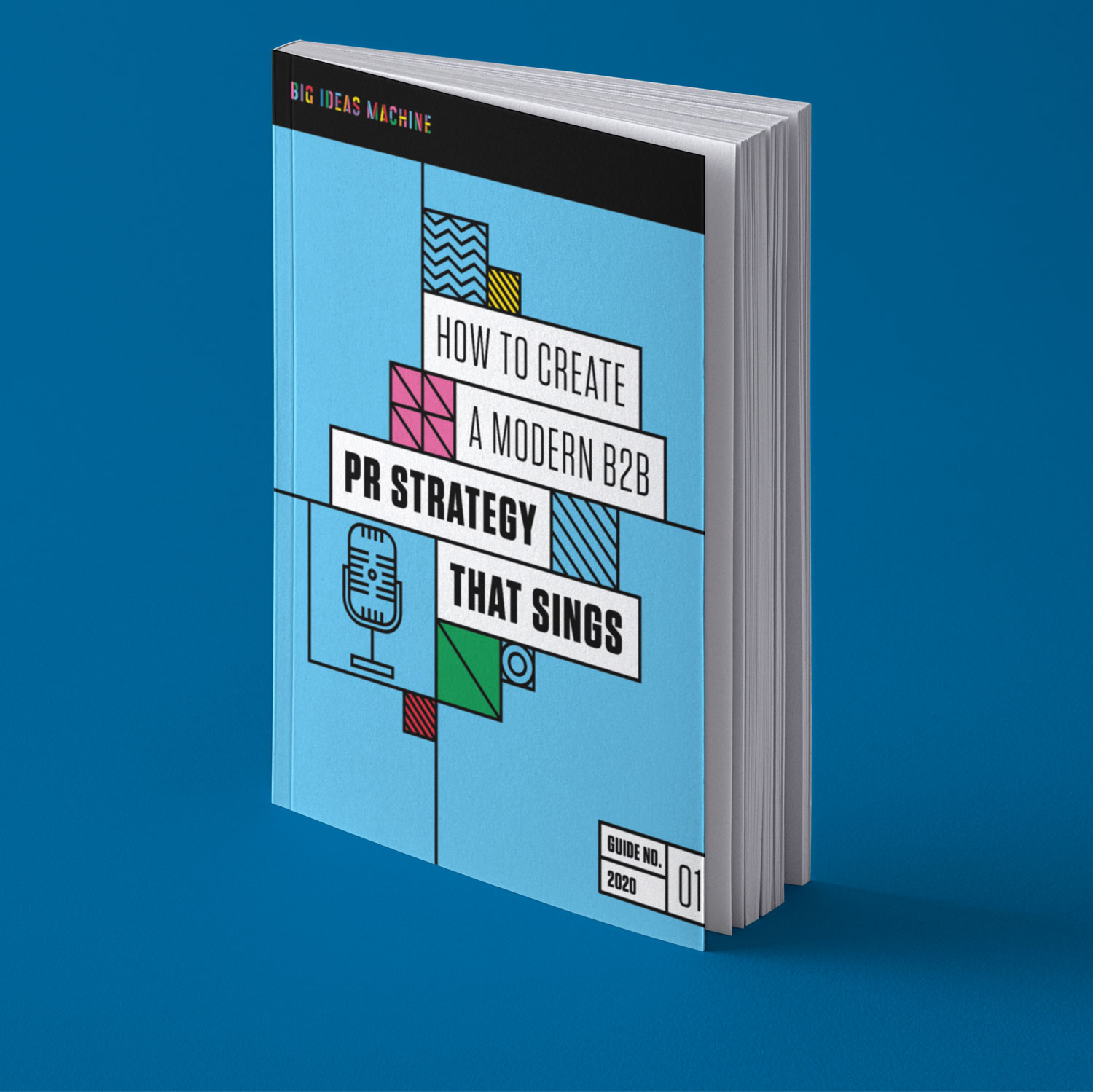
How to create a modern B2B PR strategy that sings
22 January 2021 · Content, Creative & Campaigns
ABM with Mark Larwood of O2
In this week's episode, B2B Marketing's Joel Harrison sits down with Mark Larwood to discuss all things ABM. Leading up to our ABM Conference 2020, they get into how ABM plays a role in the B2B world today, especially during the Coronavirus.
22 January 2021 · ABM & Demand Generation

Can AI take your business performance to a new level?
In this feature, Tony Lamb, Propolis Hive expert, Data Strategy, Insight & Intelligence, answers the burning questions around artificial intelligence (AI), and explains how it can help marketers directly improve their business performance.According to the 2019 Accenture report AI: Built to Scale, 84% of c-suite executives believed they must leverage artificial intelligence (AI) to achieve their growth objectives. Yet 76% acknowledge they struggle when it comes to scaling it across the business, so fail to realise the desired benefits. AI is already part of our everyday existence and its use is growing at pace. Today, you will probably have experienced AI in action through LinkedIn, Spotify or Alexa, all tailoring content to improve your personal experience. A number of industry areas are thriving and reaping the rewards from using AI. In the financial sector, as early as 1987, banks were using AI systems to detect fraud with debit cards, and AI-powered electronic trades now account for almost 45% of revenues in cash equities trading.Covid-19 has rapidly moved consumers and businesses to digital channels with organisations adopting and scaling AI and analytics much faster than they previously thought possible, quite simply because they’ve needed new answers or ways of working. But many other organisations are still wrestling with the basic data fundamentals of having a trusted view of their customers or business ownership of the data.In this feature, we look at how companies can start to use AI to understand how it could drive their business performance
21 January 2021 · Content, Creative & Campaigns

Hiscox launches ‘dreams’ campaign highlighting small business owners
Small business insurer Hiscox has announced its advertising campaign in the US, with two videos that highlight the journey to fulfill the American dream of owning a business.Created by Merkle B2B and directed by Leigh Marling, the campaign illustrates two individuals as they work towards their dream. One video ‘Not Now’ shows a woman’s passion for car design as she embarks on starting her own automotive design firm. A second spot ‘Chair’ follows a middle aged businessman in a rut who realises he wants to own a carpentry business. As both see their dreams become reality they turn to Hiscox, as they trust that their investments will be protected with small business insurance tailored to their specific needs. Adryanna Sutherland, Chief Operating Officer at Gyro,said, “The spirit of entrepreneurship is built on an action-oriented mindset and pride in whatever you set out to do. Through this campaign we wanted to demonstrate that, even in the toughest of times, the American spirit remains alive and well.” Media Storm was responsible for the media planning and implementation of the digitally-led campaign.
21 January 2021 · Content, Creative & Campaigns
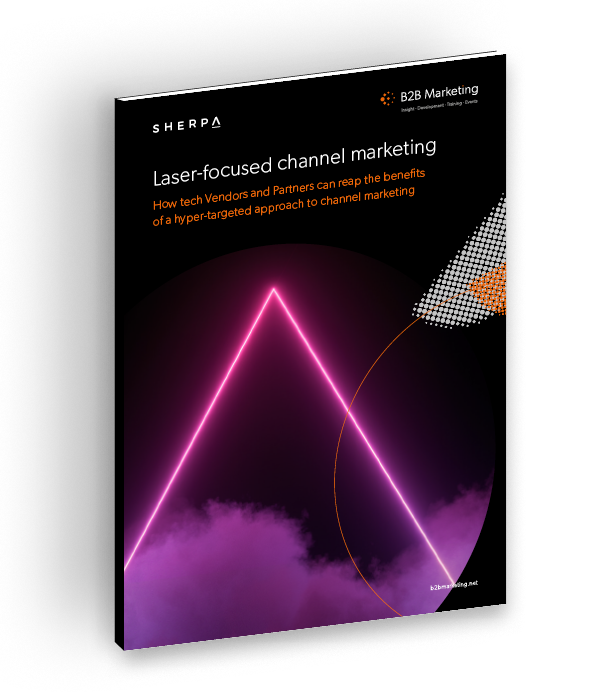
Laser-focused channel marketing: How tech Vendors and Partners can reap the benefits of a hyper-targeted approach to channel marketing
Let’s be real. When it comes to channel, the Vendor-Partner relationship is not perfect. For too long, Vendors have pushed out standardised campaigns for all of their Partners to run, regardless of their Partners’ requirements or specialisms. Clearly, there is a better way – a way in which both Vendor and Partner thrive. This report will show you how.
21 January 2021 · Channel Partnership
B2B Ad Technologies for Right Now
This essential guide by Modern provides guidance, summaries, and reviews of the ad technology that’s relevant for B2B right now. Download it now to assess your options and evaluate how you should move forward.
19 January 2021 · Marketing Operations and Technology (MarTech)

The dos and don’ts for planning your marketing budgets (from a CFO perspective)
Kavita Singh spoke with Steven Cozens FCCA, co-founder of Think Beyond, on what CMOs should and shouldn’t do when slicing up their marketing budgets.Steven is an ex-finance director with 20 years’ experience from a 50-employee SME to a 130,000-employee blue-chip. In addition, he has worked with boards and non-finance teams, working alongside marketing, sales and commercial. With plenty of experience in finance, he gives some top tips for CMOs to consider when planning their marketing budgets.DO: Cultivate a relationship with your CFOThe CFO is typically responsible for everything from long-term investment strategy, to the annual budget cycle, to daily forecasts of cash flow. They often have to balance competing investments and overheads against the long-term view of profit. If they haven’t already, CMOs should be cultivating strong relationships with their CFOs. Steven mentions a huge reason this relationship often goes overlooked is because the business performance is already right on target, so, in other words, ‘what’s the point?’Steven says: “As is so often the case when things are going well, human psychology dictates that we may choose to ignore some of the negative aspects of performance. The efficacy of marketing investment and the effectiveness of marketing activity is one such area that many CFOs only have the bandwidth and strategic focus for when business performance begins to deteriorate.”However, even if you’re right on target, it is important to have a pulse for where the CFO’s head is at when making budgeting decisions.He adds: “In the absence of a strong relationship with the CMO, the CFO may have no other option but to reduce areas of 'discretionary' expenditure, such as travel and expenses, training, consultancy and marketing. The underlying reason is a lack of reporting and insight that ties marketing expenditure to profit.”
19 January 2021 · Marketing Operations and Technology (MarTech)


