Case studies, webinars, reports, podcasts and videos from B2B Marketing, in one place.
Best practice briefing
A guide to overcoming the biggest challenges to becoming a commercial marketer.
A guide to overcoming the biggest challenges to becoming a commercial marketer.15,425 results · page 80 of 643
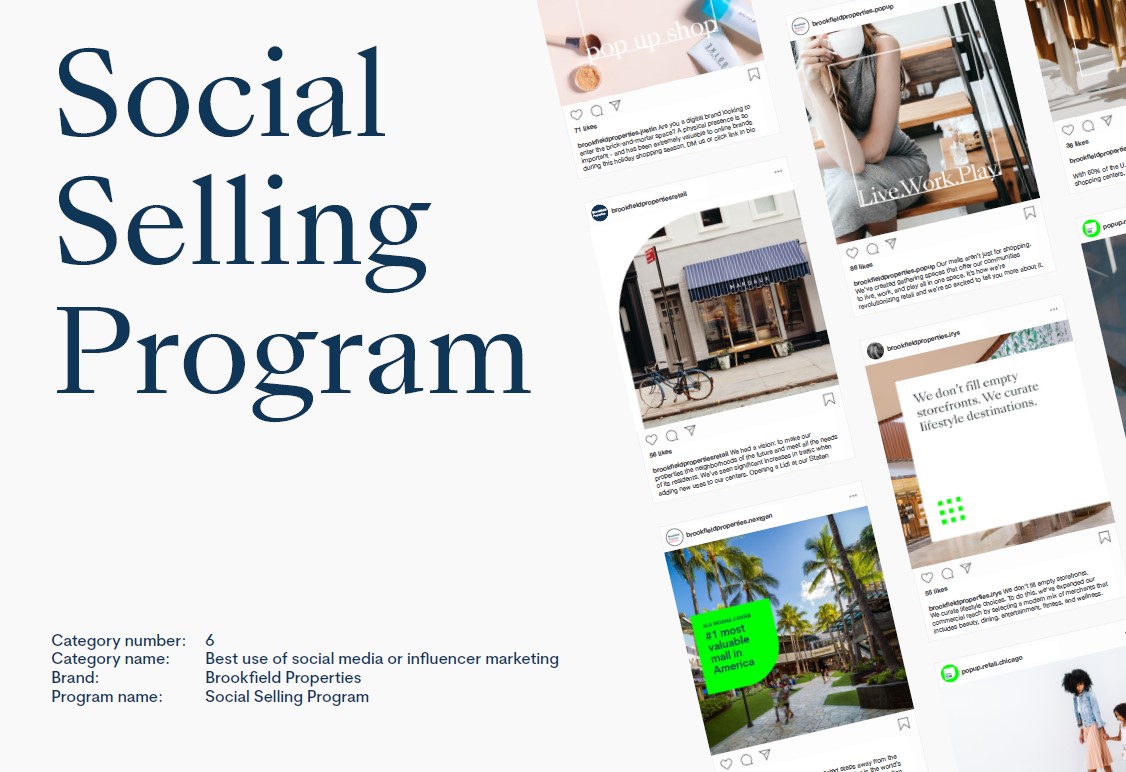
In today’s pervasive social environment, over 3.2 billion daily users turn to social media to fulfil both personal and business needs. Social media has become a method of selling just as much as it’s a medium to share information about day-to-day activities. With the understanding that social media is a key component of selling business — and the desire to connect with brands looking to grow through physical retail — Brookfield Properties developed its first social selling program (SSP). This corporate owned and supported Instagram program allows Brookfield’s sales teams to curate touch points for their target customers, and offers a platform where they can identify, nurture and close leads.
2 June 2021 · Content, Creative & Campaigns
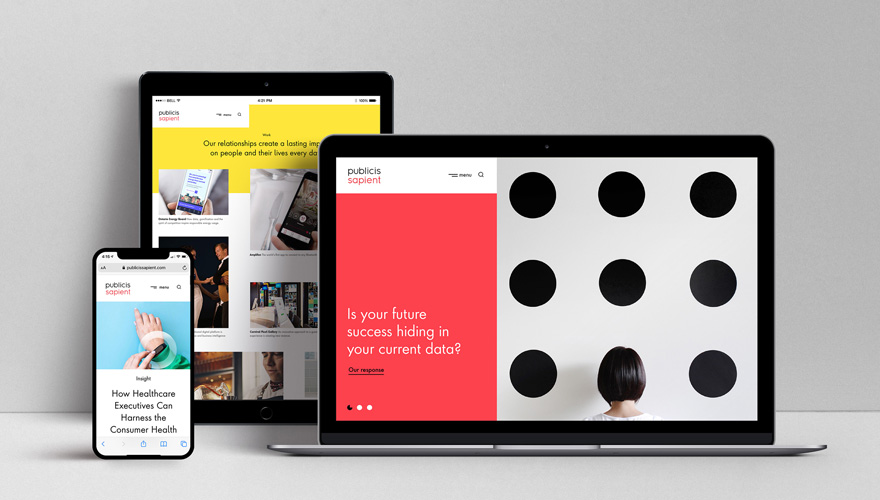
Find out how Publicis Sapient saw a 174% increase in brand name search and 722% increase in mentions. About the client company Publicis Sapient (PS) is a digital transformation partner helping established organizations get to their future, digitally-enabled state, both in the way they work and the way they serve their customers. PS helped unlock value through a start-up mindset and modern methods, fusing strategy, consulting and customer experience with agile engineering and problem-solving creativity. As digital pioneers with 20,000 people and 53 offices around the globe, their experience spanning technology, data sciences, consulting and customer obsession – combined with its culture of curiosity and relentlessness – enables them to accelerate clients’ businesses through designing the products and services their customers truly value. Publicis Sapient is the digital business transformation hub of Publicis Groupe. Strategy – broader business issues the company is facing In 2018, Publicis Sapient was in the middle of a Brand Identity Crisis. They were shifting its business strategy to seize the digital business transformation opportunity and they had several external-facing brands without a clear vision, leading to market and client confusion and lack of awareness and identity. Brand study and research showed that Publicis Sapient was unknown in the marketplace and therefore was less credible than necessary as a formidable partner for DBT. Sapient and Sapient brands had come to signal a certain set of capabilities, not inclusive of DBT. Multiplicity of vision had eroded internal belief in their ability to compete. Aggressive growth strategy aimed at the most sophisticated buyers required clarity of message and hyper-focus. There was a huge opportunity to capture DBT market space, requiring a strong and well-defined brand and value proposition. Their biggest challenge was that Incumbent competition was strong and forceful and invested aggressively in brand building and content creation. Objectives of the campaign Their goal was to develop a unique and distinctive market position to reflect a new vision to more accurately align with their new strategy and give them better potential for consideration among C-level. They wanted to engage in an aggressive challenger brand strategy that would place them into an established, incumbent consideration set. They set out to unify brands and websites under one global brand and redefine the experience. Plus, build advocacy from within through strong and clear brand identity, and tools to interact with clients. And lastly, they wanted to consolidate and connect digital channels to create clarity and credibility for its PS brand and improve client engagement and conversion. They created and launched a single, powerful, credible brand against a significant business transformation opportunity. PS launched a multi-phase, multi-channel brand campaign targeting C-level and Marketing executives. They designed a new website with the purpose of driving growth and brand awareness and to position PS as a leader in DBT. They also created a streamlined digital ecosystem that enables global go to market teams to generate growth and create meaningful engagement with clients. PS wanted to siege the market advantages of being a disrupter through powerful messaging that challenges the status quo. Their campaign strategy was all about changing the consideration criteria with a better HOW. Their insight was in between now and next is the space that dictates the outcome.
2 June 2021 · Brand
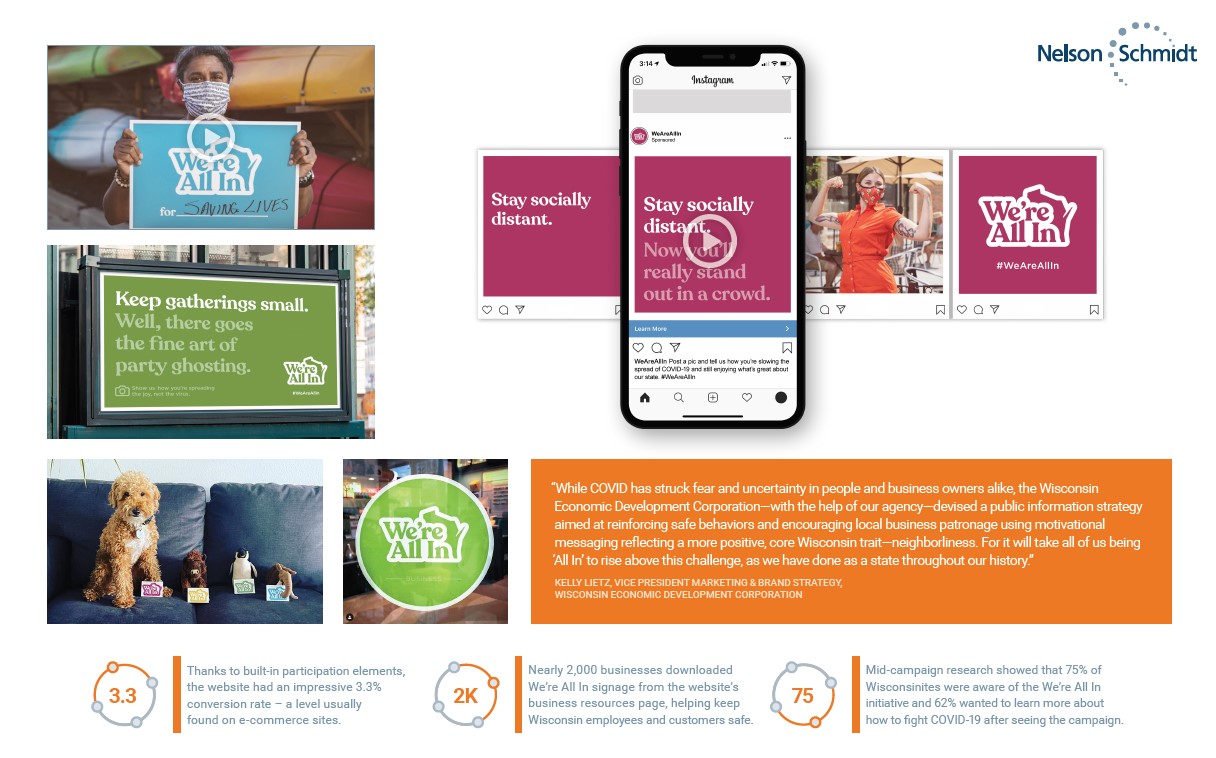
Like most states, Covid-19 struck Wisconsin fast and fiercely. At no other time in history had our personal health and the health of our economy been more intertwined. The only way to get through this was to work together. Every single person, business and community in the state had to commit to going all-in against the virus. This was the insight that led to the ‘We’re All In’ multichannel campaign for the Wisconsin Economic Development Corporation (WEDC). It was a statewide, multi-phased public information campaign designed to help protect the well-being of all Wisconsinites and Wisconsin businesses.
2 June 2021 · Channel Partnership

Marketers have always had to cope with complicated workflows, long hours, and high expectations. But the challenges of the past year have been unlike any we have seen before. Marketing organisations had to adapt to accelerated consumer demand for seamless digital experiences, solve a myriad of team collaboration issues, and pivot away from in-person events—all while continuing to prove ROI. Add on broader mandates around social justice and sustainability, procurement pressures, and of course, the pandemic’s toll on each of our personal lives, and it’s no wonder so many marketers are feeling the strain. For proof, take a look at the findings from a recent independent survey commissioned by Sitecore. We asked marketers to reflect on the impact of COVID-19 and their priorities going forward. The results show that: Marketers are stretching themselves to the breaking point. Nearly three-quarters of UK marketers (74%) said the past 12 months were the most challenging time in their career. Most (61%) considering quitting their jobs at least once. The challenges facing marketers are complex and diverse. In response to the pandemic, marketing organisations had to fundamentally change the way they engaged with customers. For many, that exposed gaps in training and experience, and seven out of ten of the marketers we polled (72%) said they have had to upskill. In addition, much of what was created over the past several months involved short-term fixes that now need to be cleaned up. Others have reported similar results. For example, a study by Merkle found that 93% of B2B CMOs work at organisations that have been negatively impacted by the pandemic. Even so, 52% have increased their marketing spend and 74% have changed their approach to customer content. Finding like these indicate that several pressure points are looming, and that it may take some time for marketers to regain a sense of balance. What can we do to support one another as we grapple with the challenges that lie ahead? In order for us to improve our well-being and continue to best serve our customers, marketers—and enterprises as a whole—need to: Recognise the impact that the pandemic has had on both the workplace and the marketing industry overall. Managing the uncertainty of the past year hasn’t been easy, and many marketers continue to feel anxious and overwhelmed. What’s more, these emotions may intensify as the workplace shifts again and new hybrid environments emerge. Check in with your team. How are they adapting to return-to-office policies? Acknowledging the issues we face and working together on solutions is the first step towards alleviating the stress that marketers are experiencing. Leverage technology. As mentioned earlier, many companies have had to change the digital experience they offer to customers. Investing in the right technology can make those gains permanent and make it easier to reach customers, deliver seamless experiences, and prove ROI. For example, a digital experience platform combines customer data, analytics, AI, and marketing automation capabilities to nurture customers throughout their journey with personalised content in real-time, across any channel. Technology like this enables marketers to provide better end-to-end customer experiences in a marketplace now dominated by digital selling. Put people first. A strong work culture impacts business performance. Enterprises must prioritise the employee experience and create workplaces where everyone feels included and valued. Marketing hiring is expected to outpace the labor market in the years ahead, so address any job satisfaction issues now—before they cascade downward. Support employees through mentorship. Mentors can serve as tutors, counselors, or coaches—or a mixture of all three—and formalized mentorship programs have been shown to improve retention and employee engagement. I know I would not be anywhere close to where I am today without the smart, talented women who were my mentors along the way
2 June 2021 · People, Teams and Skills

Find out how Gravity Global won for ‘Best product launch campaign’, ‘Best customer engagement initiative’, Best use of digital techniques or technologies, ‘Best use of creative’ and ‘Best use of content marketing’. About the client company Embraer, a Brazilian company, is a world leader in the design and manufacturing of aircraft in the 70-130 seat segment (known as regional jets), competing against Boeing, Airbus and challengers including Sukhoi and Mitsubishi. Strategy – broader business issues the company is facing An integrated campaign that utilised events at and around air shows, viral video, VR and AR, animated OOH, Print, Social Casts and Social Media. Gravity research even prior to Covid-19 indicated that the key issue occupying airlines was generating profit. Recent events mean this now has even greater focus. Gravity created personas for the audience and the aircraft. Renaming the E190-E2 and E195-E2 (not memorable) as the ‘Profit Hunter’ reflected the proposition (most efficient/profitable) and the target market’s needs (profit) – something even more relevant in the current environment. The ‘big idea’ was to use hand-painted predators from the natural world on nose cones to attract attention and reflect efficiency and profit making. The Paris Air Show was chosen as the stage for the global roll out of the all new E195-E2 – famously nicknamed the Profit Hunter – Tech Lion Our challenge was to ‘own’ the Paris Air Show and make the campaign relevant to airlines looking to renew their fleets with next generation aircraft. However, competitors were claiming the E195-E2 was not a clean sheet design and therefore adopted older technology. This rumour was not the case but it was starting to gain market traction and perceptions can be dangerous. As well as reflecting the predatory theme, we needed to highlight the new technology on the aircraft. We created experiences using AR and VR to showcase technological innovations. The lion was chosen because of its predatory prowess and for being known as the King of the Jungle, perfectly matched to positioning the Profit Hunter’s technology. The lion creative required bravery because never before had we attempted to paint an entire aircraft and neither had the artist, an employee of Embraer. This was so successful customers are now asking for their own aircraft to be painted in similar styles. The aircraft was then to be used to create an AR experience showcasing the noise-to-tail technology. The idea was hugely positively received, dominating the Paris Air Show, featuring extensively in the world’s leading media, doubling the reach of the campaign and creating queues to see and be photographed with the aircraft. The teaser video for the Profit Hunter Tech Lion received over 1m Youtube views.
2 June 2021 · Content, Creative & Campaigns
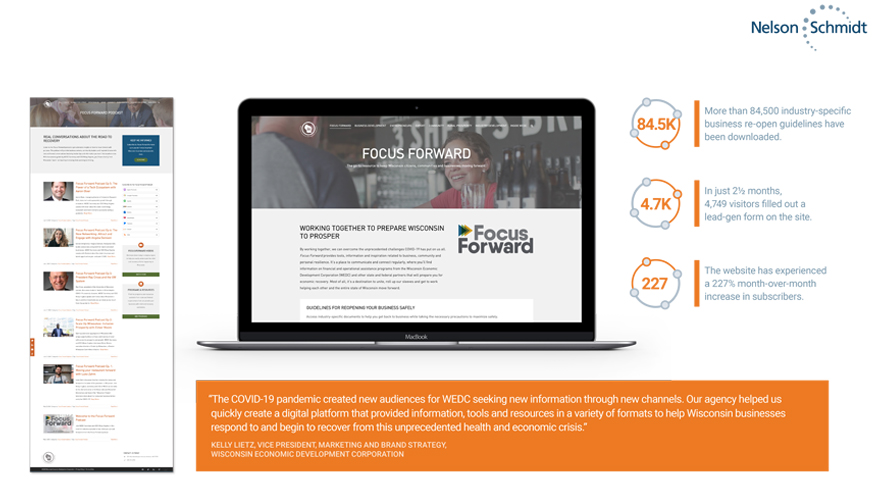
In just two weeks, Nelson Schmidt planned and built Focus Forward, the go-to COVID-19 relief hub for Wisconsin business owners. Learn how Nelson Schmidt helped to make it happen. About the client company The Wisconsin Economic Development Corporation (WEDC) is a state organization committed to creating and maintaining an economic climate that allows businesses and people to maximize their potential. During the pandemic, WEDC focused heavily on relief efforts for SME businesses, as they were hit the hardest and had the fewest resources to survive the economic impact of COVID-19. Strategy – broader business issues the company is facing COVID-19 struck the economy of Wisconsin quickly. Nelson Schmidt’s governor took swift action, executing a Safer at Home order that closed most businesses and placed operating restrictions on those deemed essential. It was a time of great confusion for small- and medium-sized business owners. Most were just scrambling to figure out if they could survive the shutdown. Critical information these businesses needed was coming from a wide range of city, county, state and federal organizations, but there was no central hub for a business owner to get this crucial information. At a time when every minute needed to be spent inside their businesses, owners were having to spend countless hours searching for outside resources. Our challenge was simple, yet highly complicated: Create a branded destination for WEDC that aggregated local, state and federal COVID-19 relief programs and resources available to Wisconsin’s small- and medium-sized businesses. From the start of the project to its launch, the timeline was a mere two weeks.
2 June 2021 · Content, Creative & Campaigns
Find out how Agent3 created an ABM campaign that influenced significant pipeline and exceeded all expectations. About the client Splunk had historically faced a tough battle dislodging an incumbent competitor in the cloud monitoring and observability space. However, following its acquisition of SignalFX, its observability solutions were sufficiently bolstered to be able to offer customers the same level of monitoring capabilities for native cloud applications as it historically had on-premise. So, it was game on for Splunk and time to persuade on-premises customers that it could compete in the cloud. Agent3 did this by focusing on the unique differentiators of the Splunk-plus-SignalFX story in order to arm its sales teams to better target this competitor. By using account-specific propensity data Agent3 was able to point them at the accounts where they would win biggest and fastest. Most importantly, by implementing a scalable approach to deep account-by-account personalization, we left those target accounts feeling like Splunk was much, much more invested in their business. In doing so Agent3 achieved both breadth and depth results: while pipeline was driven across accounts, Splunk was still able to support individual accounts with unique insights and content. Ultimately, this ABM campaign Influenced significant pipeline, exceeding all expectations. About the client company Founded in 2003, Splunk is the world’s first Data-to-Everything Platform designed to remove the barriers between data and action, so that everyone thrives in the Data Age. Based in San Francisco, California, Splunk has more than 6,000 employees in 27 offices worldwide and aims to build a future where data provides clarity, elevates discussion and accelerates progress for innovators in IT, security, DevOps and more. Strategy –broader business issues the company is facing Data fuels the modern business and, as such, when Splunk, the data monitoring and analysis platform, acquired SignalFx in Fall 2019, its newly bolstered observability solutions secured the company its position as global leader in monitoring and observability at massive scale. As a result of this acquisition, Splunk could now offer customers the same level of monitoring capabilities for native cloud applications as it historically had on-premise. But the challenge was how to pinpoint and persuade its on-premise customers that Splunk could also beat out the competition in the cloud. Splunk’s brief to the Agent3 ABM team was to solve this challenge and help drive cross-sell deals into a targeted account list of existing on-premise customers who would be ripe targets for Splunk's expanded cloud proposition. A key challenge facing many ABM programmes is the ability to scale to hundreds of accounts while not compromising on the deep, account-level customised messaging which is inherent in ‘true’ ABM. Agent3 broke the mold, though, with its scalable approach to personalization leaving Splunk’s target accounts in no doubt who the market winner was.
2 June 2021 · ABM & Demand Generation
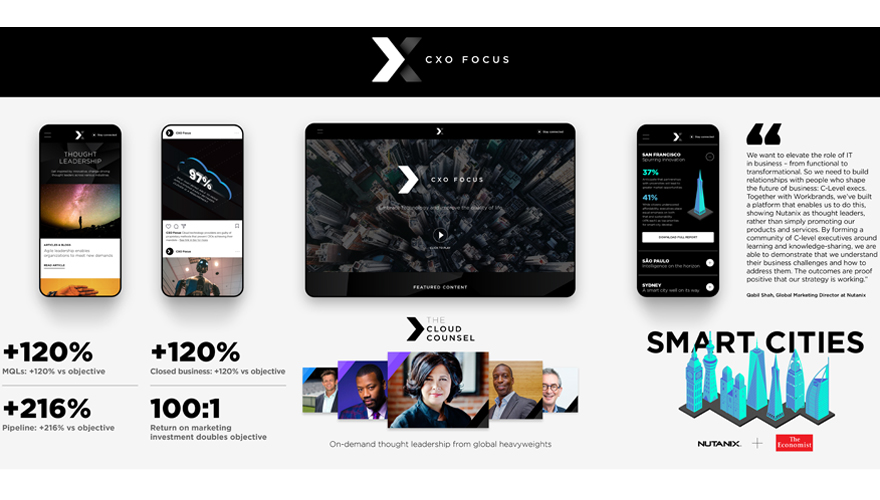
Learn how CXO Focus fast became the cornerstone of Nutanix’s marketing activity through its exceptional campaign. About the client company Founded as a tech start-up in 2009, San Jose-based Nutanix is now a global leader in cloud software and a pioneer in hyperconverged infrastructure solutions, making computing invisible anywhere. Organizations use Nutanix software to leverage a single platform to manage any app at any location for their private, hybrid and multi cloud environments. The company reached a $1 billion valuation by 2013 and in 2016 it listed on the NASDAQ in what was the biggest IPO that year. Today, the company has a market cap of US$5.5 Billion. Strategy – broader business issues the company is facing Nutanix found itself competing for substantially bigger deals within largely siloed organizations. But to stand a better chance of winning those deals, it needed to raise brand awareness at C-Level earlier in the sales process – to instil confidence, knock down those silos and unlock budgets. The conversation needed to elevate from technical nuts and bolts to the transformative power of technology. But how to impactfully influence Board Level decision-makers? What would truly achieve cut-through? Cue to a series of interviews with CIOs from the world’s top 200 organizations to ask what they really wanted to hear from a company like Nutanix. Based on this, the Nutanix global marketing team partnered with Shaped By to devise CXO Focus – a high-level framework of exclusive content and events built around four pillars, each designed to tackle an issue close to the hearts of C-level leaders: Learn, Network, Advise, and Give Back. Objectives of the campaign In addition to the content itself, to help position Nutanix as a thought leader and a go-to resource for C-level execs, CXO Focus needed its own identity, so Nutanix partnered with Shaped By to create a standalone look and feel with a subtle association to the parent brand – one that is recognizable, exclusive, and ownable. Nutanix expected that after 12 months CXO Focus would yield an ROI of 50:1, with specific objectives related to: Number of C-Level execs that engage with the program Minutes of engagement from those people Marketing Qualified Leads (MQLs) generation Conversion to pipeline $ Actual closed business $
2 June 2021 · Strategy and Evolution
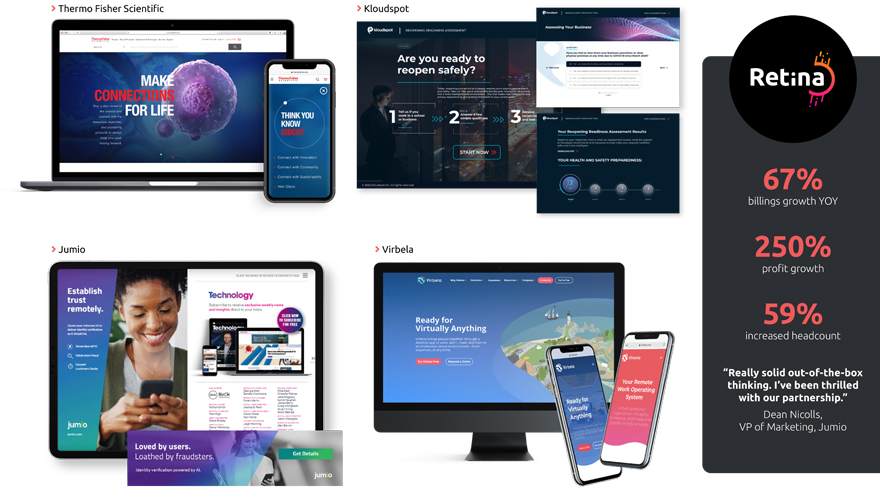
Learn how Retina won the award for communications agency of the year with its year of resilience and record growth. About the agency Retina is a global marketing communications and technology services company, connecting expert services in strategy, creative, content, and go to market with deep digital and software engineering capabilities to drive marketing efficiency and business impact for brands globally. Our team of marketers, creatives and software engineers is structured to fulfil Retina’s 4DTM digital communications services: Demand and Brand Marketing, Digital Experience, Digital Transformation and Data Science solutions. Retina operates from 11 locations globally, including San Francisco, Toronto, Madrid, Vienna, Glasgow, Bucharest, and Brasov. Contribution to clients’ businesses In 2020, Retina delivered innovation and impact with clients in myriad ways, while maintaining a near-100% retention rate: For Thermo Fisher Scientific, Retina rebranded the company’s cornerstone Gibco brand and launched new branded content initiatives across digital, social and digital event channels – increasing leads by 30% and fueling multi-billion-dollar revenue growth For AI-driven identify verification leader Jumio, Retina increased brand awareness 203% and purchase consideration 300%,over delivered on lead generation targets by 70%, and powered consecutive record sales quarters (100% growth year-over-year) For Bank of Montreal (BMO), Retina developed a new personalization/recommendation engine that resulted in double-digit revenue growth year-over-year. For eXp Realty, the world’s fastest growing brokerage, Retina rebranded the company, and launched its commercial and international businesses in India, Mexico and Portugal – supporting record revenue and profit growth (more than 100% year- over-year) For Virbela, a leading provider of virtual engagement/VR platform for remote work, Retina developed a new brand positioning, design and website, powering a 78% increase in new users, dozens of new marquee clients, and 6.5x headcount growth
2 June 2021 · People, Teams and Skills

Dell Technologies is one of the world’s leading technology companies, with a breadth of product portfolios and customers that’s unmatched among most global IT providers. However, they found themself behind the curve in terms of developing a strong, distinctive cloud proposition. Having announced the launch of the Dell Technologies Cloud portfolio in May 2019, they needed to quickly raise awareness of this new technology among their influential channel partners to start gaining ground on competitors.
2 June 2021 · Content, Creative & Campaigns
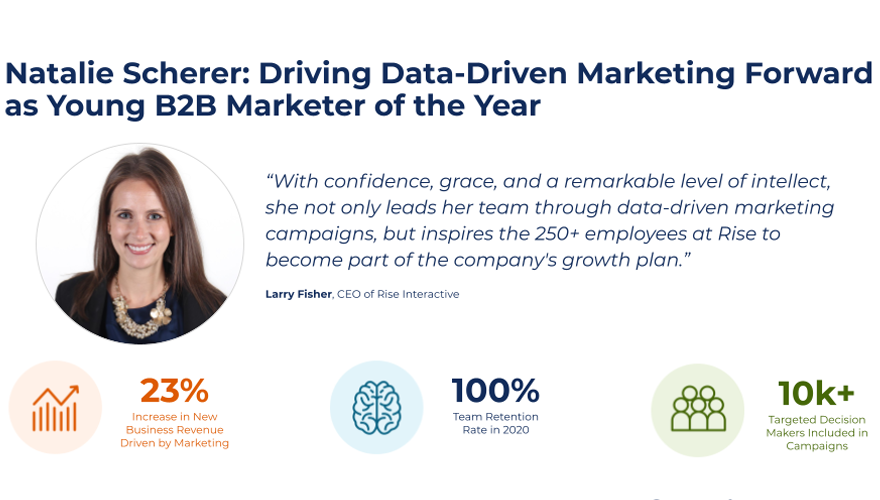
Find out how Natalie Scherer, the youngest person in the history of Rise to be promoted to an executive role, won out for ‘Young B2B marketer of the year’ About the candidate Natalie Scherer is the Senior Vice President of Marketing at Rise Interactive and is responsible for the vision, strategy, and execution of all marketing activity and communications. She is focused on identifying and building relationships with the right brands that would most benefit from partnering with Rise to achieve their business goals through digital marketing. She leads a team of 6 and oversees all outbound marketing and demand generation, analyst relations, brand positioning, pipeline growth, and is responsible for the overall ROI of the marketing organization. Natalie has been with Rise for 7.5 years, and prior to leading Rise's marketing team, she spent four years as an Account Director, driving client strategy for both eCommerce and lead generation brands. She worked across a variety of verticals in both B2B and B2C marketing including retail, healthcare, and finance. She has a proven track record of leveraging data to help brands drive better results from their marketing investments. Natalie also brings a background of management consulting from her prior role at Oliver Wyman. Natalie holds a bachelor of science in Marketing and Management from the Wharton School of Business at the University of Pennsylvania. The brand they work for Rise Interactive is a full-service digital marketing agency that consistently competes against larger holding company agencies with more access to capital for initiatives such as marketing, sales, and innovation. (Rise is the smallest performance marketing agency recognized by Forrester’s 2019 Performance Marketing Wave.) Rise differentiates from competitors by demonstrating through its talent and technology that it is the most data-driven agency in the digital marketing industry with a proven approach to multichannel media management and customer experience. With aggressive annual agency growth goals relying heavily on new business, Rise's marketing and sales strategy must be ROI positive and directly contribute to the bottom line. Rise’s business model is based on annual contracts of $350K - $1.5MM, coupled with a long, hyper-competitive, and high consideration buying process that includes multiple milestones across a variety of stakeholders. With limited budget overall, marketing strategies need to find and target decision makers with compelling messaging that positions Rise as the clear leader amongst the competition.
2 June 2021 · Data and Insights

Kavita Singh spoke with David Fabbri, chief strategy officer at LoSasso Integrated Marketing, about the benefits of using connected TV and how marketers can start utilising its services effectively. KS: For those that might not know, what is connected TV? DF: Connected TV (CTV) is programming viewed on a television through a connection to the internet instead of via a traditional cable or satellite TV connection. Connected TV programming is accessed using apps like Hulu, Sling TV and Netflix among many others. Connected TV is a subset of OTT (over the top) video, which is programming streamed over the internet to any number of devices including, phones, tablets, and computers. Stated another way—CTV refers to OTT programming viewed on your television. KS: Why might consumers turn to CTV in place of traditional cable? DF: The increased availability of low cost, high-quality OTT programming has led to the phenomenon of cord cutting, where people break away from more expensive cable or satellite subscriptions, opting instead to get their TV through the internet. There are many providers with a wide variety of programming options. Depending on what combination consumers choose, the savings can be substantial. According to eMarketer estimates, the number of US cord-cutters will reach 28% of the population in 2021 – around 73 million people – and could pass 100 million people by 2025.
2 June 2021 · Content, Creative & Campaigns
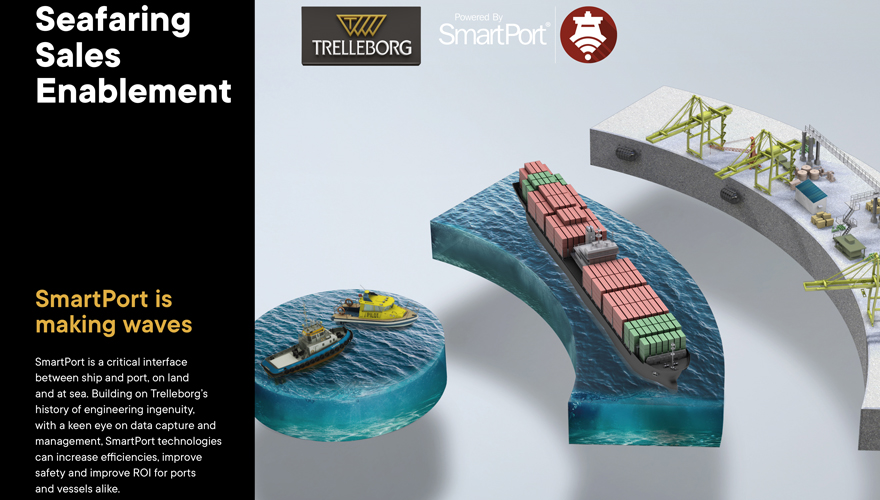
Find out how Stein IAS helped Trelleborg gain 5,216 unique opens, 2.54% unique clickthrough rate for its creative and technical campaign. About the client company Historically, Trelleborg Marine and Infrastructure are global leaders in engineered polymer solutions. Recently, they have become Technology leaders in the Marine industry with the invention of SmartPort. Port operators struggle with outdated manual systems. The multiple touchpoints of approach, docking and mooring vast amounts of cargo, and the swift unloading, is of utmost importance. SmartPort is an integrated solution, giving port operators 360-visibility. It monitors the movement of both the ocean and other ships, enabling vessels and goods to flow freely. Strategy – broader business issues the company is facing With a relatively small but extremely high-value B2B market, qualitative research was carried out. Stein IAS reached out to high-level stakeholders around the globe. The top issues identified were clearance delays, increased freight rates, port congestion and a lack of technology to deal with these issues. Ports were also under immense pressure to solve these issues in a highly competitive market. Technology was the answer but changing anything in a port has huge consequences. Stein IAS needed to enable Trelleborg’s sales team with both inspirational content and factual data to convince their customers to make huge purchase decisions. Objectives of the campaign The objective was to educate/empower the internal team as well as the customers they engaged. Working with subject matter experts, Stein IAS created detailed, buyer-journey aligned content that gave the sales team the knowledge and confidence they needed – as well as the right tools at the right times to initiate and progress conversations and ultimately close business. The video’s objective was to provide them with awareness content that would enable them to approach already-engaged and highly qualified leads. For a salesperson, qualified, emotionally engaged leads and the technical knowledge to make high-value sales are as good as it gets. That was our objective, and it was met. Technical objective metrics will be addressed in the ‘results’ section. The target audience Stein IAS has worked hard with Trelleborg to ringfence a high-value pool of port contacts. When it comes to particular products within the SmartPort offer, the audience can be in the low thousands. The target audience for the full SmartPort offer is 10,000 stakeholders including Port Owners, Port Operators, Harbor Masters, Marine Consultants and Contractors. Through research and engagement, Stein IAS know the audience and we know what kind of information they need to make a purchase decision.
2 June 2021 · Content, Creative & Campaigns
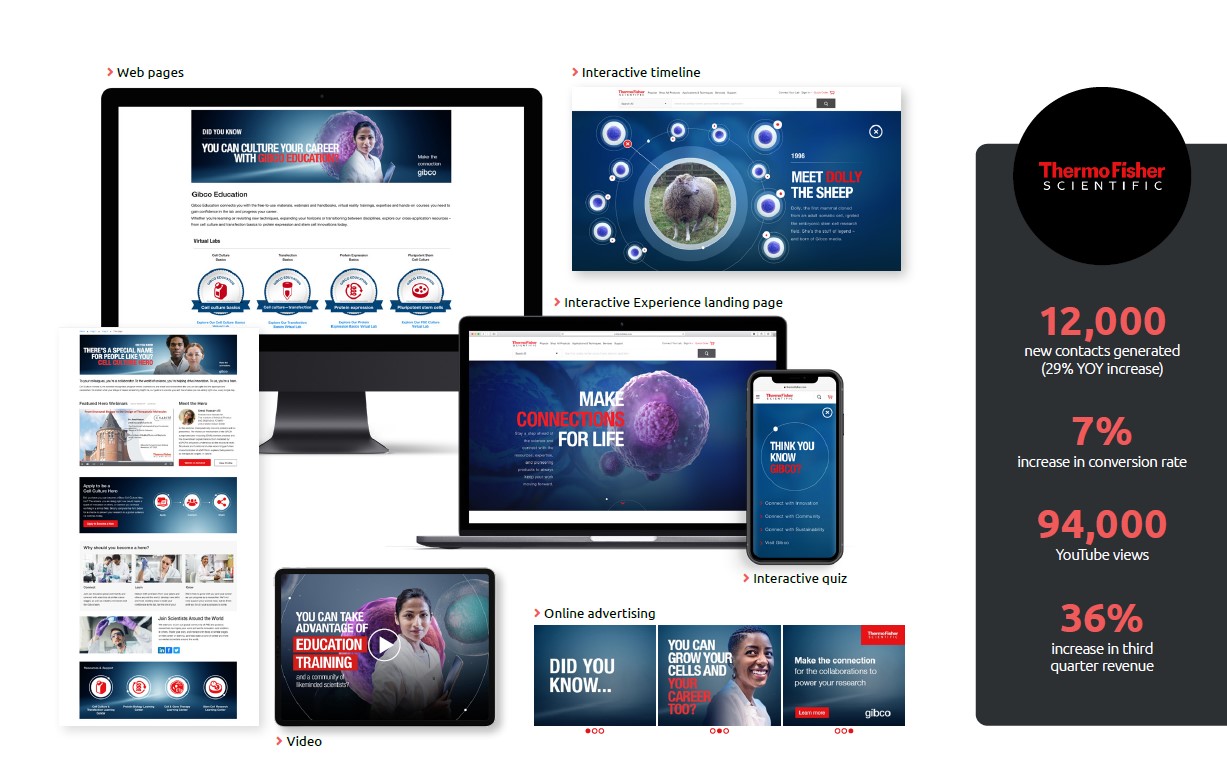
At the dawn of the Covid-19 pandemic, with scientists the world over needing connections to products, services and expertise to power their therapies and vaccines, the 'Connections for Life' campaign boldly challenged what customers know (or think they know) about Thermo Fisher Scientific’s Gibco brand. And it empowered them with the new knowledge of what they can achieve when they make that connection with Gibco – connecting ideas, cures, and people, across careers and lifetimes, and celebrating the impact and achievements of the bold men and women on the front line against coronavirus, cancers, genetic diseases and more.
2 June 2021 · Customer Experience

Who is the most important stakeholder in a business? Is it the CMO, the CEO, investors or the regulator? Whilst these are all very important, there is no business without your customers. The shocking truth is that not everyone treats their customers like royalty. Believe it or not, there is money on the table here if you can get a few basics right. Why the long face? The worst thing a business can do is ignore customer feedback. You have great services and products but somehow fail to hit the spot. If the customer is contracted for 2-3 years, you set yourself up for a torrid relationship and at worst they tell others of their plight. So, what is Customer Advocacy? It is a methodology that puts customer services and customer marketing at the forefront in delivering what is best for customers. In terms of service, this could be an account manager who picks up issues and queries. In marketing, this could be regular content to educate customers and promote other services. If you don’t know what your customers think of your company, services or processes, read on. The power of making someone’s day Making customers happy doesn’t cost the earth. In fact, if you think about the cost of losing a 3-year SaaS customer at the end of the term, customer retention has to form part of your marketing strategy. Additionally, if you have costs to extricate yourself from a customer at the end of a term, you may want to go a step further and consider Account Based Experience (ABX). So, what does a happy customer look like? You could start by asking them. Customer Advocacy is the end product of a great Customer Experience (CX) and Customer Satisfaction (C-Sat). If you deliver great CX and measure great C-Sat, customers are more likely to advocate for your products and services. All it takes is research and feedback to start making a difference. Yes, that’s right, you can advocate for customers internally to make sure that they are well-served. You can educate and communicate with them about exciting new features and ways to leverage your product. You can encourage customers to shout about you from the rooftops, nominate you for awards or complete online reviews. We just need to understand where to start.
1 June 2021 · Customer Experience
Download this report to learn why the tech buyer demographic has changed and four lessons for tech marketers, from vendors themselves.
1 June 2021 · Marketing Operations and Technology (MarTech)

Before the pandemic, Americans spent 5% of working time at home. By spring 2020 the figure was 60%. Today, the average employee wants to work from home nearly half the time. Successful companies will adapt to this as an opportunity, not resist it as a threat. A year ago, I wrote a blog arguing that, ‘the genie was out of the bottle’ and that things would never go back to normal once the world had overcome the worst impacts of the pandemic. While many parts of the world are still dealing with the COVID-19 crisis, there is growing evidence to suggest that my crystal ball was in decent working order. The Economist reports that data for New Zealand, which has already returned to something like normal, shows that in the three months to December 2020, 27% of people in employment worked at home for some of the week – a ‘big increase’ over previous levels. Elsewhere, Salesforce has already announced that the ‘9-to-5 workday is dead’ and that employees can ‘work from anywhere’. In the Netherlands, Rabobank expects employees to work from home 40-50 percent of the time, while UK building society Nationwide is making permanent the teleworking facilities it introduced during the pandemic. For a variety of reasons, some of which are discussed below, many people – particularly those with school-age children – have struggled with lockdown and are eagerly anticipating their return to the office. However, it is becoming clear that the change forced upon us by the lockdown is a watershed, not a blip. A digital dividend A big part of the motivation for supporting a hybrid work culture is financial. Research from McKinsey found that the COVID-19 crisis has ‘accelerated the digitization of their customer and supply-chain interactions and of their internal operations by three to four years’. These massive investments were made in the face of the worst global recession in 300 years – and that money needs to be recouped from somewhere. These new, virtualized workplaces mean that fewer people need come to the office and can do so less frequently, so there are huge savings to be made by consolidating office space. In the middle of last year, Gartner reported that real estate budgets had already been cut by 7 per cent on average, with plans for an additional 8 per cent reduction over the course of the rest of the year; and that real estate was also the most targeted expense in 2021, with a 3.4 per cent reduction versus original budget plans. Essentially, companies need a ‘digital dividend’ – an ongoing return on these huge IT infrastructure investments – and ‘sweating’ these expensively acquired new digital assets is certainly one way of doing that. (On a separate but related note, marketing is another area where organisations are looking to make savings after investing heavily in customer self-service capabilities: according to Forbes, CMOs can expect to start 2022 with 30% less marketing spend than they had at the end of 2019. So, if you work for a marketing services agency, you had better be able to help your clients do more with less!) Connective or creative For those of us able to enjoy this hybrid work culture, the extent to which we will want to take advantage of home working opportunities will increasingly be determined by the nature of the work we do, rather than by a corporate mandate to turn up to the office. A few years ago, I wrote a White Paper that outlined two different work modes: creative and connective. Most value-creating employees – particularly knowledge workers – spend at least some of their time in each of these modes. The creative mode is immersive Deep Work that can be described as “the ability to focus without distraction on a cognitively demanding task” and as a “skill that allows people to quickly master complicated information and produce better results in less time”. Creative work requires strong focus and is best carried out in whatever environment (usually not an open-plan office) that is most conducive to concentration. Connective work is the corollary of creative work. If creative outputs are to have value, they need to be shared. Colleagues may need to provide input; calls may have to be convened to debate how best to move forward; these outputs may need to be shared internally or presented to clients before they are taken to market. In a hyper-connected workplace with multiple stakeholders in different offices – or even different time zones – these activities may be complex and time-consuming. Most people find that these connective behaviours are very suited to the highly networked environment of the typical office. Both creative and connective work are necessary for a business to be productive. Focus too much on the creative and those great ideas will never be realised as marketable goods or services. Focus too much on the connective and you won’t produce enough ideas in the first place. It is important to find the balance between the two and to enable both to flourish. The point is that this is not apples and apples. Creative and connective work are two very different modes of working, making very different demands upon those carrying them out – and best conducted in very different environments.
1 June 2021 · Content, Creative & Campaigns

Intent data specialist, Cyance, has announced three B2B partners as accredited partners - Modern, Clarify and Gilroy, who have become Cyance’s first Platinum Accredited Partner. Cyance has three levels of partner accreditation, which are awarded where a full platform deployment has been delivered within either a demand generation or account-based marketing programme. Since deploying Cyance, each partner has delivered significant ROI for their clients, in terms of engagement, leads and new business. As Cyance’s first platinum accredited partner, Gilroy used Cyance intent data to fuel its ABM campaigns. With Cyance, Gilroy has achieved 420 SQLs within four weeks, a 4x uplift in engagement on an ABM programme, and a £70m pipeline for one account through 1:1 ABM. For Clarify, Cyance is a key component of its unique intelligence stack, underpinning its sales talent and marketing services. Clarify has seen a 11.3x ROI, 3x more leads than non-intent driven campaigns, and a CPL reduction of more than 50%. Modern uses Cyance intent data to cluster accounts and content around customised keywords to determine the exact buyer stage of an account and subsequently target markets which have a high propensity for their clients’ services. Modern has also delivered incredible results for its clients, including campaigns which have achieved 8.6x ROI, and 4x increase in average deal size compared with non intent deals. Just this past month, Cyance has announced a new round of additional funding from investors including Blackfinch Ventures and Nexus Investments, in the amount of £860,000. Jon Clarke, founder, chief product officer of Cyance, said: 'Our partners are an incredibly important part of our business. Their ability to build sophisticated account-based programmes by leveraging data and technology to develop a deep understanding of accounts and create highly targeted and relevant engagement is very advanced. Furthermore, Cyance's leading European intent platform gives partners the best insights for accounts across this territory, which means they are able to identify buyer behaviour that other platforms simply cannot see. As a result, the ROI from account-based strategies that incorporate European buyers is very high'.
28 May 2021 · Content, Creative & Campaigns

Nowadays, content must work harder than ever to speak to the right people and provide a fast ROI. So where do you start? Purple Agency has written a 6-step guide for planning your B2B content roadmap.
28 May 2021 · Content, Creative & Campaigns

Often when we introduce ourselves as psychologists, people imagine us in an office, our patients spread on a chaise longue, pouring their hearts out about their problems. This is a misguided and inaccurate assumption about what a psychologist is and what a psychologist does.
27 May 2021 · Content, Creative & Campaigns

How accurate intent can drive greater levels of account engagement for B2B marketers and turn ABM to ABX Accuracy is king when it comes to intent data. Greater levels of accuracy provide far more insightful, relevant and meaningful account engagement from the very start of a customer’s digital journey. And as a result, brands can build a stronger two-way dialogue with prospects, based on the specific needs, profile and buying criteria of each individual account. These powerful account insights can lead to being able to target the message and content you offer to meet the exact g needs of each account. This can accelerate the discovery process and lead to a higher and quicker customer conversion rate. By taking this principle and continuing to leverage data-driven account level insights deeper into the account lifecycle, marketers have the ability to develop stronger ongoing engagement with clients, to broaden and diversify relationships within the client organization and, ultimately, to expose more opportunities. This is where Account-based marketing (ABM) can evolve to become Account-based experience (ABX). ABX is where the principles of data-driven engagement extend across every account touchpoint (from onboarding to renewals and account management to customer success),to create a consistent, relevant and high value experience for customers. Why ABM needs to evolve Account-based marketing (ABM) is a term that has been around for a while but it only started making headway about five years ago. The main issue with its effectiveness in this current marketplace is right there in the name ‘marketing’ - there is no indication or link to sales. Yet, sales and marketing have always been and will always be so intrinsically linked, particularly when it comes to their primary drivers. How do we encourage engagement? How do we focus on our most important accounts? How do we define our ideal customer? In the established ABM model, it has been the marketing team gathering the insights to disperse amongst sales teams and to tell sales where to focus their efforts. But it is always the sales teams who have more direct contact and dialogue with both potential and existing customers. As a model it doesn’t make a lot of sense. ABX addresses this issue head on, pushing ABM to the next level, a 2.0 version if you will. It starts by acknowledging that it’s not just marketing that is important in any relationship with the customer. What matters is how the whole organisation interacts with each customer across the full customer lifecycle, taking into account the entire customer journey. Customer journey, again though, is an outdated marketing term, which generally focuses only on the stage from initial customer interest all the way through to sale,and rarely takes into account the renewal cycles or ongoing opportunities to upsell or cross sell. Though that first deal with a new customer is important, it should only be the start of the journey, the beginning of an ongoing relationship that develops a deeper understanding of the account and delivers a lifetime of value. That means, in order for marketers to be more effective in the longer term, they need to engage and collaborate with sales and customer success teams and, to some extent, customer services as well. These functions need to work seamlessly together to ensure a single pane of glass view on each customer, so there is consistency and continuity in every customer interaction. As many of us know from bitter experience, as a sales rep, there’s nothing worse than walking into a quarterly review to find out that there’s churn risk that was completely unexpected but totally avoidable. . This is where ABX is a real game-changer.
27 May 2021 · ABM & Demand Generation

With May being Mental Health Awareness month, it’s about time we address the inevitable burnout and Zoom fatigue we’re all feeling. After reading Grace Beverly’s latest novel, Working Hard, Hardly Working, I decided to outline some of the top takeaways that you can use to work smarter, not harder. Coming from New York, I always had a mentality that we ‘live to work’, but, after spending a few years here in London, I’ve realised that it’s more of a ‘work to live’ mindset here – and for the better. Too many of my friends and family back home work the weekends, incredibly long overtime hours and have little time for a personal life. And, while it’s only human to get a bit overwhelmed with work and want to work a bit extra, it can lead to burnout and chronic stress over time. With more flexibility with work than ever, you and your team can start to figure out how to be more productive during your work hours. Set goals accordingly Take your standard to-do list to the next level, and start creating goal-setting prompts. These can be for both yourself and your employees to use especially during monthly reviews. But before you set a goal, be sure to ask yourself if it’s worth setting in the first place. Grace suggests evaluating the following first for yourself: A professional goal you’d like to achieve. A professional habit to instate. A personal goal. A personal habit. The feeling you want to achieve by setting these goals. This is for your personal use as you’ll be able to clearly outline your own, as well as your employee’s, long-term trajectory. An even better template Grace suggested can be useful for project management. For each project or task that you take on, you need to make sure they’re SMART: Specific: clearly defined. Measurable: criteria are specific enough to know when something has actually been achieved. Achievable: attainable. Relevant: aligned with your views of success and company trajectory. Time-bound: gives a realistic timeframe. This not only helps keep you accountable, but it can be really useful to use if someone on your team is being overly ambitious. Maybe one or two of the criteria are a bit off and, rather than disagreeing, you can point to the SMART template to say what works and what doesn’t work.
25 May 2021 · People, Teams and Skills

Most businesses have called it: they’re going to be adapting to a flexible working environment in the upcoming months. That means the days of working in the office five days a week are long gone (at least, for now). With that in mind, Kavita Singh spoke with our Propolis Hive Expert for Teams, Resourcing and D&I, Maria Cameron, to reveal some top tips to adjusting to what looks to be the ‘new normal’. Clearly communicate everything to staff Maria said: “The businesses that are getting this right are the ones that have a real clarity on how this is going to work, so it’s not left for people to wonder certain questions such as: are they going to return to the same desk? What are the expectations of me moving forwards? This is communicated very clearly. The expectation for a lot of companies is that you will come into the office when it’s suggested or required, but you won’t be expected to be there.” Providing very clear instructions to people takes away the worry of what it’s going to be like when they start coming back to the office. Companies are providing lots of information around cleaning regimes to ensure safety in the workplace. Back in the summer of 2020, we saw a slight return to the office, as companies were utilising safe work practices, such as providing hand sanitizers, strictly assigned seats and one-way signs to navigating the office. Some companies even used ‘back to work wristbands’, which are bracelets designed to state social distancing comfort measures. For example, if there are green, red, and yellow bands, they can indicate each employee’s comfort levels with red meaning they’d like to social distance and green meaning they are a bit more comfortable with people approaching them. This tactic might be used in the future, perhaps with the wristbands meaning something different, such as ‘vaccinated’ and ‘unvaccinated’, for example. These types of measures promote the two essential aspects to an employee’s return: their confidence and comfort being in the office. Make meetings all inclusive While marketers are still wrapping their heads around hybrid events, hybrid working is inevitable. That means that half of your team might be in the office and half might be working from home. When it was 100% remote for everyone, a sense of inclusiveness was a bit easier to achieve. Everyone was on the same playing field, doing post-work pub quizzes, company meetings and stand up calls from home. If your team is having a meeting, and half the team are in the office sitting at a board table while a few people are tuning in via Zoom, it can be quite awkward, especially if there are materials being shown or something being written on a whiteboard. Maria suggests that hosts really need to consider looking at behaviours at meetings. Should they structure them differently? Should the length of the meeting be amended? Another solution might be to make everyone on the same page, so either everyone tunes in virtually or all in-person. Maria says: “It’s about redesigning the teamwork framework for hybrid working, which is very inclusive to people and recognises that you might not have everyone in the office.” In many of these instances, it comes down to overcommunicating, specifically to your team. She continues: “That is such a big driver. Teams have the opportunities to ask for support, how their projects are going, and, in terms of how work is structured, there is a big ask for leaders to be prioritising their projects more strategically.”
25 May 2021 · People, Teams and Skills

In this week's episode of our podcast, Editor for B2B Marketing David Rowlands talked to Barbara Stewart, Propolis Hive Expert in Customer Experience about customer success. In our 2021 Trend Tracker, customer success – a new entry – came second place overall, just after growth marketing. They dive into why customer success landed second on our list, the benefits of implementing customer success within your company, and how marketers can start humanising the customer experience. DR: Each year, B2B Marketing runs something called the Trend Tracker. Basically, this is a survey that seeks to understand what specific areas B2B marketers will be focused on in the year ahead. In the 2021 iteration of this report, customer success – which was a completely new entry – finished in second place, just behind growth marketing. As the Propolis Expert for our CX Hive, why do you think customer success will be so important in 2021 and beyond? Is it just about reducing churn, or is there more to it than that? BS: Unfortunately there is no easy quick, silver bullet that will enable B2B organisations to deliver a CX that will deliver. Instead companies must deliver a total B2B customer experience. Doing so means that companies must address all aspects of the relationship in terms of both what they deliver to customers and how they deliver. They have to create and deliver two customer experiences; one that caters to the needs and priorities of buyers and another that caters to the needs and priorities of users. It is only by taking a two pronged approach, organisations will attain the tangible, measurable benefits they seek. For me, the customer success team are vital to enable this approach to be a reality. They are responsible for the on-going partnership and ensuring the organisation is delivering against the golden promises made at moment of sale and managing buyers expectations. As well as supporting the users to have the optimum on-going service and able to use the portfolio of products and services to the best of their capabilities. DR: On that note, what do you think a great customer success process looks like? What people or processes do you think B2B marketers need to have in place in order to deliver customer success? BS: For me, it’s challenging for marketing to do this alone, to establish a customer success process you need a whole organization to create it not a department. Marketing should lead it but they cant do it alone. Regarding a process: Have a clear & living Customer Experience Vision, that has been shared to all of the company Really understand who your customers are, what their needs are and what their expectations are Work to create a single view of the customers (unifying data across your internal systems, capturing each customers activities and using this information to seamlessly engage with each customer across touchpoints) Articulate your CX strategies internally Build a corporate culture that knows how to listen Train and develop your team Act upon regular employee feedback Ensure that customers feel understood Measure the ROI from delivering great customer experience Don’t make assumptions or think about what makes life easy for you. It is all about your customers
25 May 2021 · Customer Experience